Afrobeats is everywhere: playlists, stadiums, weddings, the Billboard charts. So a fair question is going round: who actually owns it? One loud answer online says "the CIA is running Afrobeats". Another, quieter answer sits in contracts and royalty statements.
We looked at both. The money question has real, documented answers. The CIA claim does not. Here is what we found, so you can decide with facts.
Follow the money
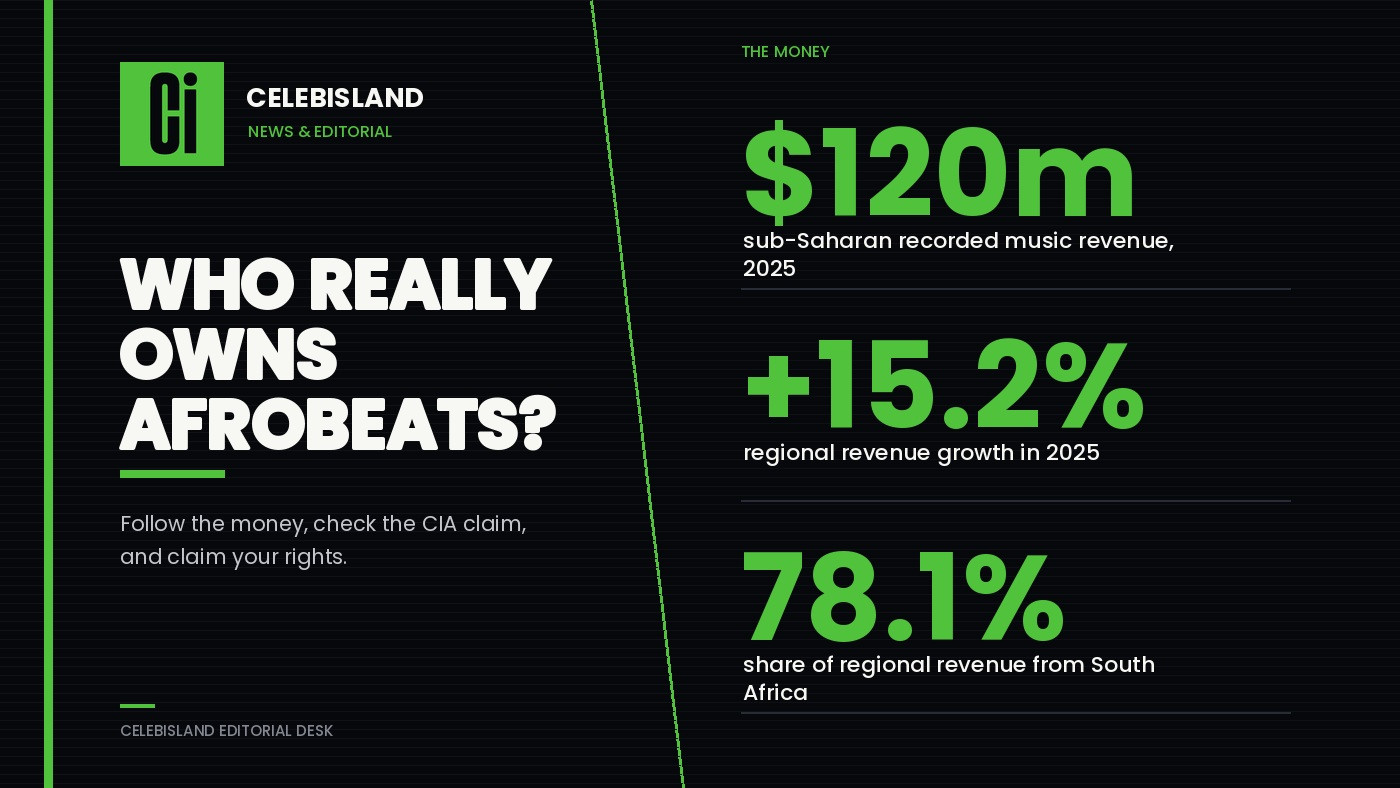
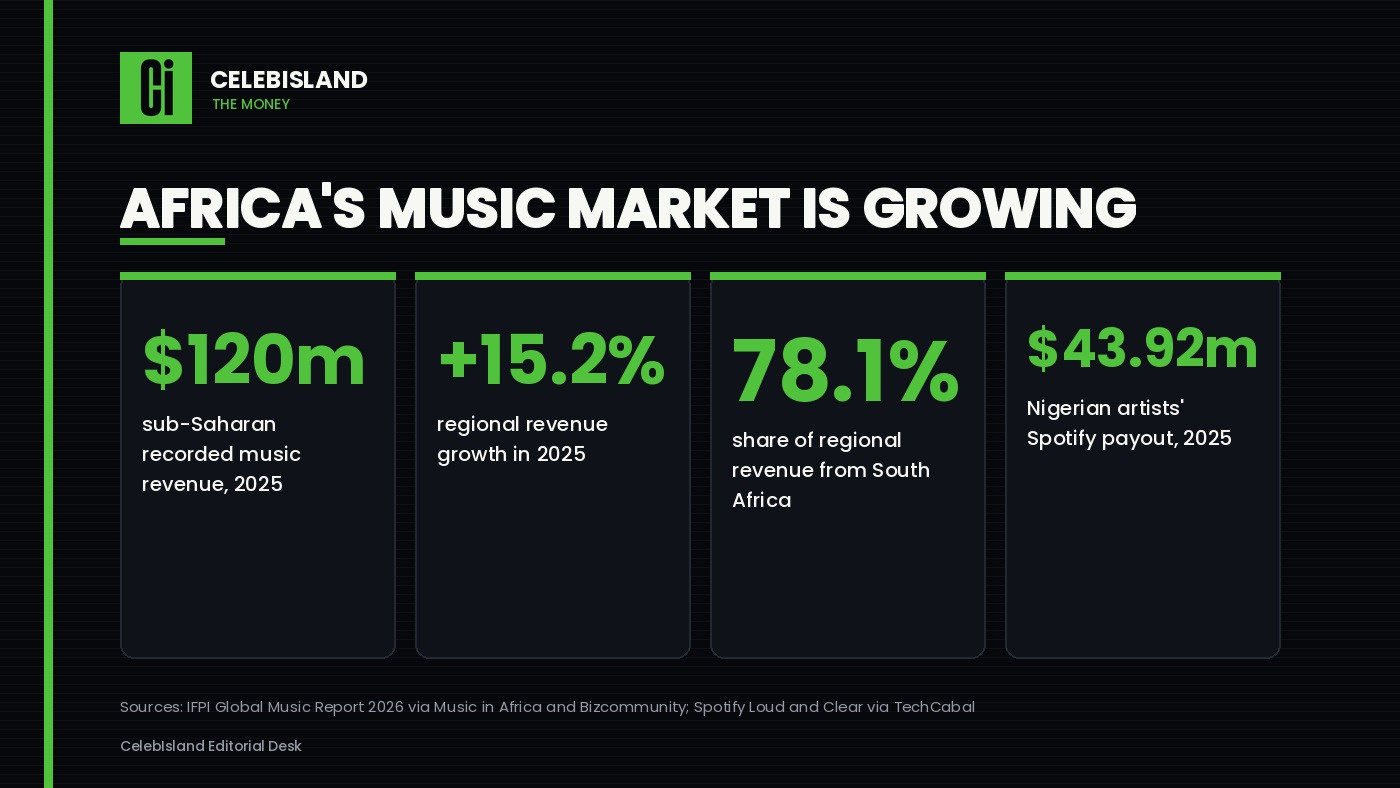
Recorded music in sub-Saharan Africa earned US$120 million in 2025, up 15.2%, according to IFPI's Global Music Report 2026. South Africa is still the biggest market there, at 78.1% of regional revenue. Nigerian artists earned about 60 billion naira (US$43.92 million) from Spotify in 2025 across 30.3 billion streams, per Spotify's Loud and Clear data as reported by TechCabal. That is roughly 0.39% of Spotify's global payouts.
Big companies have noticed. Universal Music Group announced a majority stake in Don Jazzy's Mavin Global in February 2024, with Don Jazzy staying on as CEO. Warner Music Group bought a majority of Africori in 2022 and confirmed a full acquisition in February 2025. Africori distributes and manages rights for more than 7,000 artists. Major-label partners also sit behind stars such as Wizkid (RCA/Sony) and Burna Boy (Atlantic/Warner), according to BusinessDay.
Masters, publishing, performance: who owns what
Three different rights hide inside one song. The master is the recording. Publishing is the composition: melody and lyrics. Performance rights pay when a song is played in public or broadcast, and are collected by societies on behalf of writers and owners.
A stake in a label is not automatically a stake in every master or every song. Public reports of the Mavin and Africori deals do not say who holds which catalogue rights, so we will not guess. What is documented: Afrocritik explains that a label holding 80% of master revenue leaves the artist the remaining 20%, often after recoupment. Tems' RCA deal reportedly includes a 12-year reversion clause, which returns rights after a set period.
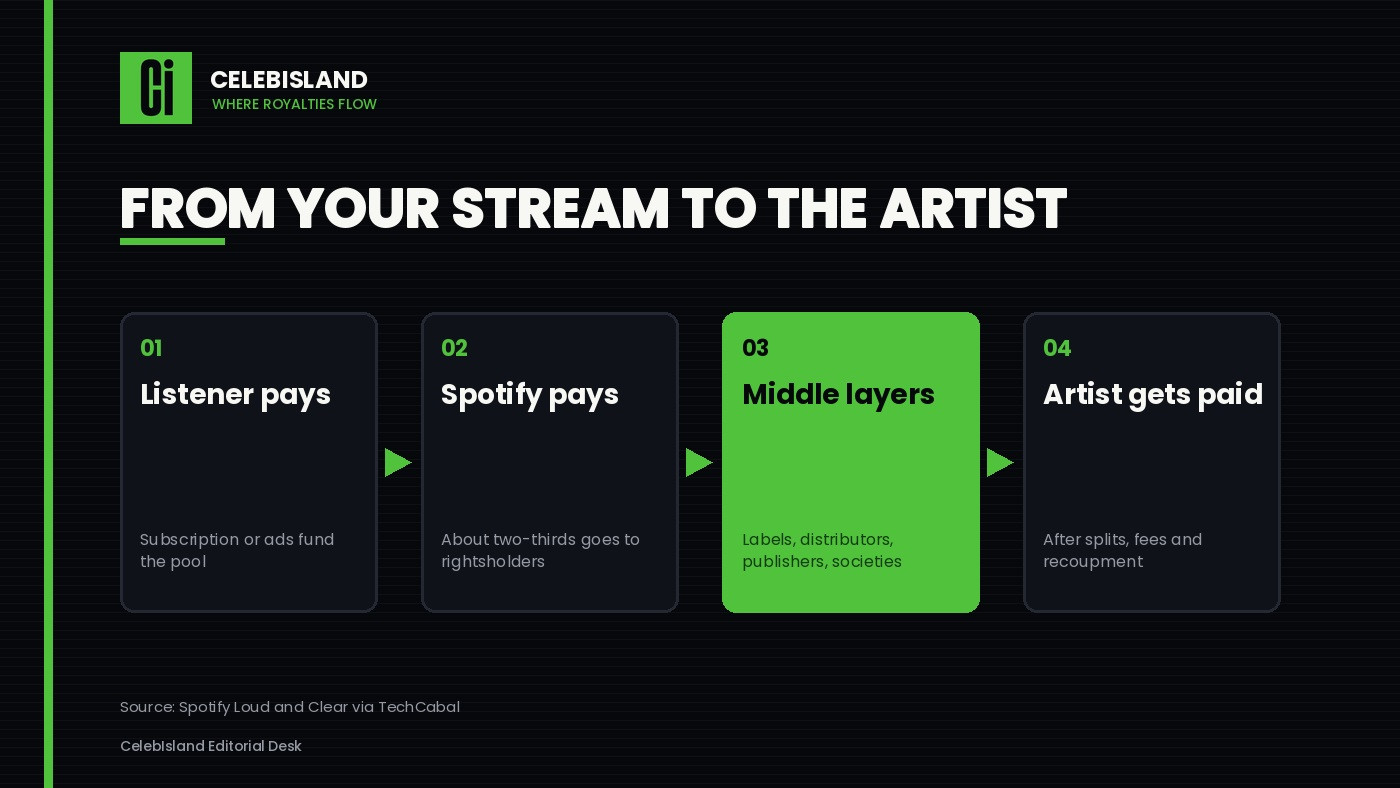
Streaming money does not go straight to artists. Spotify pays about two-thirds of its music revenue to rightsholders, and it passes through labels, distributors, publishers and collecting societies. About 58% of Nigerian artists' 2025 Spotify royalties went to independent artists or labels.
The CIA claim: documented, claimed, unproven
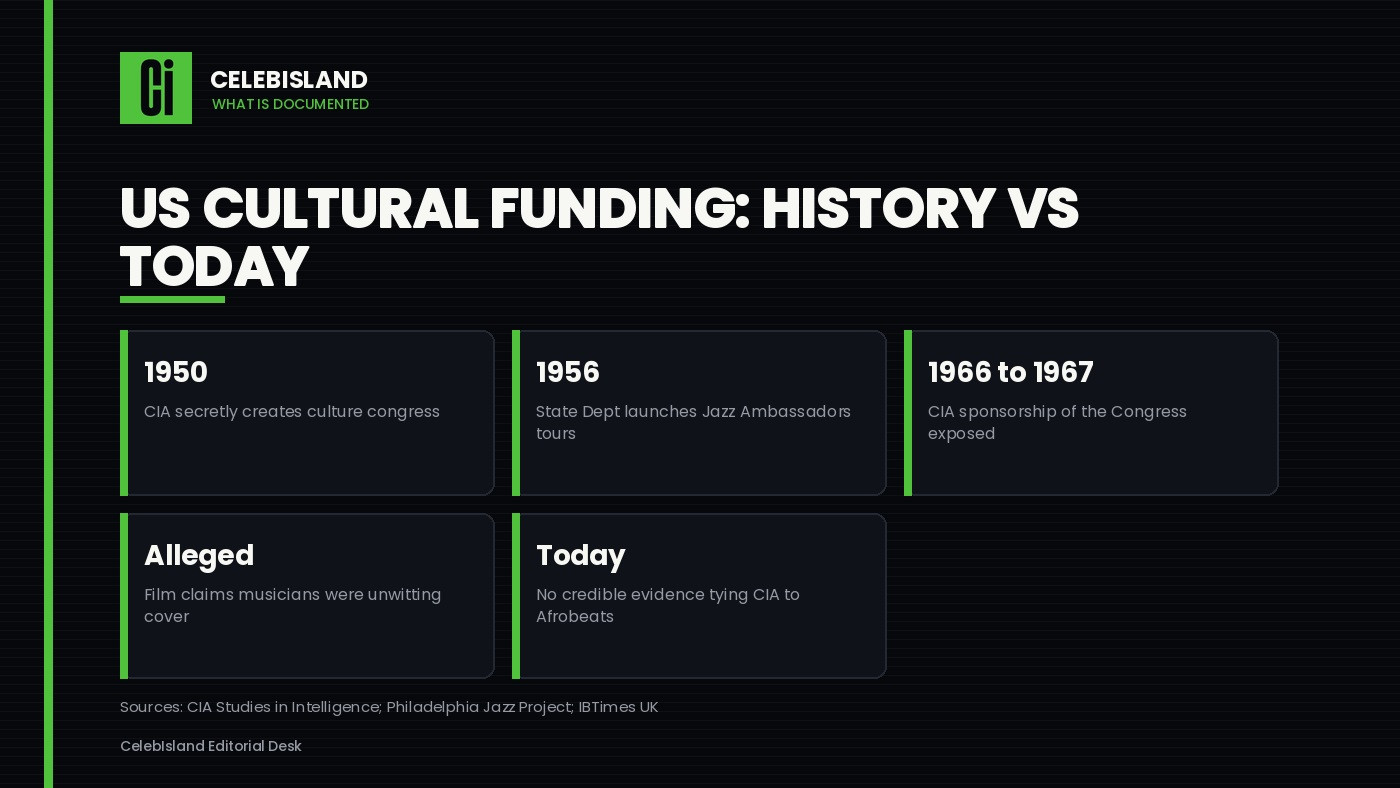
The viral post came from the X account Spearhead Africa and offers no specific evidence. IBTimes looked in September 2026 and found no publicly available evidence that the CIA or any US intelligence agency directs or controls leading Afrobeats artists. We found none either. There is no credible evidence for this claim.
Why does it feel believable? Because the history is real. The CIA secretly created the Congress for Cultural Freedom in 1950, and the CIA's own Studies in Intelligence calls the 1967 exposure of that sponsorship "embarrassing". The State Department openly ran its Jazz Ambassadors tours from 1956. A film, Soundtrack to a Coup d'Etat, alleges the CIA used unwitting jazz musicians as cover around the Lumumba plot, but the New York Times review treats this as a possibility, not a settled finding.
Today, US involvement is out in the open. A US announcement covered by VON described a State Department TV exchange with USC and a mentorship programme with the Recording Academy. To change our view, we would need documents: funding records, court filings or leaked papers, money traced to labels or artists, and several independent outlets confirming it.
What this means for us
CelebIsland's view. The claim gets one thing right: ownership matters. It gets two things wrong. It has no proof, and it treats African artists as puppets. Nigeria is Africa's "most local" market, with 62.2% of streams coming from domestic artists, Luminate reports. That is fans and creators, not spies, building the base.
You do not need a secret agency to explain why money flows upward. Contracts, catalogue ownership and weak collection systems explain it already. And these are problems we can fix with paper, not panic.
Collecting is a live issue. Reports say a Nigerian Court of Appeal found COSON's approval lapsed, and MCSN is the only society the Copyright Commission currently recognises. A Supreme Court appeal is reportedly being prepared. Check the latest before you register.
What to do now
This is general information, not financial or legal advice. Talk to a music lawyer before you sign anything.
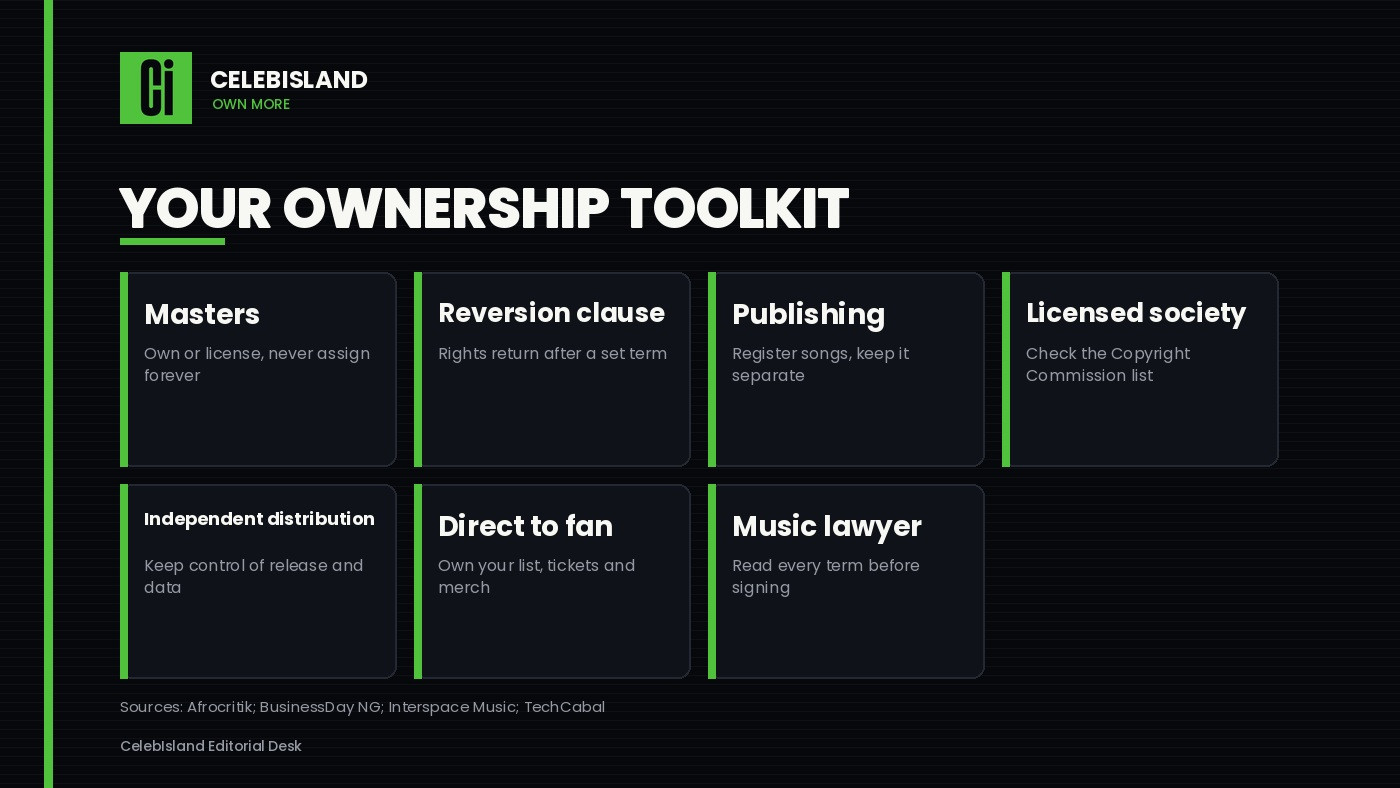
- Read the grant. Ask whether you are assigning rights forever or licensing them for a fixed term.
- Ask for reversion. A clause that returns your masters after a set period is a real tool.
- Split your rights. Keep masters and publishing separate, and register your songs with a licensed society.
- Distribute independently. Independent routes already carried 58% of Nigerian Spotify royalties in 2025.
- Go direct to fans. Build your mailing list, ticketing and merch so your audience is yours.
- Fans, pay creators. Buy tickets, streams and merch from artists who own their work.
Who should own Afrobeats most? Vote in the CelebIsland poll and repost this so more kings and queens see it. What do you think?
Sources: Music in Africa (IFPI), Bizcommunity (IFPI), TechCabal (Spotify Loud and Clear), Music Business Worldwide, IBTimes UK, CIA Studies in Intelligence, Philadelphia Jazz Project (New York Times review), Afrocritik, BusinessDay NG, Interspace Music, VON, Mixmag MENA (Luminate).