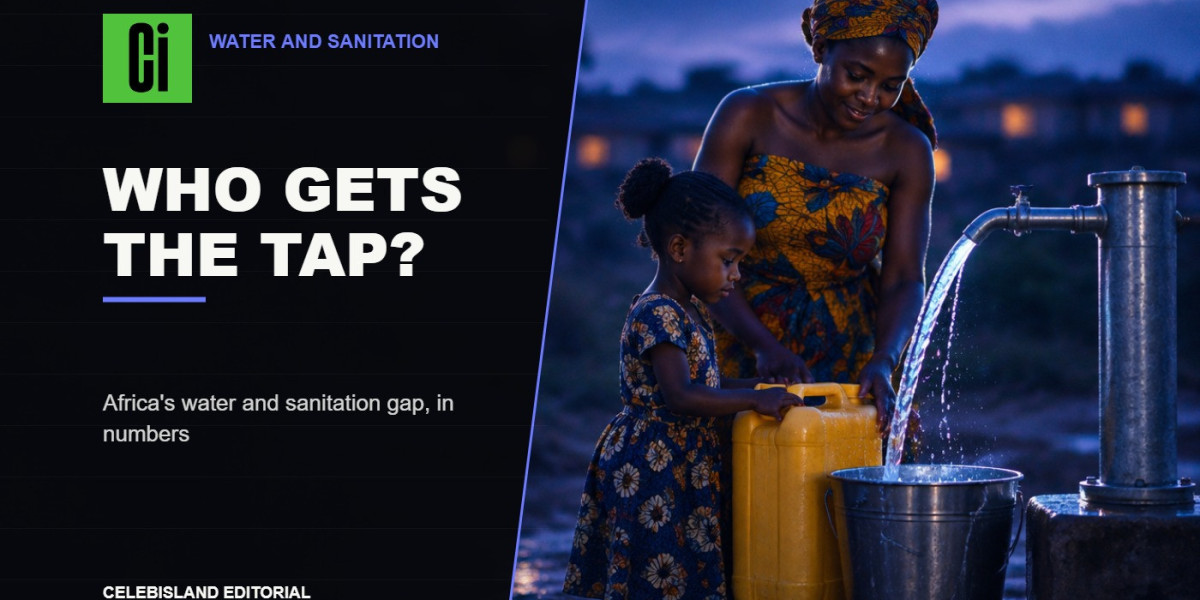
Kings and queens, let us talk about the most basic crown of all: a tap that runs and a toilet that works.
Every great city, every great kingdom, began beside water. Yet on the continent that gave the world its oldest civilisations, millions still queue, carry and wait for the one thing nobody can live without. We went to the published numbers, read the source pages, and kept each figure with the institution that stated it.
The toilet gap
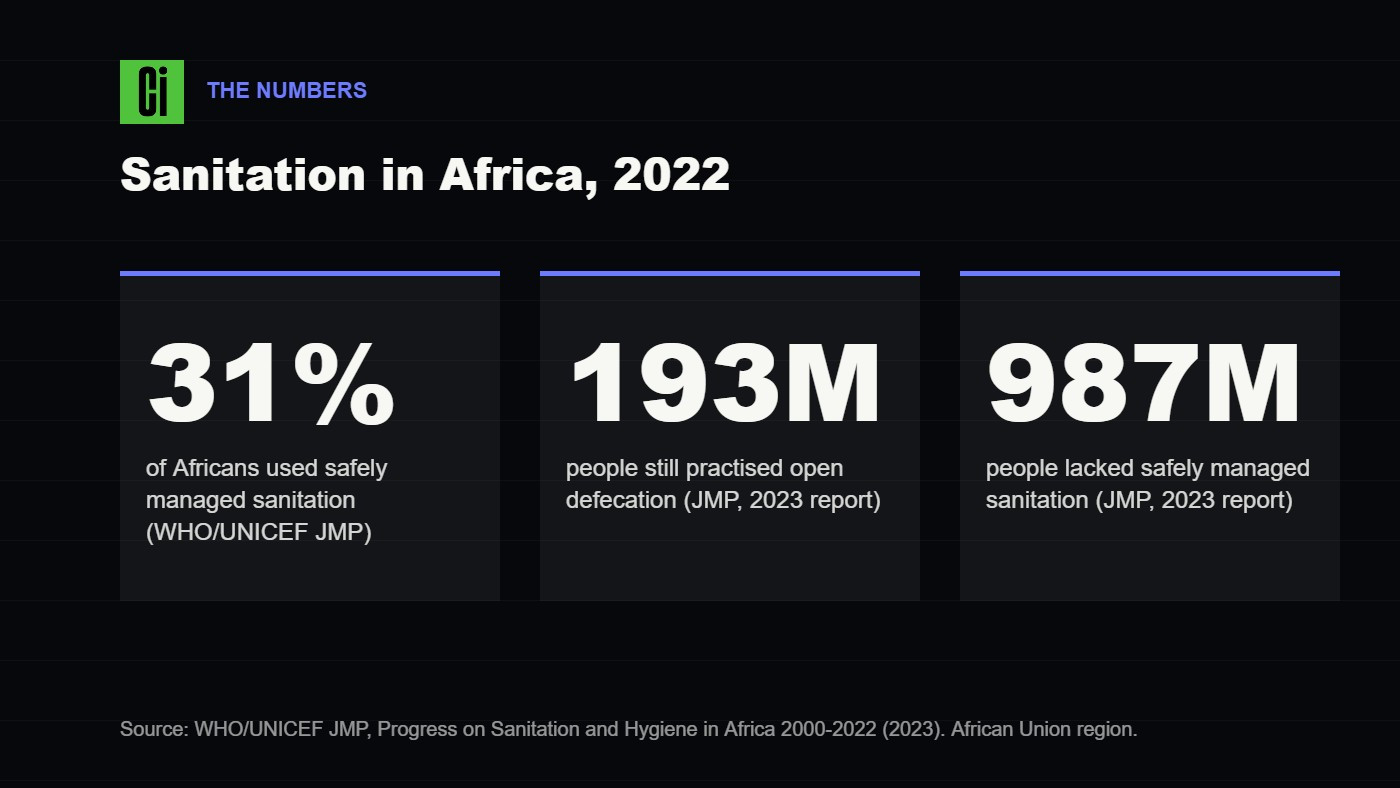
The WHO/UNICEF Joint Monitoring Programme reported in 2023 that in Africa (the African Union region) 31% of people used safely managed sanitation in 2022. Over 987 million people still lacked it, and 193 million still practised open defecation.
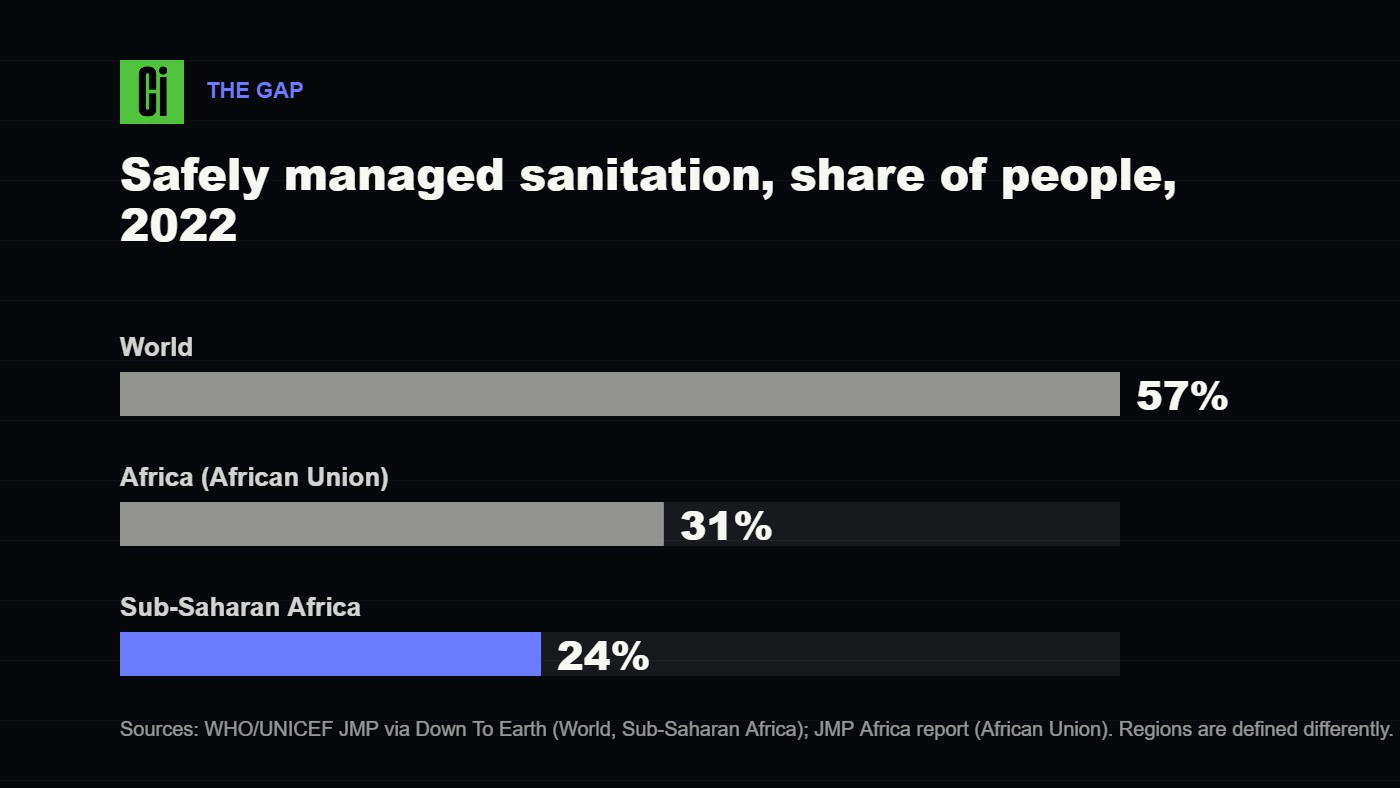
The same programme's data, as reported by Down To Earth in July 2023, put sub-Saharan Africa at 24% for safely managed sanitation in 2022, against 57% worldwide. The two Africa figures cover different regions, so we do not stack them into one trend. The direction is the same either way.
The tap gap
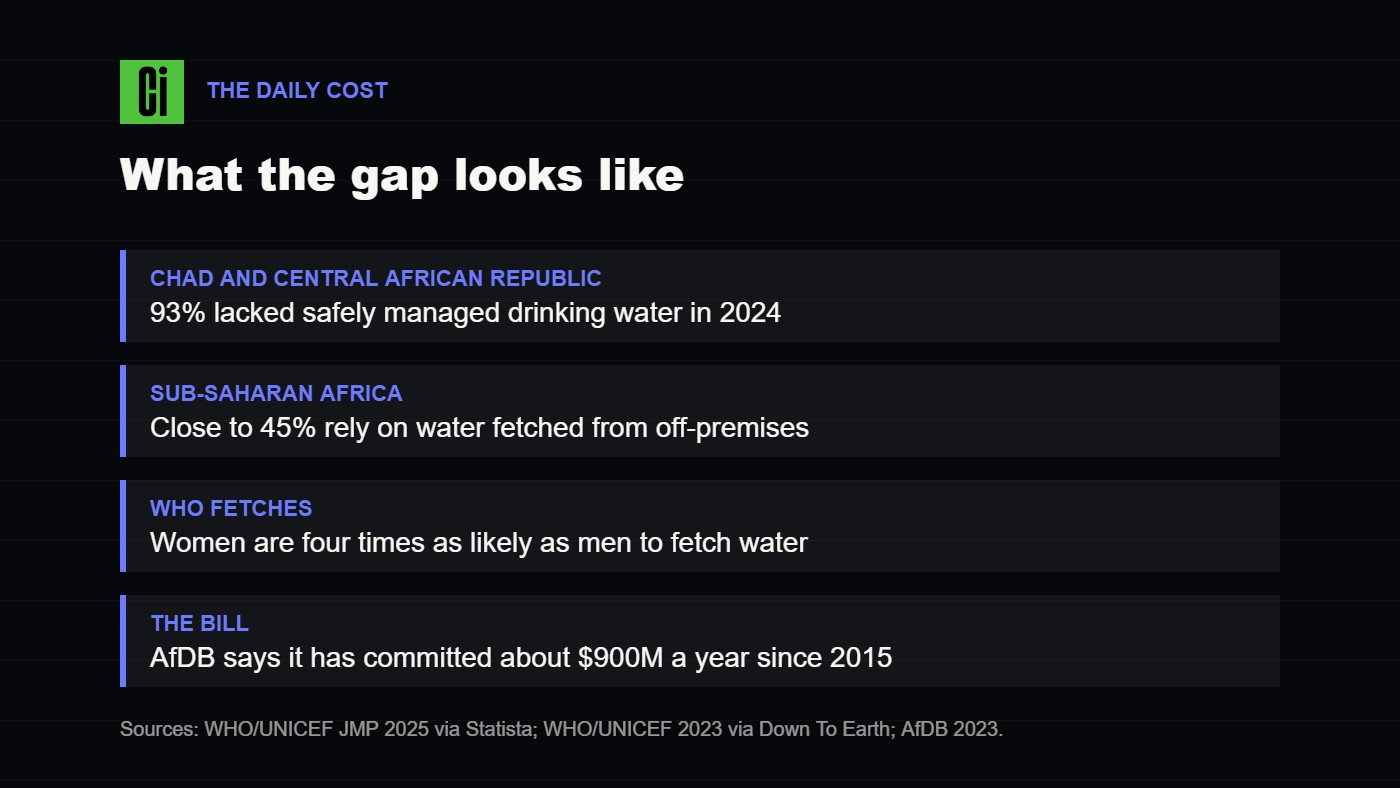
On drinking water, the JMP 2025 report, as reported by Statista in October 2025, found that 93% of people in both Chad and the Central African Republic lacked safely managed drinking water in 2024. Globally the figure was 2.1 billion people. Down To Earth, again citing WHO/UNICEF, reported that close to 45% of sub-Saharan Africa's 1.2 billion people rely on water collected from off-premises sources, and that women there are four times as likely as men to fetch it.
Our reading, as a question: if women carry the water, how many hours a week is that taken from school, from trade, from rest?
Who is paying?
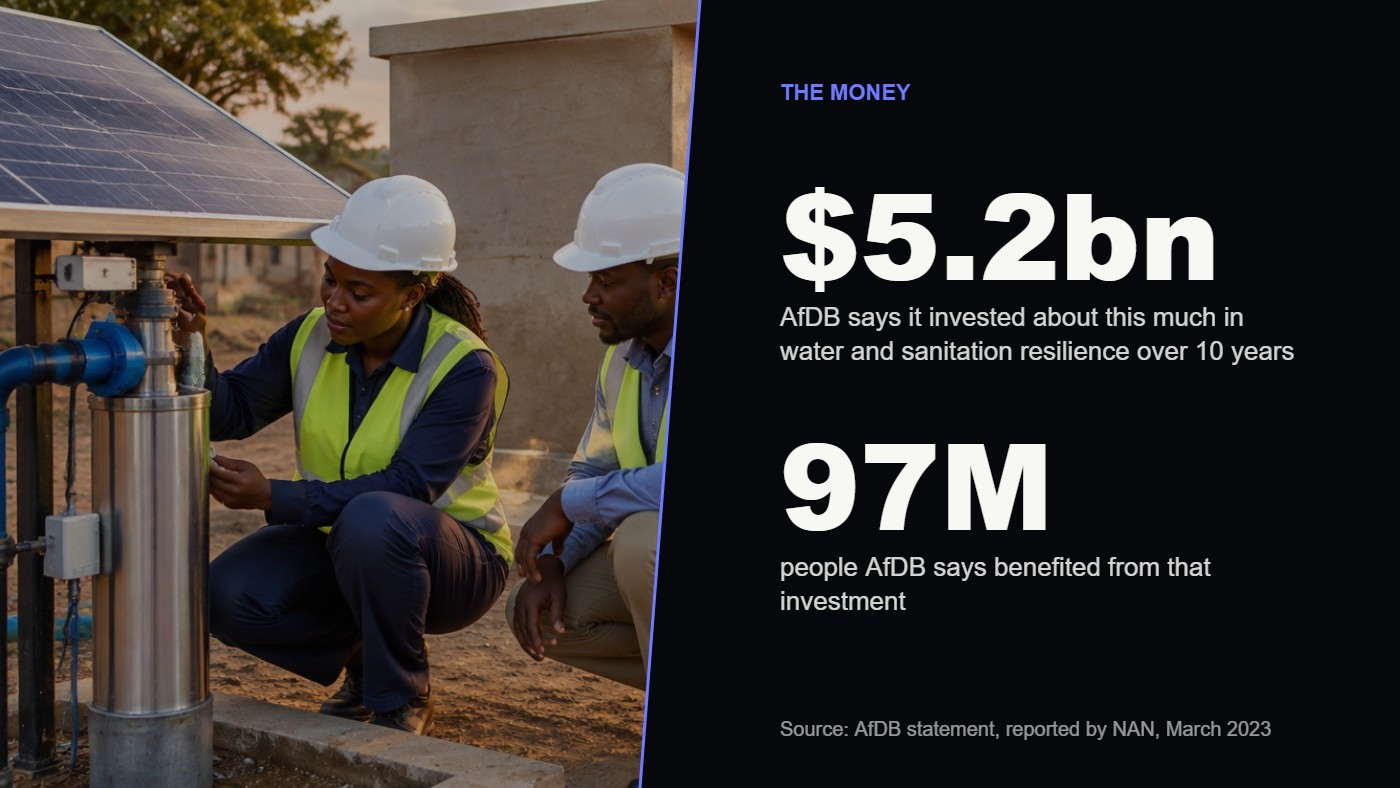
The African Development Bank said in a March 2023 statement, reported by NAN, that it invested about $5.2 billion in water and sanitation resilience over 10 years, benefiting almost 97 million people. It also said it has committed roughly $900 million a year on average since 2015. Those are real numbers. Is one bank's yearly commitment anywhere near the size of the gap above?
What this means for Africa
Water is infrastructure, but it is also a business. Pumps, kiosks, meters, pipes and repair all need people who are trained, paid and respected. Who trains the technician in every district? Who keeps the spare parts in stock? A tap that breaks in year three and is never fixed is not access, it is a photograph.
For young Africans building companies, this is an open field: low-cost repair services, water-quality testing, payment tools for community kiosks. The need is clear. The question is who builds the first reliable, locally owned version in your city.
For the diaspora
Many of us abroad already send money home. Could a share of it go to a community water point with a named caretaker and a repair fund? Before you give, ask the question that matters most: who maintains it in year three, and who can the community call when it fails?
Your turn
What should come first in your community? Comment with a letter:
A A working tap. B A safe toilet. C Both at once. D Reliable repair crews.
Then repost this to the king or queen who should see it. The numbers only change when more of us can see them.
Sources: WHO/UNICEF Joint Monitoring Programme, Progress on Sanitation and Hygiene in Africa 2000-2022 (2023); WHO/UNICEF data as reported by Down To Earth (July 2023) and Statista (October 2025); African Development Bank statement as reported by NAN (March 2023). Regional definitions differ between sources. Figures are quoted as each source stated them.