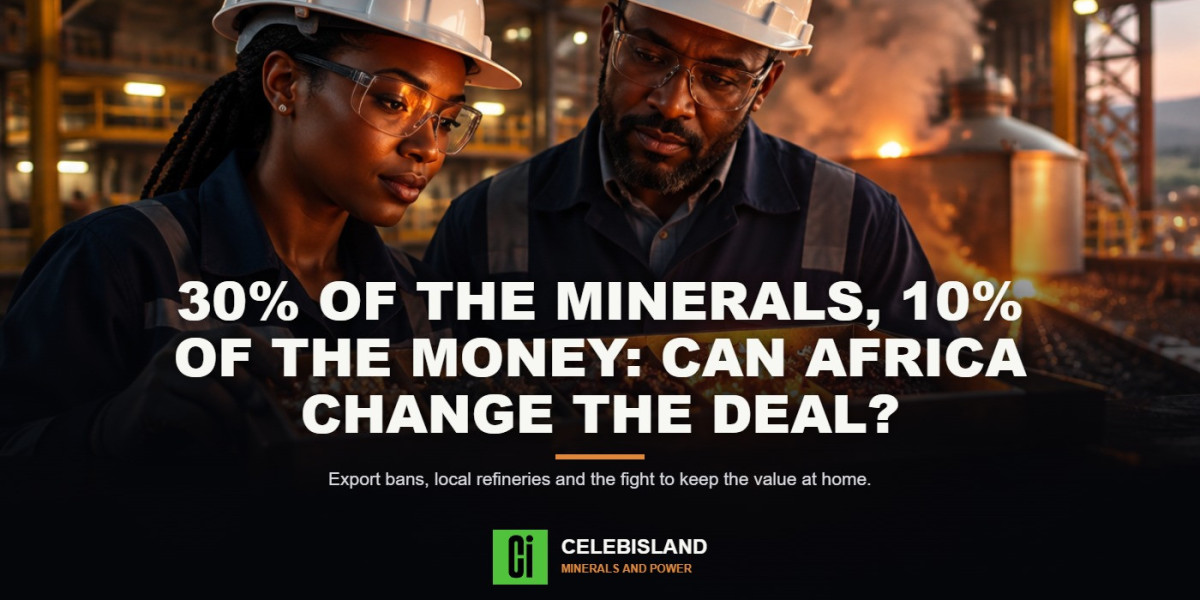
Africa holds roughly 30 percent of the world's critical mineral reserves. It captures about 10 percent of the revenue. That gap is the whole story, and a growing number of governments are now trying to close it.
The numbers behind the gap
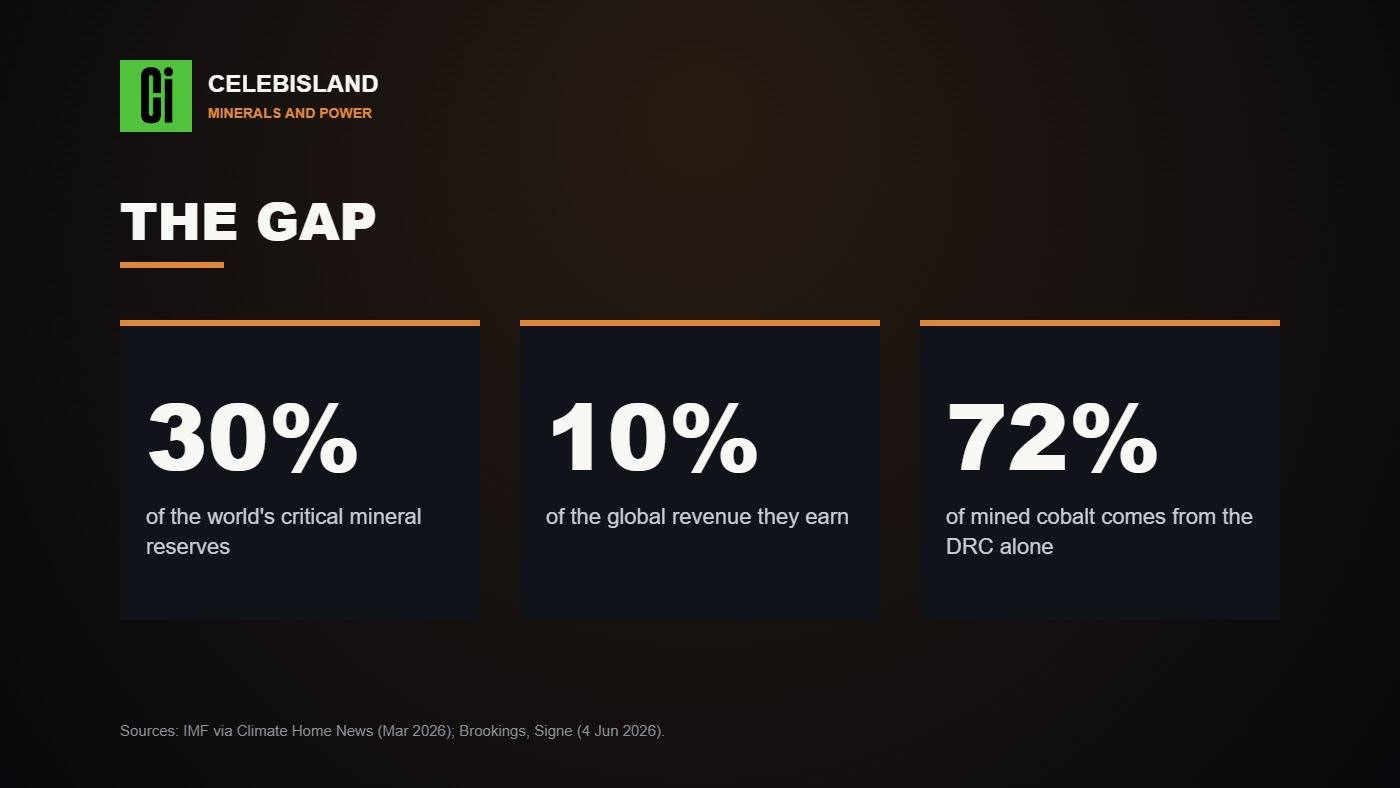
The IMF figures reported by Climate Home News in March 2026 put it plainly: about 30 percent of the world's critical mineral reserves sit in Africa, while the continent earns about 10 percent of the global revenue from them. The Democratic Republic of Congo alone supplies around 72 percent of mined cobalt, according to Brookings and Signe in June 2026. The metal that powers phones, electric cars and grid batteries comes out of African soil. Most of the profit is made after it leaves.
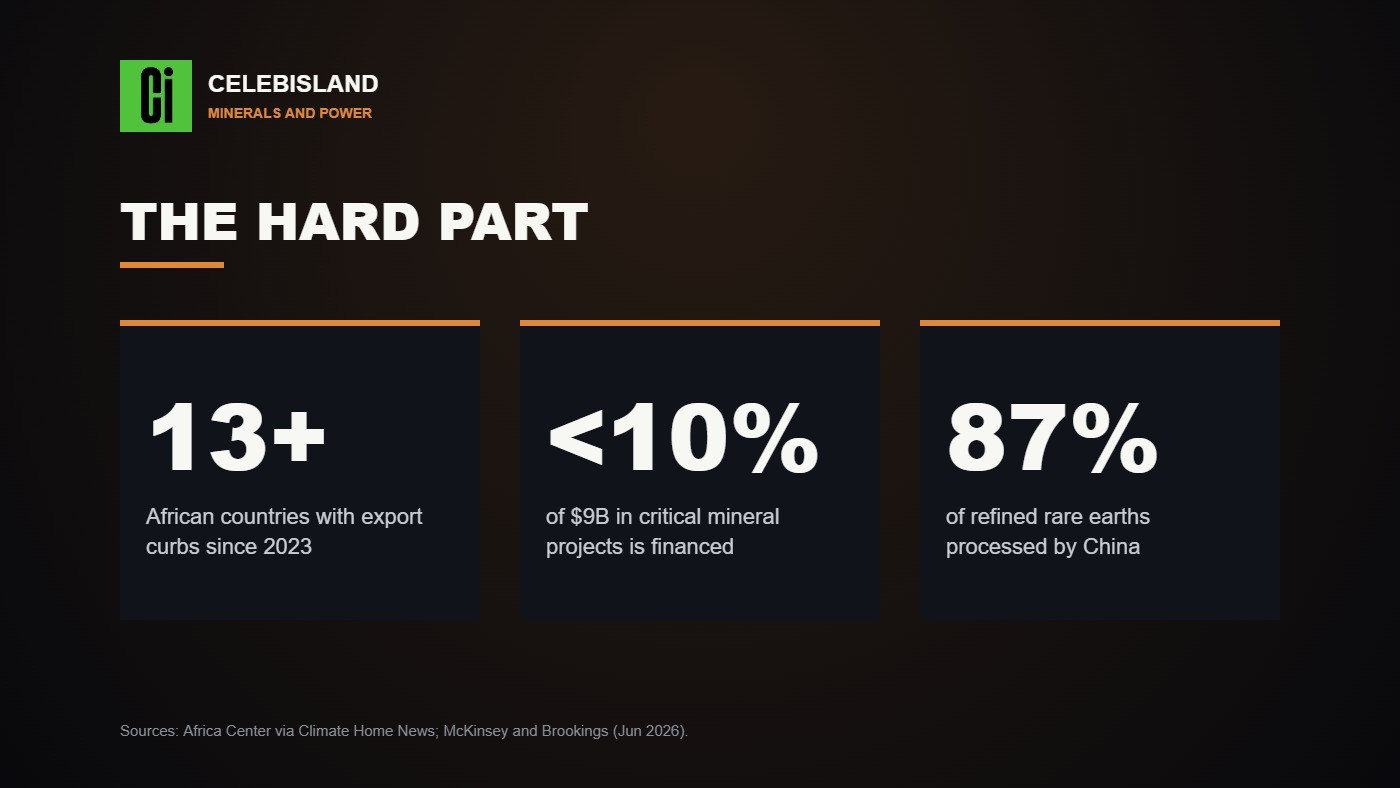
The reason is simple. Mining is the cheap, low-margin first step. Refining, processing and manufacturing are where the money is made, and those steps have mostly happened in Asia. McKinsey and Brookings note that China processes about 87 percent of the world's refined rare earths.
What a billion dollars can do at home
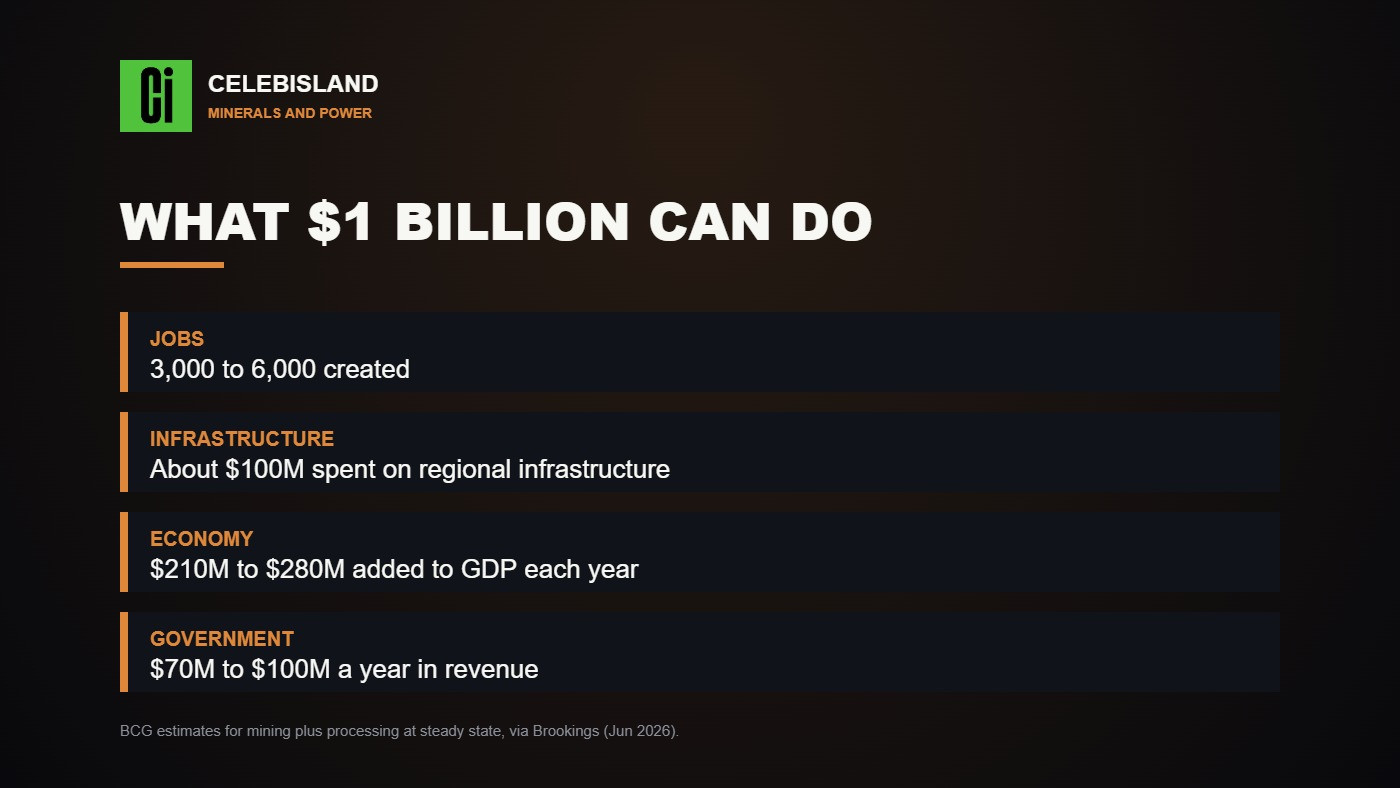
BCG estimates, cited by Brookings, show why governments want processing on their own soil. For every $1 billion invested in mining plus processing at steady state, they estimate 3,000 to 6,000 jobs, about $100 million spent on regional infrastructure, $210 million to $280 million added to GDP each year, and $70 million to $100 million a year in government revenue.
Those are estimates, not guarantees. But they explain the political appetite. A tonne of raw concentrate leaves once. A refinery keeps paying wages, taxes and suppliers year after year.
Zimbabwe moves first, and loudly
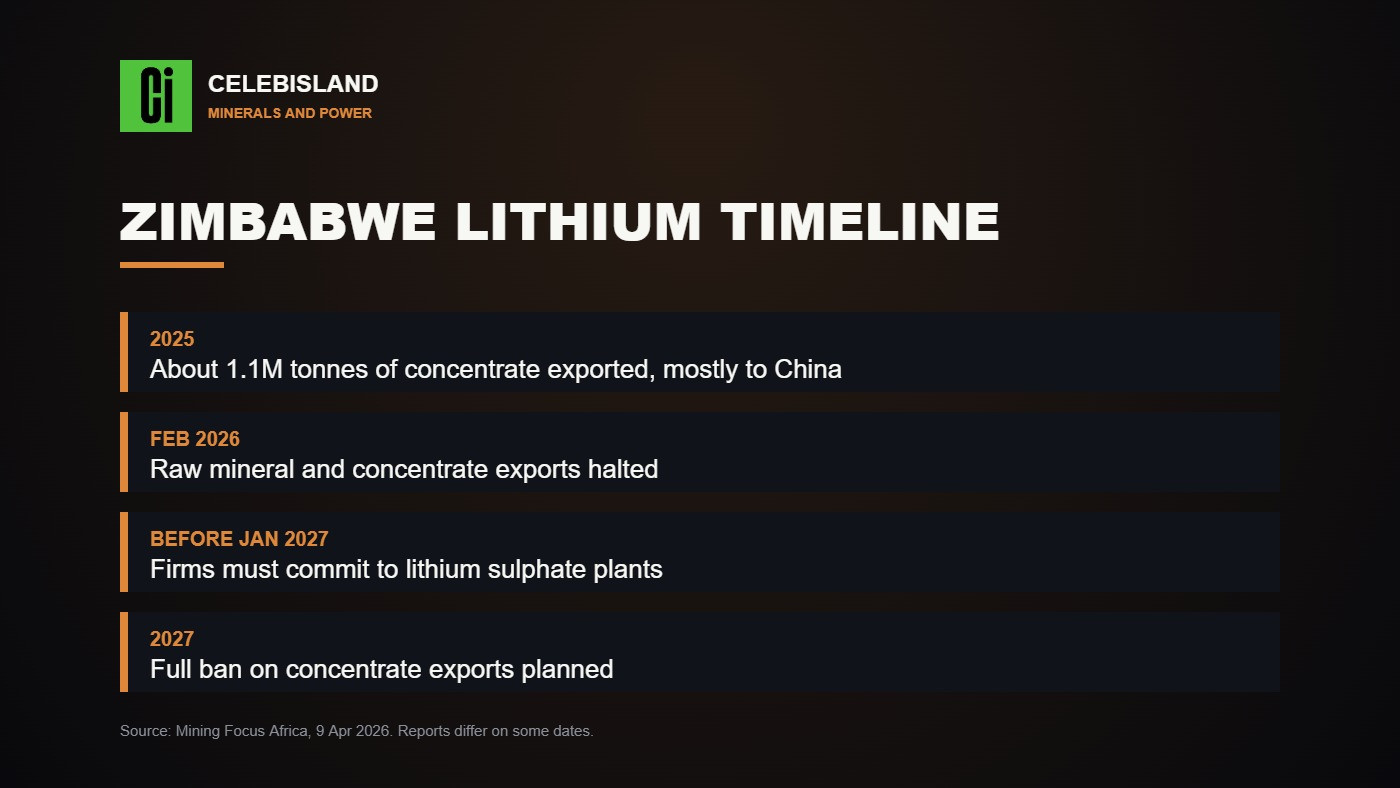
Zimbabwe is the clearest test case. Mining Focus Africa reported on 9 April 2026 that the country exported about 1.1 million tonnes of lithium concentrate in 2025, mostly to China. In February 2026 it halted exports of raw minerals and concentrate. Firms were told to commit to lithium sulphate plants before January 2027, with a full ban on concentrate exports planned for 2027. Reports differ on some of these dates, so watch the official notices rather than the headlines.
The hard part nobody puts on a poster
Export bans are easy to announce and hard to make work. The Africa Center counts more than 13 African countries that have introduced export curbs since 2023. But refineries need reliable power, water, skilled technicians and patient money. Brookings reports that fewer than 10 percent of about $9 billion in critical mineral projects is actually financed. A ban without a funded plant is just a closed door.
What this means for Africa
The deal changes only if three things arrive together: processing capacity, financing, and people who know how to run it. That makes this a talent story as much as a mining story. Metallurgists, chemical engineers, geologists, data analysts and plant managers are the scarce resource. A continent that trains and keeps them owns the next chapter. A continent that exports raw rock and imports finished batteries repeats the last one.
Where the diaspora fits
African engineers and finance professionals abroad already work inside the refineries, battery plants and mining houses that Africa now wants to build at home. They bring technical knowhow, supplier contacts and credibility with lenders. Mentoring, joint ventures, advisory seats and returning for a few years are all ways to move the value chain closer to its source.
Your turn
Should African governments ban raw mineral exports even if it slows revenue in the short term? Tell us in the comments, and share this with someone who works in mining, energy or engineering.
Sources: IMF via Climate Home News (March 2026); Brookings and Signe (4 June 2026); BCG estimates via Brookings (June 2026); Mining Focus Africa (9 April 2026); Africa Center via Climate Home News; McKinsey and Brookings (June 2026). Figures are reported estimates and may be revised.