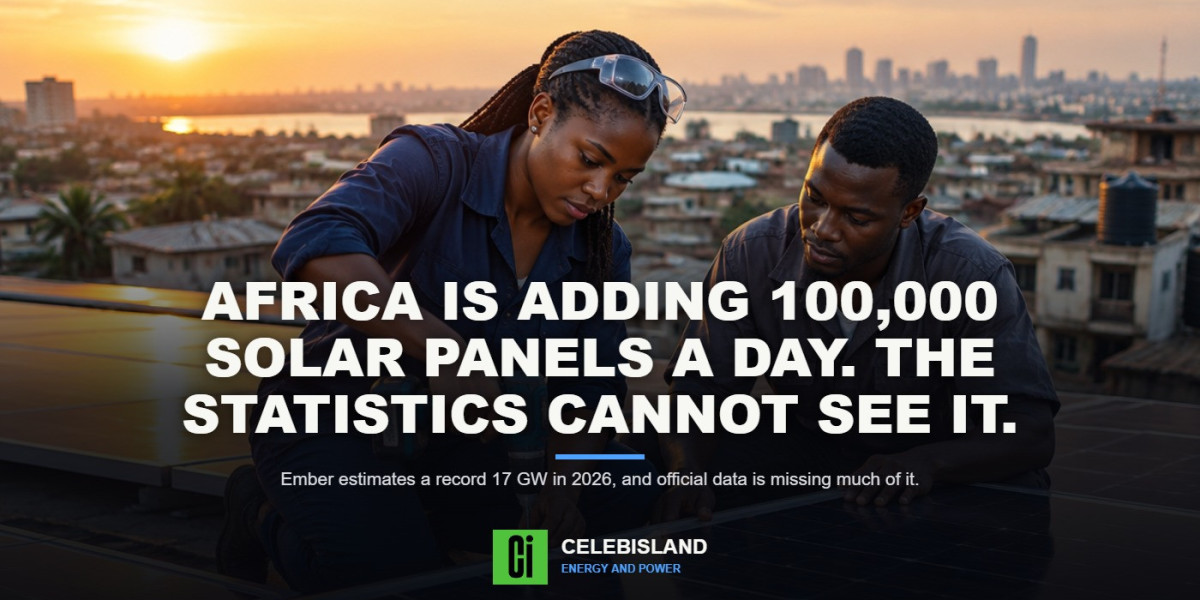
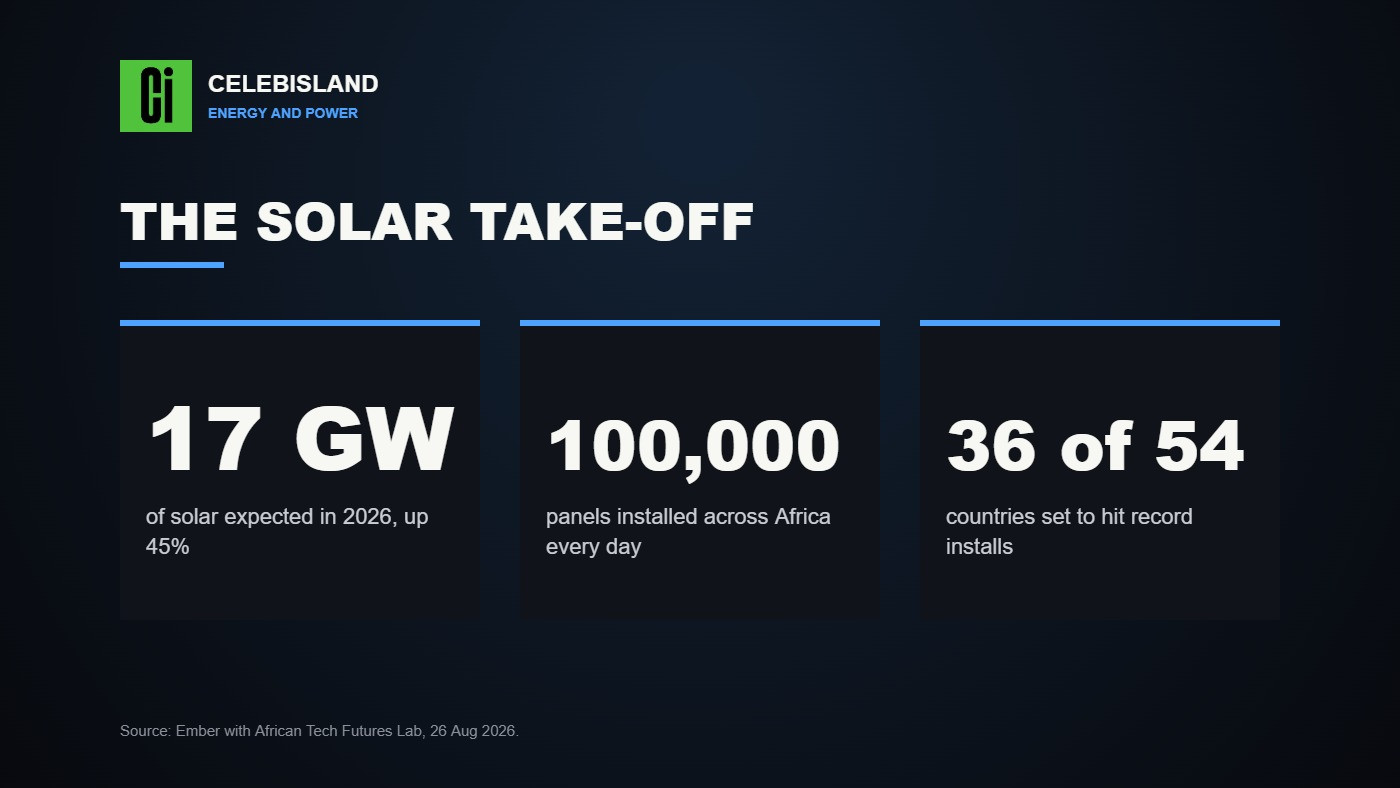
Every day in 2026, about 100,000 solar panels are going up across Africa. Ember estimates the continent will install a record 17 GW this year, up 45 percent on 2025. The official statistics are struggling to keep up.
The numbers behind the take-off
Ember, working with the African Tech Futures Lab, published the estimates on 26 August 2026. Installations rose 25 percent in 2024 and 51 percent in 2025, and Ember expects a further 45 percent in 2026, about 47 MW every day. Thirty-six of Africa's 54 countries are on course for record years, and 19 are growing by more than 100 percent, including the DRC (up 544 percent), Zimbabwe (282), Egypt (176) and Zambia (117).
Who is installing
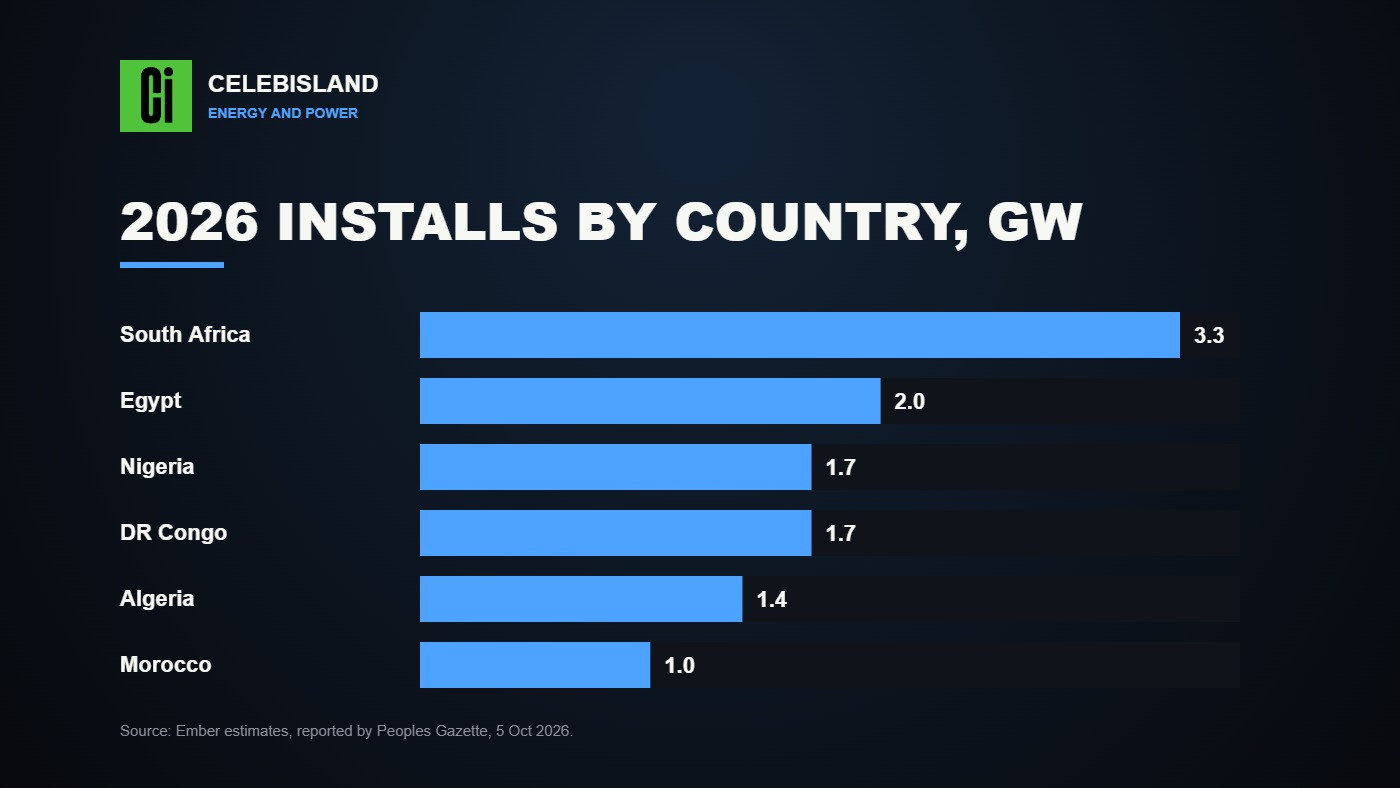
South Africa is still the biggest single market at a projected 3.3 GW, but its share of African installations is expected to fall below 20 percent, the first time since 2019. Egypt (2.0 GW), Nigeria (1.7 GW), the DRC (1.7 GW), Algeria (1.4 GW) and Morocco (1.0 GW) are surging. Peoples Gazette reported on 5 October that Nigeria's number reflects a shift from emergency generators to solar and battery systems, according to Kowatek Solar.
The statistics cannot see it
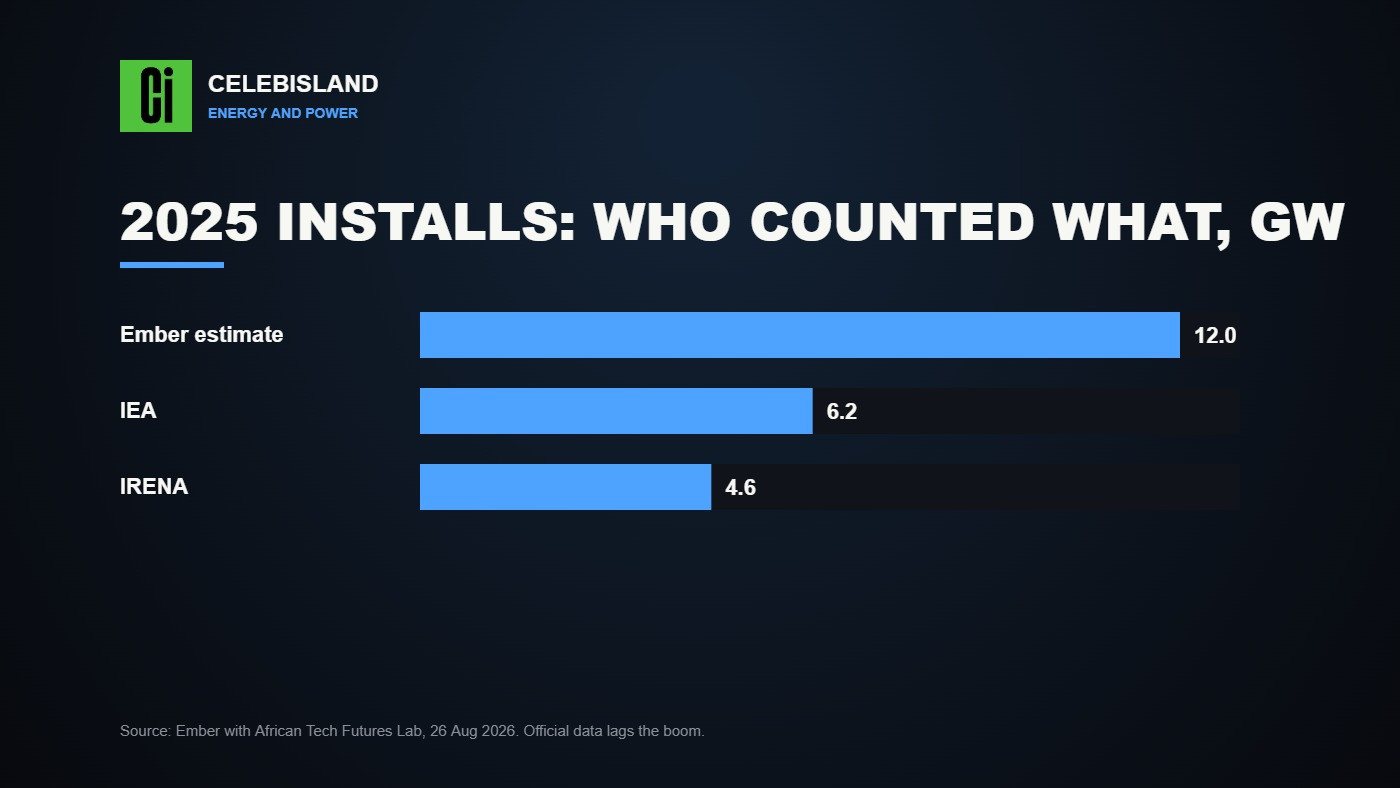
For 2025, Ember estimates 12.0 GW was installed. The IEA's figure is 6.2 GW and IRENA's is 4.6 GW. Ember says official solar capacity data exists for 36 of 54 countries, only 14 of which cover 2025, and just 12 countries publish any figure for distributed solar. Much of the boom is rooftop and commercial systems that never pass through a utility: Ember estimates that 20 GW of the 26 GW installed between 2023 and 2025 was distributed solar.
The hard part
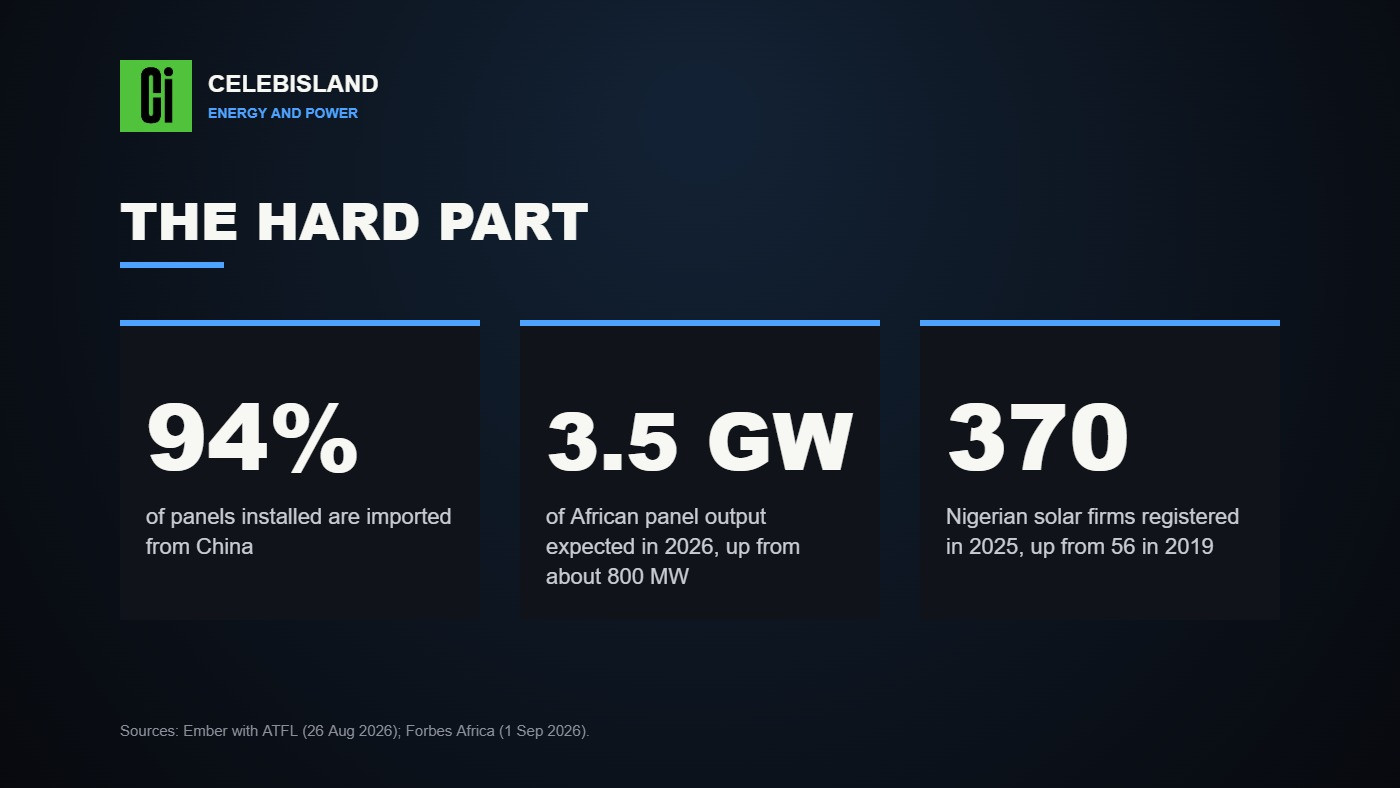
About 94 percent of the panels installed in Africa are still imported from China, according to Ember's report as covered by Forbes Africa on 1 September. African panel output is expected to reach about 3.5 GW in 2026, up from roughly 800 MW in 2025, led by Egypt and Tanzania. Ember's report also notes that 370 solar companies registered in Nigeria in 2025, against 56 in 2019, while the country's manufacturing capacity is about 300 MW, per its rural electrification agency. Since 2024, Africa has imported more dollars of batteries than solar panels from China.
What this means for Africa
Solar is turning households, shops, clinics and factories into power producers faster than any national plan on paper. Ember says the solar added between 2023 and 2026 equals almost 80 percent of Senegal's 2023 grid capacity. But owning the panels is not the same as owning the value chain. The jobs and margins in manufacturing, financing, installation and maintenance go to whoever builds the skills and the factories. Better data matters too: a country that cannot see its own energy cannot plan, price or finance it.
Where the diaspora fits
African engineers, installers and financiers abroad can bring battery, inverter and project-finance expertise, help local firms meet lender standards, and back the factories and training schools that keep more of the value at home. Mentoring a solar start-up or joining its advisory board is a practical place to begin.
Your turn
Should African governments push local panel and battery manufacturing now, even if it makes solar costlier at first? Tell us in the comments, and share this with someone in energy or engineering.
Sources: Ember with the African Tech Futures Lab, 26 August 2026; Forbes Africa, 1 September 2026; Peoples Gazette, 5 October 2026. Figures are estimates and may be revised.