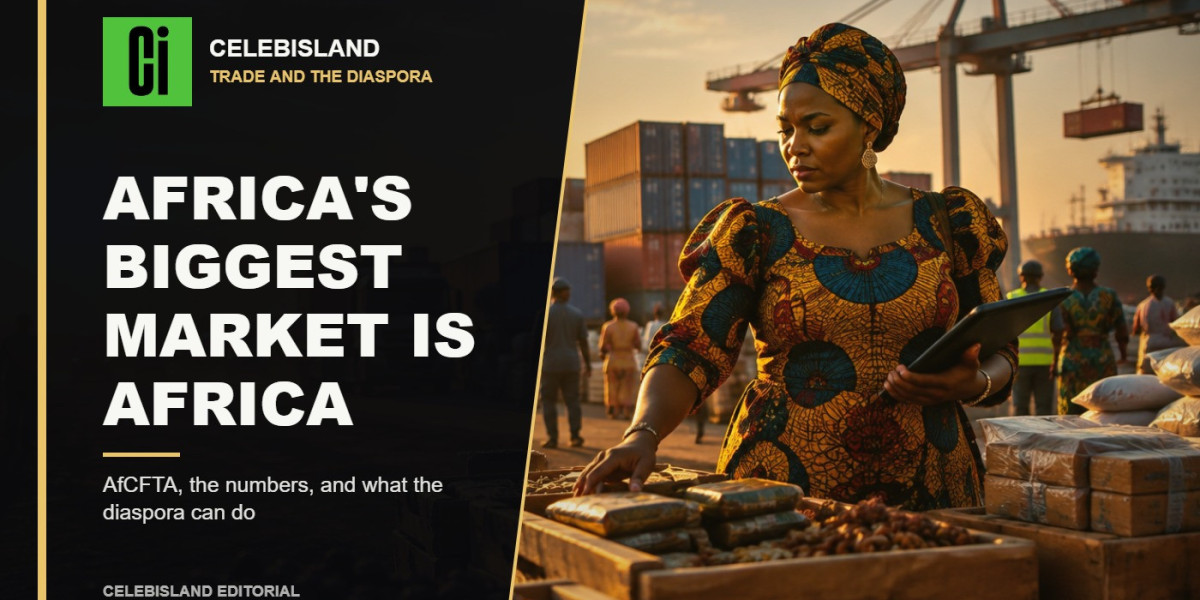
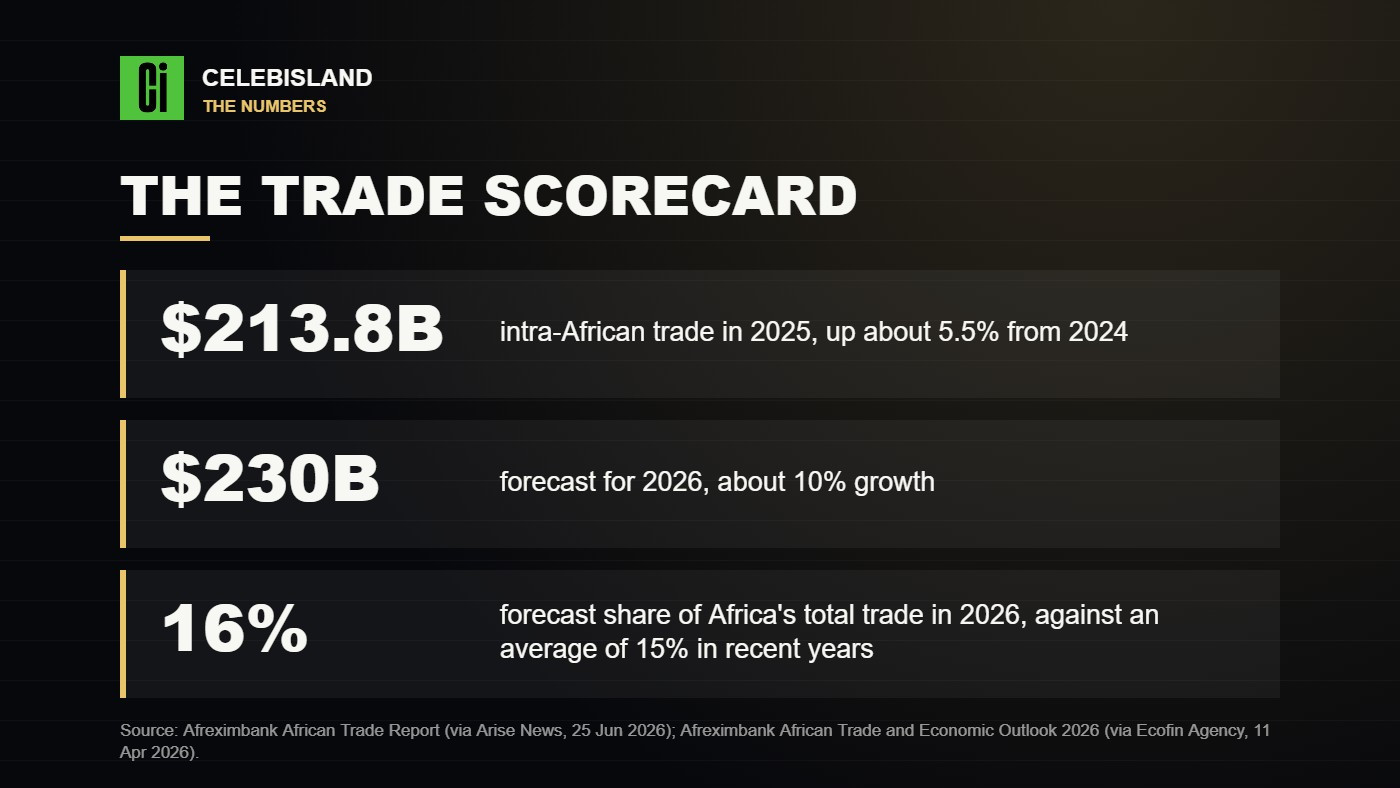
Kings and queens, here is a number worth sitting with. In 2025, African countries traded $213.8 billion among themselves, up about 5.5% from $202.7 billion the year before, according to Afreximbank's latest trade report. Afreximbank put the $11.1 billion rise down to stronger activity in Ethiopia, Uganda, the DRC and Zambia.
The scoreboard
Afreximbank's African Trade and Economic Outlook 2026 expects intra-African trade to grow 10% this year, to about $230 billion, lifting its share of Africa's total trade to 16% from an average of 15% in recent years. It also expects manufacturing and agri-food to make up 48% to 50% of those flows, up from 46% in 2025. Behind the forecast sits the African Continental Free Trade Area (AfCFTA), and the bank expects the Pan-African Payment and Settlement System to cut foreign exchange costs by 20% to 30%.
Hold that against the wider picture. The UN Economic Commission for Africa says Africa's share of global merchandise trade fell from about 5% in 1994 to 2.8% in 2025. Afreximbank says African exports are about $433.8 billion below their potential, and that a trade finance gap of about $100 billion a year stands in the way. The growth is real. So is the distance still to travel.
What the deal could unlock
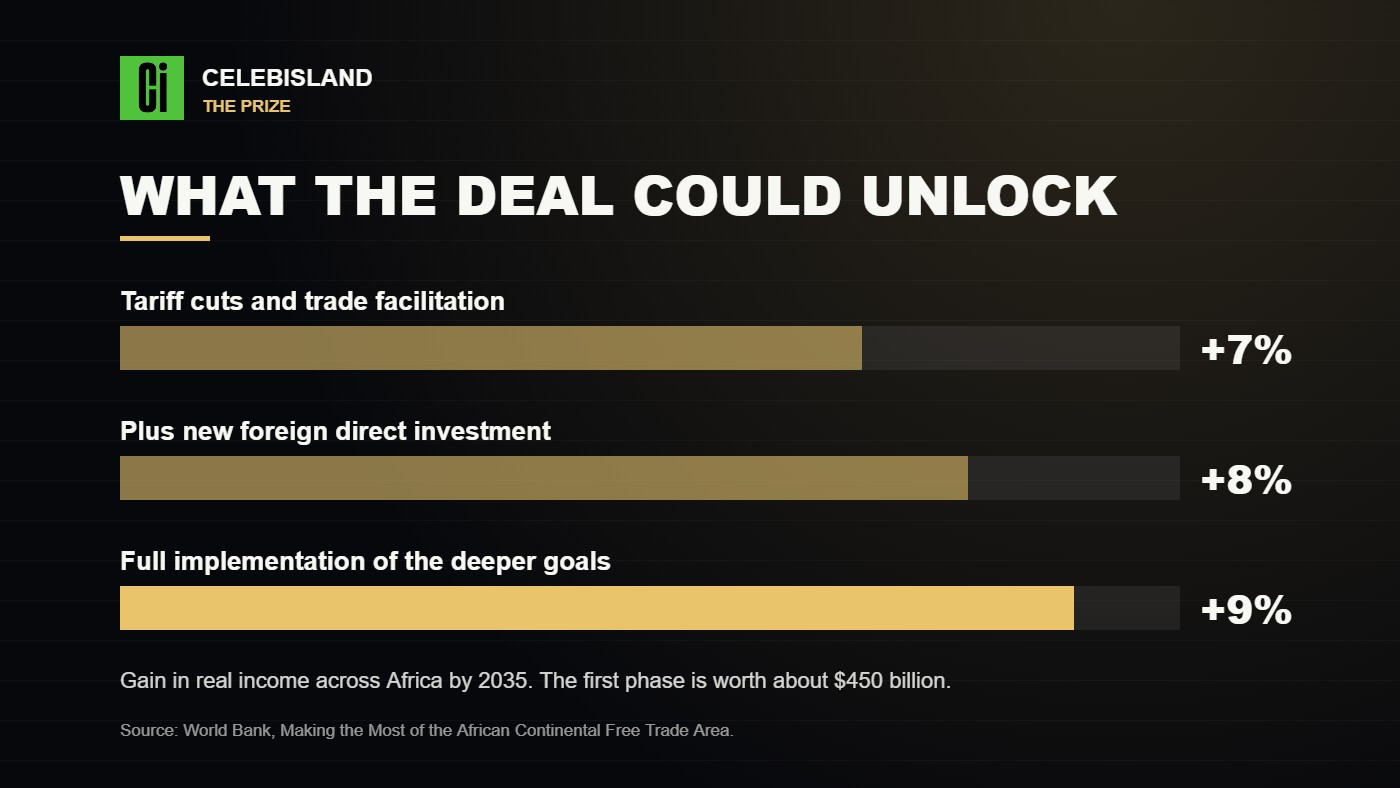
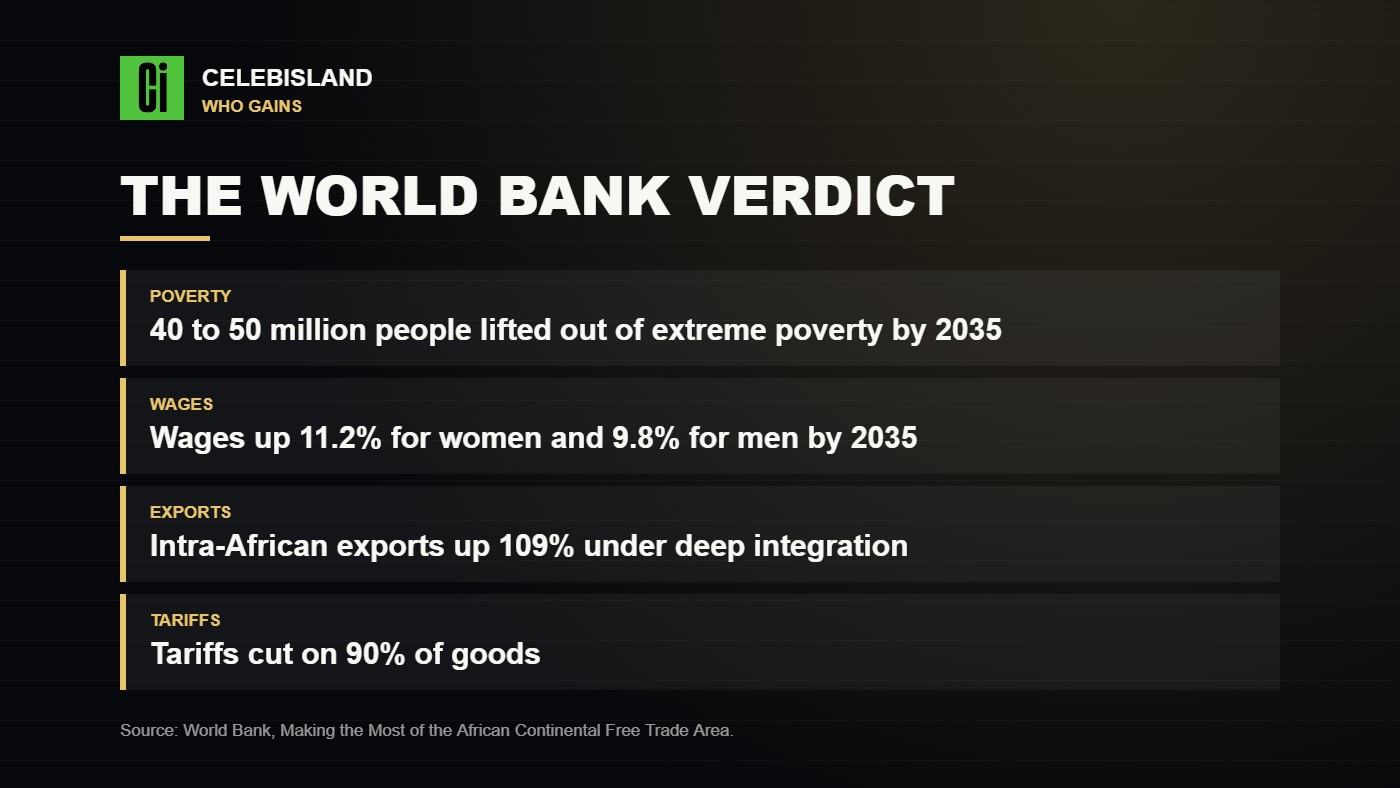
The World Bank's study of the AfCFTA is the clearest map of the prize. It finds that real income across Africa could rise about 7% by 2035, roughly $450 billion, in the first phase of tariff cuts. Add foreign direct investment and the gain reaches about 8%. With full implementation of the deeper goals, it reaches about 9%. Extreme poverty would fall by 40 million people in the first phase and by up to 50 million in the fullest version.
The gains are not abstract. The same study projects wages rising 11.2% for women and 9.8% for men by 2035, and intra-African exports rising 109% under deep integration, led by manufactured goods. That is the part of the deal that builds factories, not just freight.
What this means for Africa
The lesson in the numbers is that the agreement only pays if it is used. Tariff cuts on 90% of goods mean little if a trader still waits days at a border, cannot get trade finance, or loses a slice of every payment to currency conversion. The fixes the data points to are cheaper payments, finance for traders, and manufacturing that gives African buyers something worth buying from African sellers. A market of this size rewards the countries that make things, not only the ones that move them.
The diaspora dividend
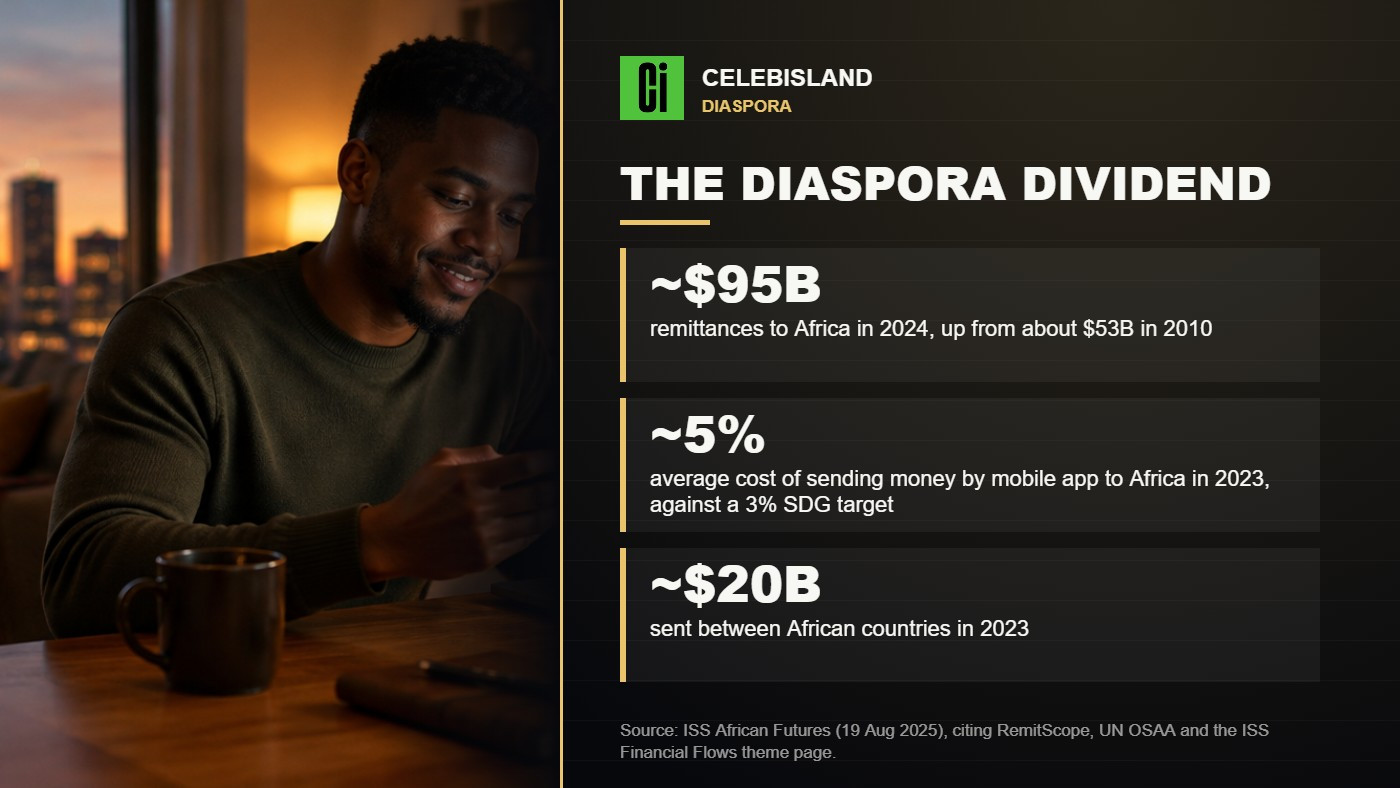
This is where the diaspora matters most. According to ISS African Futures, remittances to Africa rose from about $53 billion in 2010 to about $95 billion in 2024, and from 3.6% to 5.1% of the continent's GDP. By our calculation, that $95 billion equals roughly 44% of the $213.8 billion Africans traded among themselves in 2025, although the two figures measure different things and should not be added together. The same ISS article reports that sending money by mobile app to Africa cost about 5% on average in 2023, against a global target of 3% by 2030, and that about $20 billion moved between African countries in 2023.
Every point shaved off that cost stays in a family's pocket. Beyond sending money, there is buying: diaspora members who order from African makers, back African startups and bring skills home turn remittances from support into capital.
Your turn
Poll: what would do the most for African trade in the next five years? Cheaper cross-border payments, finance for small traders, or more African-made goods on shelves? Answer in the comments, and repost this for someone who trades, builds or sends money home.
Sources: Afreximbank African Trade Report (via Arise News, 25 June 2026); Afreximbank African Trade and Economic Outlook 2026 (via Ecofin Agency, 11 April 2026); UN Economic Commission for Africa, March 2026 (via Capmad); World Bank, Making the Most of the African Continental Free Trade Area; ISS African Futures, 19 August 2025. Figures are as reported by those sources. The 44% comparison is our calculation.