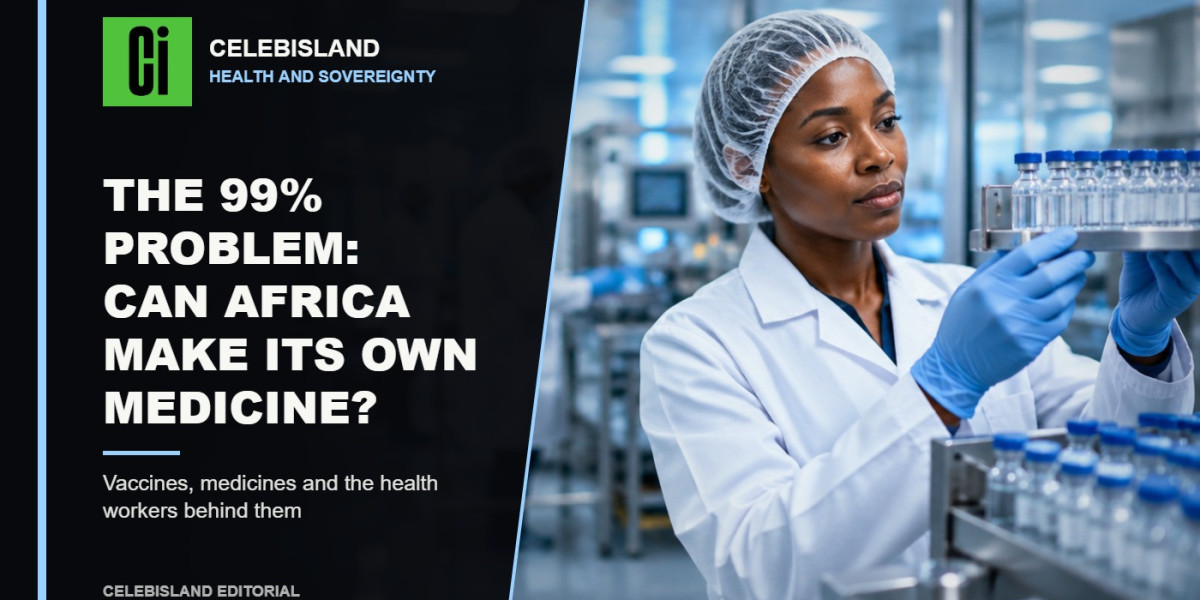
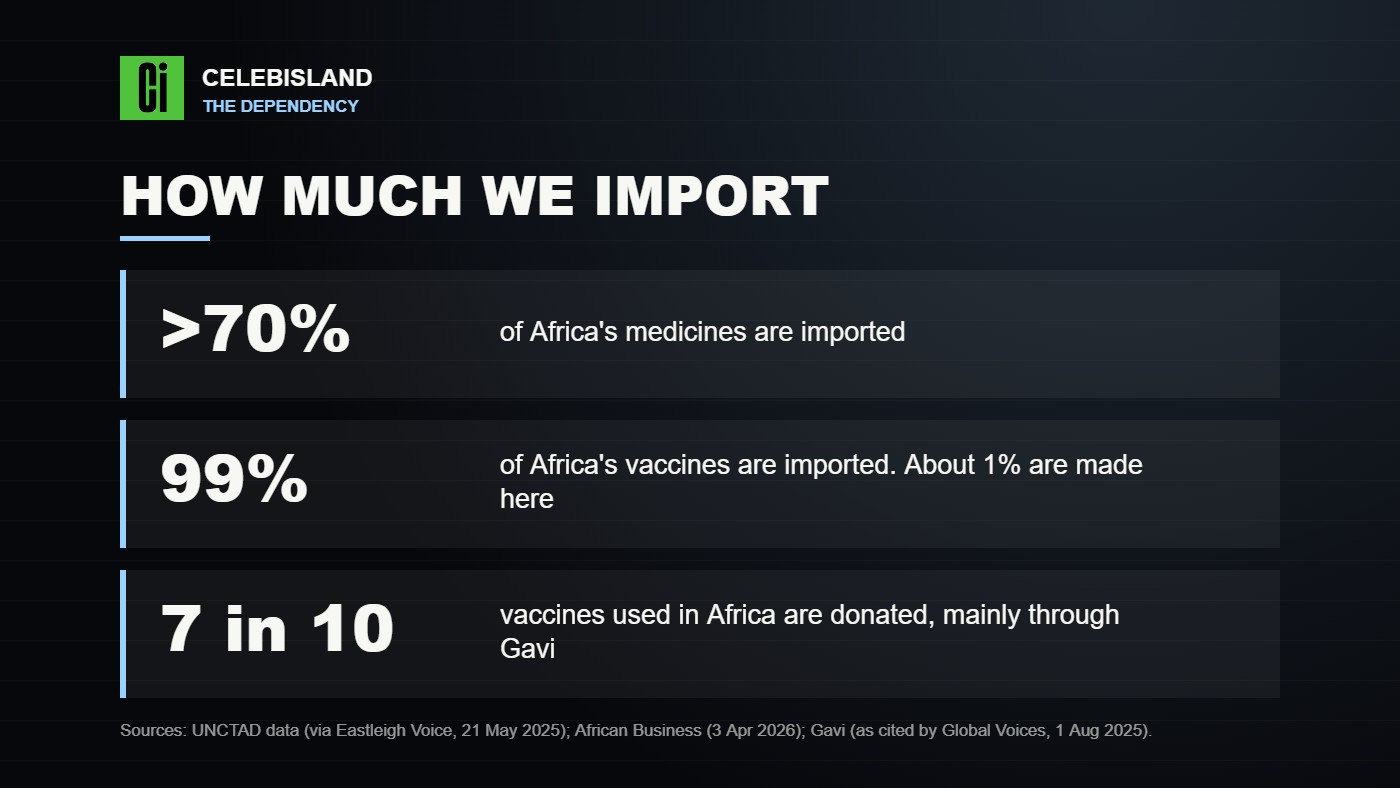
Kings and queens, one number should stop us in our tracks: about 99% of the vaccines Africa uses are imported, and only around 1% are made on the continent, according to African Business and Global Voices. More than 70% of its medicines come from abroad too, according to UN Trade and Development (UNCTAD) data reported by The Eastleigh Voice.
The dependency
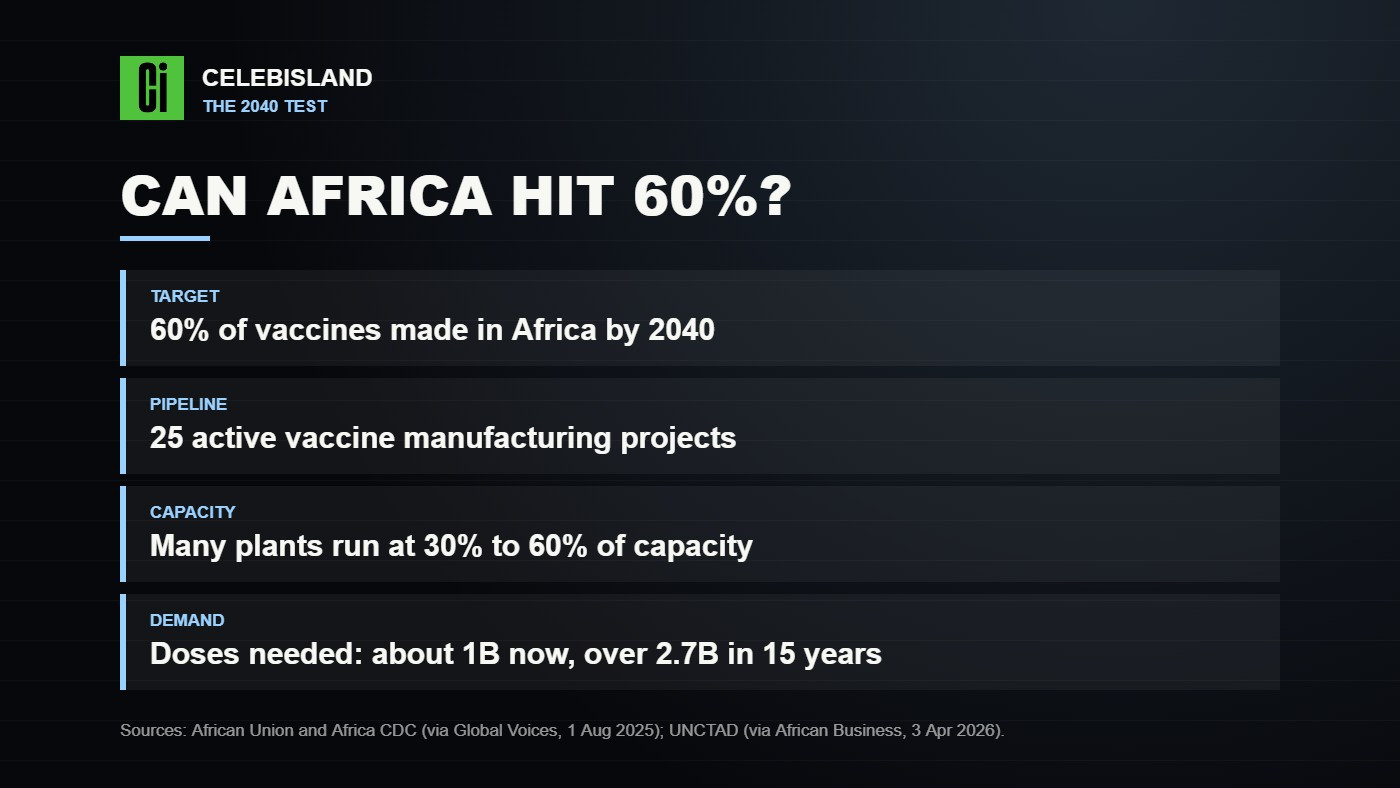
The African Union and Africa CDC have set a target of producing at least 60% of the vaccines, diagnostics and therapeutics Africa needs on the continent by 2040. Gavi, whose donations make up about 7 in 10 of the vaccines used in Africa according to Global Voices, has pledged support in principle. The ambition is clear. The distance is the story.
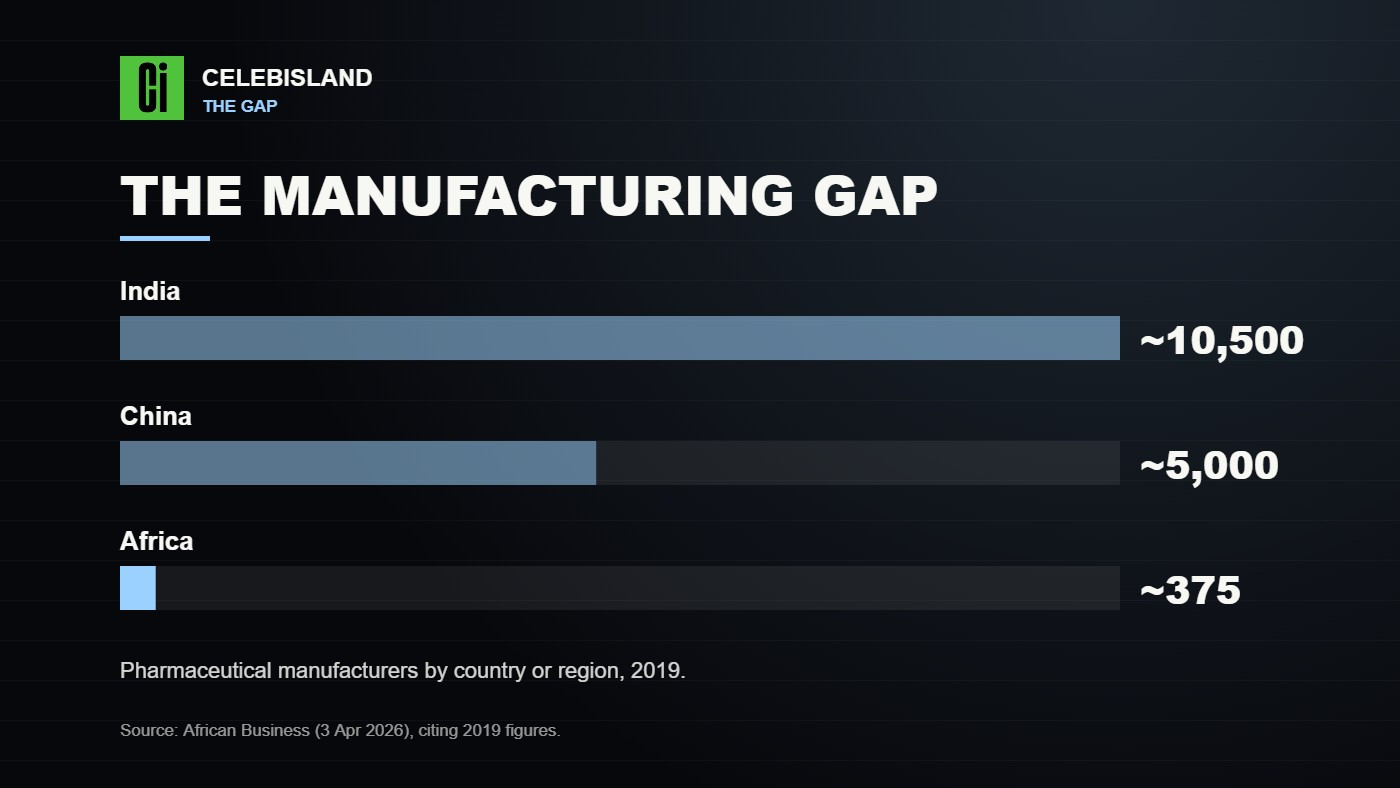
Start with how few hands make medicine here. African Business, citing 2019 figures, counts about 375 pharmaceutical manufacturers in Africa, against about 5,000 in China and about 10,500 in India. By our calculation, India had roughly 28 times as many as Africa. UNCTAD adds that many African plants run at 30% to 60% of capacity, against more than 70% in developed economies, and that eight countries, half of them in North Africa, hold 85% of the continent's 690 pharmaceutical facilities.
The pipeline
There is movement. An Africa CDC mapping study found 25 active vaccine manufacturing projects: five at commercial scale with technology transfers signed or underway, five at commercial scale without one, and 15 in early development. Africa CDC expects three African manufacturers to win WHO prequalification for nine vaccines within five years. African Business points to BioNTech's modular mRNA lab in Kigali, which opened in 2022, and a Sanofi and Marbio partnership for a new plant in Casablanca. Critics, among them Dr Adrian Ddungu Kivumbi, have called a 15-year timeline too long. Is 2040 an ambition or a delay?
The demand curve
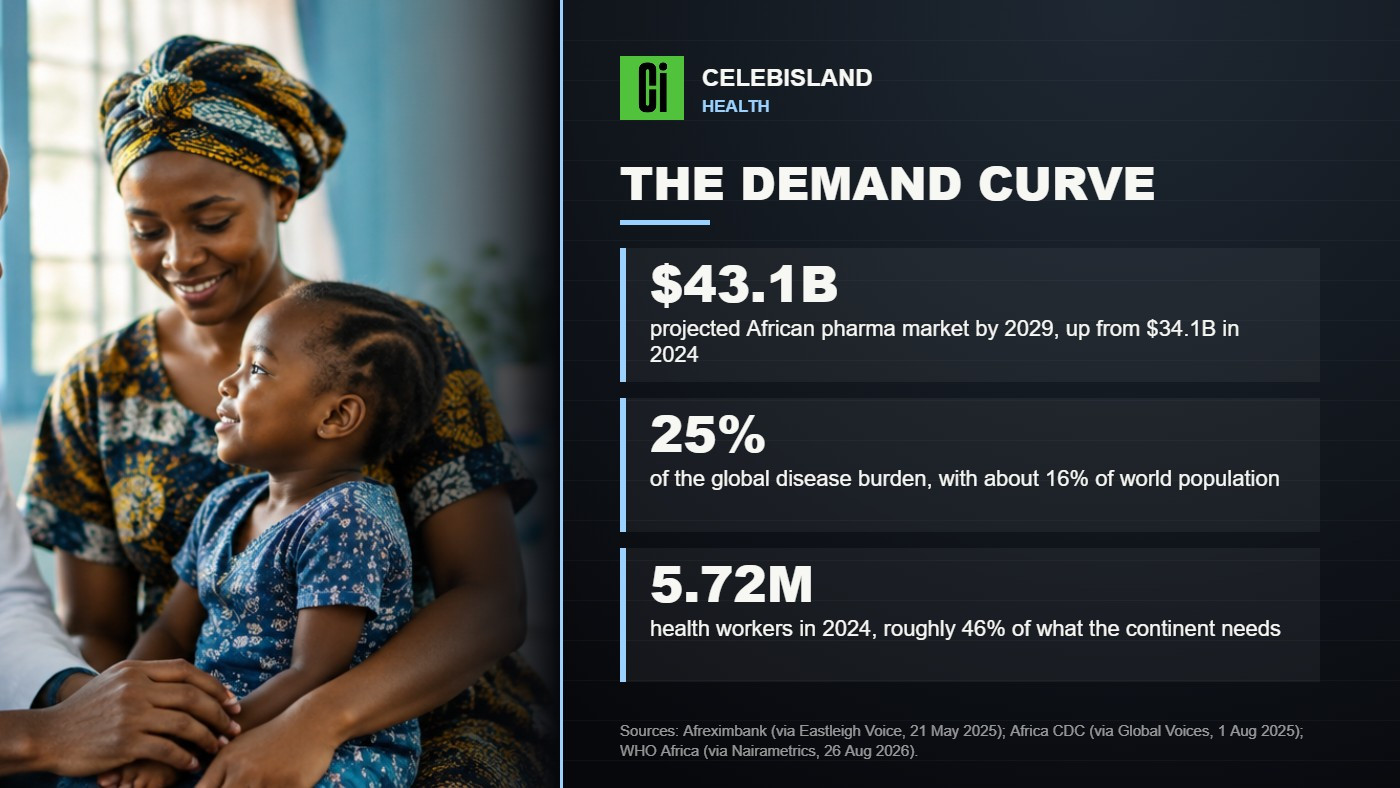
The market will not wait. Afreximbank projects African pharmaceutical sales rising from $34.1 billion in 2024 to $43.1 billion by 2029, a 26% increase. Africa CDC says the continent holds about 16% of the world's population and 25% of the global disease burden. Natasha Kofoworola Quist of VaxSen expects the vaccine doses demanded to rise from about 1 billion today to more than 2.7 billion within 15 years.
What this means for Africa
Making our own medicine is a question of health security as much as industry. A plant that runs at half capacity, a pipeline without technology transfer, and a market that still imports most of what it uses are three different problems with one cause: scale. African Business lists the African Medicines Agency, the African Pooled Procurement Mechanism and the Platform for Harmonised African Health Products Manufacturing among the initiatives built to supply it. Who buys African-made vaccines first will help decide how fast the factories fill.
The diaspora
Factories need people. WHO's Africa office says the region had about 5.72 million health workers in 2024, roughly 46% of what it needs, and could face a shortage of more than 6 million by 2035 without action. Nigeria's Health Minister Muhammad Ali Pate has said the country lost an estimated 15,000 to 16,000 doctors to brain drain in the five years before 2024. The diaspora is not only a loss on that ledger. It holds clinicians, pharmacists, scientists and investors. What would bring them into African health: better pay, research funding or the chance to build a lab at home?
Your turn
Poll: what would speed up African-made medicine most? Factory finance, faster regulatory approval or buyers who commit early? Answer in the comments, and repost this for a doctor, pharmacist or founder who is building at home.
Sources: African Business, 3 April 2026; Global Voices, 1 August 2025; The Eastleigh Voice, 21 May 2025 (UNCTAD and Afreximbank data); Nairametrics, 26 August 2026 (WHO Regional Office for Africa statement). Figures are as reported by those sources. The 28 times comparison is our calculation.