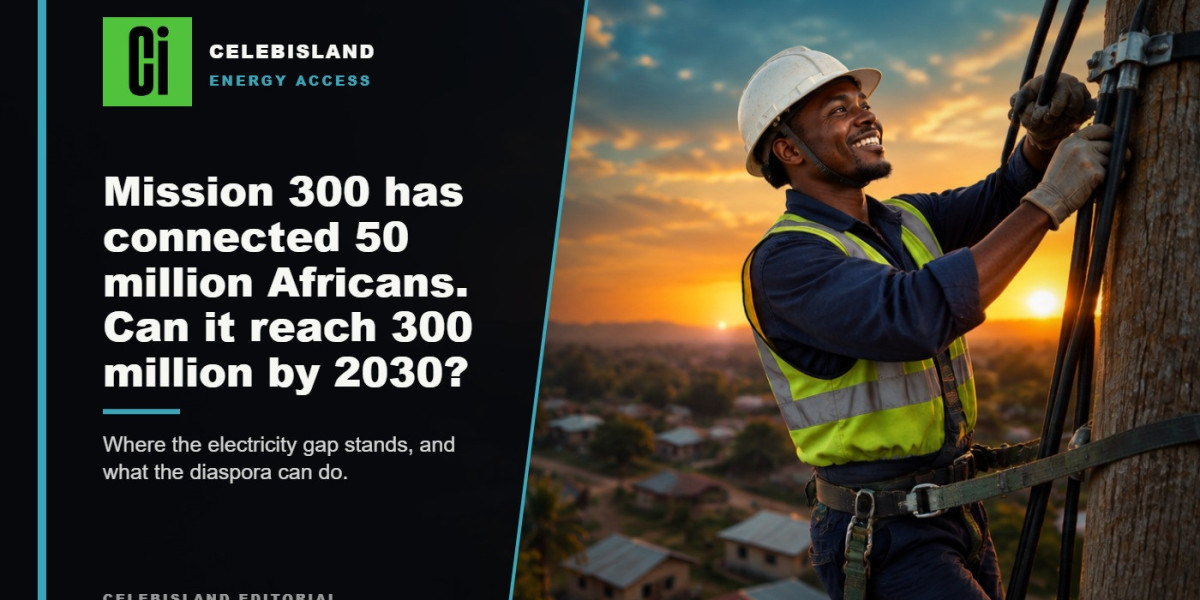
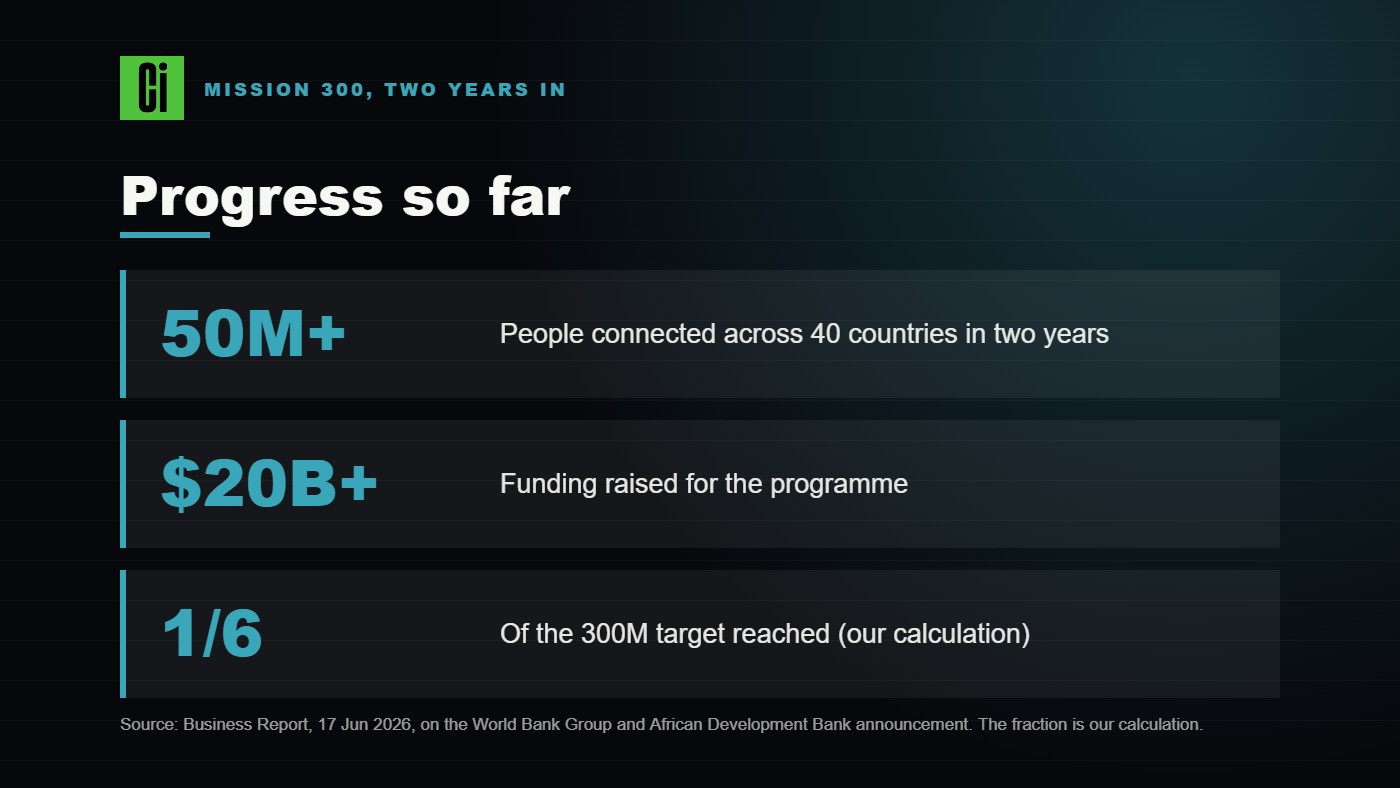
Kings and queens, two years in, the World Bank Group and the African Development Bank say Mission 300 has connected over 50 million people to electricity across 40 countries and raised over $20 billion in funding, per Business Report (17 June 2026). The target is 300 million people by 2030. One sixth of the way there is real progress, and it is also a measure of how far the road still runs (our calculation).
The gap Mission 300 is chasing
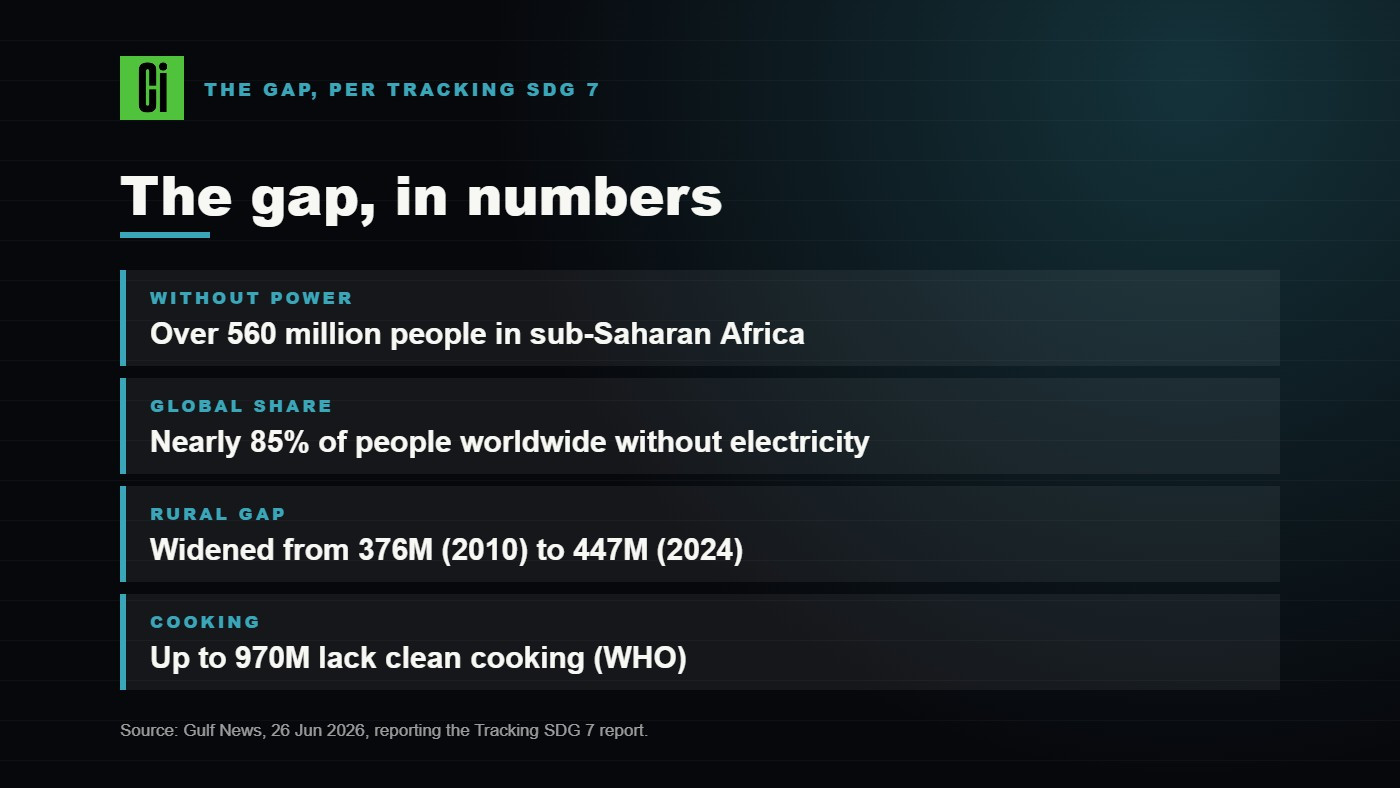
The latest Tracking SDG 7 report, as reported by Gulf News (26 June 2026), puts the number of people in sub-Saharan Africa living without electricity at over 560 million, and says nearly 85% of the world's people without power live in the region. The rural gap widened from 376 million people in 2010 to 447 million in 2024. Other outlets quote slightly different baselines: Business Report says close to 600 million as of 2024, so the exact starting line depends on the source and the year.
How fast is fast enough?
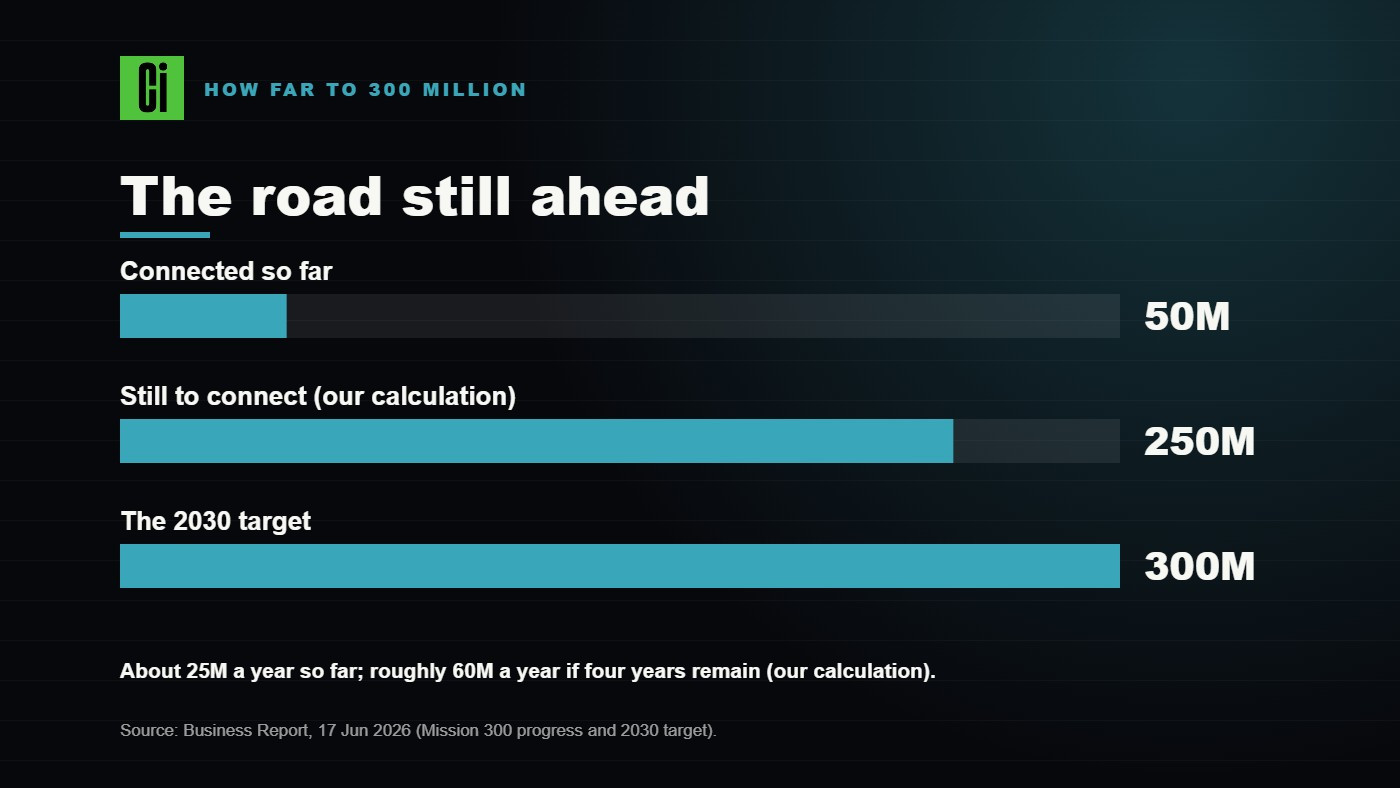
Mission 300 aims to connect 300 million people and raise $500 billion for electrification by 2030, per Business Report. After two years, 50 million are connected, about 25 million a year (our calculation). Reaching 300 million means connecting another 250 million. If four years remain, that is roughly 60 million a year, more than double the pace so far (our calculation). Engineering News, citing Bloomberg (5 March 2026), reports that the World Bank says more than $50 billion has been committed. Is money the constraint, or is it connections, grids and customers able to pay?
Where it is working
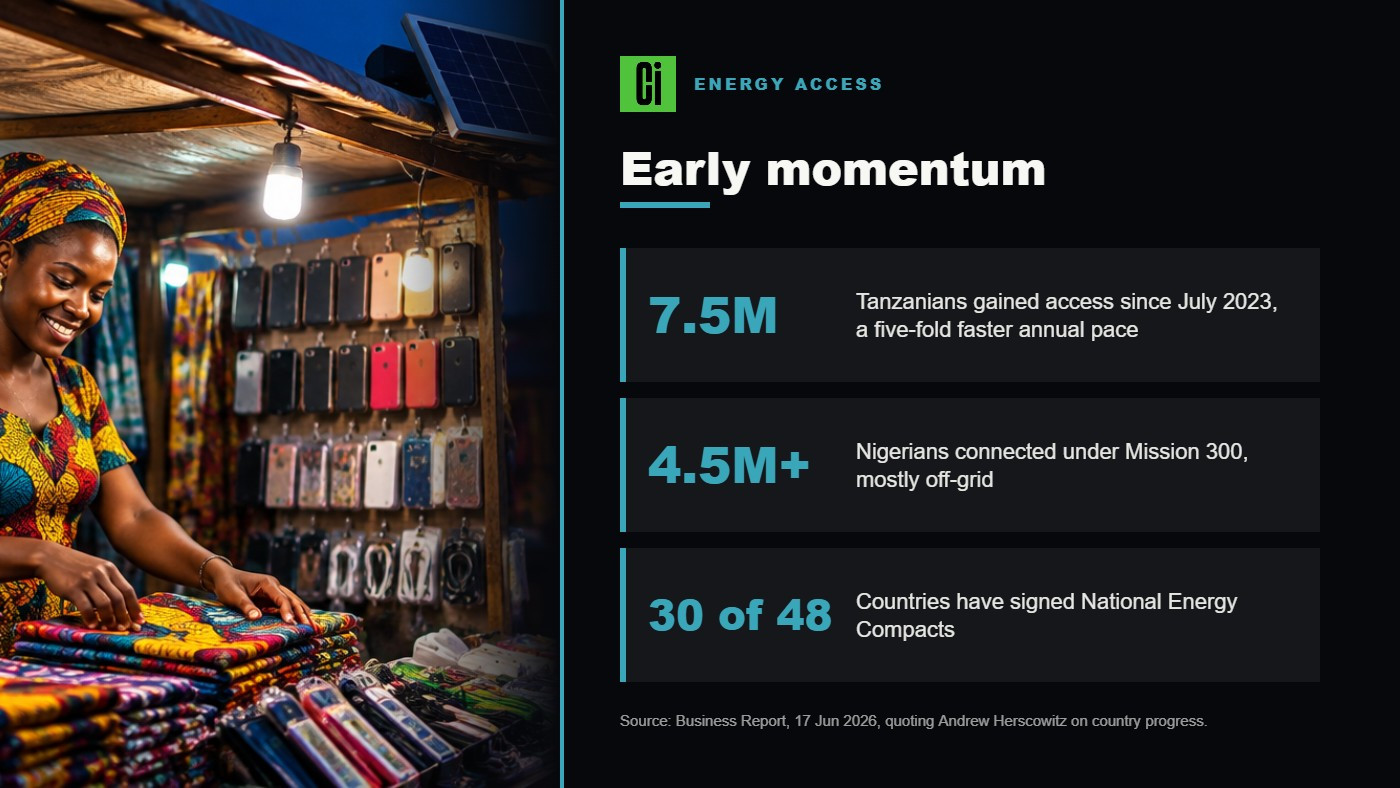
Business Report quotes Andrew Herscowitz on country progress. In Tanzania, 7.5 million people have gained access since July 2023, a five-fold increase in the average annual pace. In Nigeria, over 4.5 million people have been connected under Mission 300, mostly through off-grid solutions. Thirty of 48 countries have signed National Energy Compacts, with six more signed or signing at the Africa Energy Forum.
The kitchen is the other half of the story
Power is only part of energy access. The IEA, as reported by Mongabay, says around 15 million people in sub-Saharan Africa gained clean cooking access in 2025, about 35% above the previous five-year annual average (a preliminary estimate), yet more than 1 billion still lack it. Gulf News reports that up to 970 million lack clean cooking, per the WHO, and that household air pollution is responsible for some 3 million deaths a year in the region. The two figures differ by source, but both point the same way.
What this means for Africa
Electricity is the quiet precondition for everything else: the clinic with a working fridge, the shop with light after dark, the creator charging a camera. Whether Mission 300 closes the gap depends on connections reaching people who can afford to use them. Is the real test the number of people connected, or the number who stay connected and use power productively? The sources cited here report connections, not outcomes.
The diaspora angle
Could Africans abroad help close the gap, by funding off-grid solar for family or by backing the companies that finance it? Nigeria's connections under Mission 300 are mostly off-grid, per Business Report, which suggests small systems matter. Is there a trusted, transparent way for diaspora money to reach them?
Your turn
Poll: what would connect Africa fastest: more grid, more off-grid solar, cheaper connections or better financing? Answer in the comments, and repost this for someone working to bring power to a community.
Sources: Business Report (IOL), "World Bank and African Development Bank's Mission 300: Early milestone in electrification" (17 June 2026); Gulf News, coverage of the Tracking SDG 7 report (26 June 2026); Engineering News, citing Bloomberg (5 March 2026); Mongabay, citing the IEA on clean cooking (July 2026). Per-year pace and "one sixth" figures are our calculation.