A reader asked us a hard question: if Africans are the world's consumers, are we the new slaves of a new world order? Let us answer calmly, with documents instead of fear. Short answer: being a consumer is a position, not a destiny. Positions can be changed.
Here is what Africa's richest are doing with their money in 2026, where value leaks when we only consume, and where ownership is already working.
Where the money sits in 2026
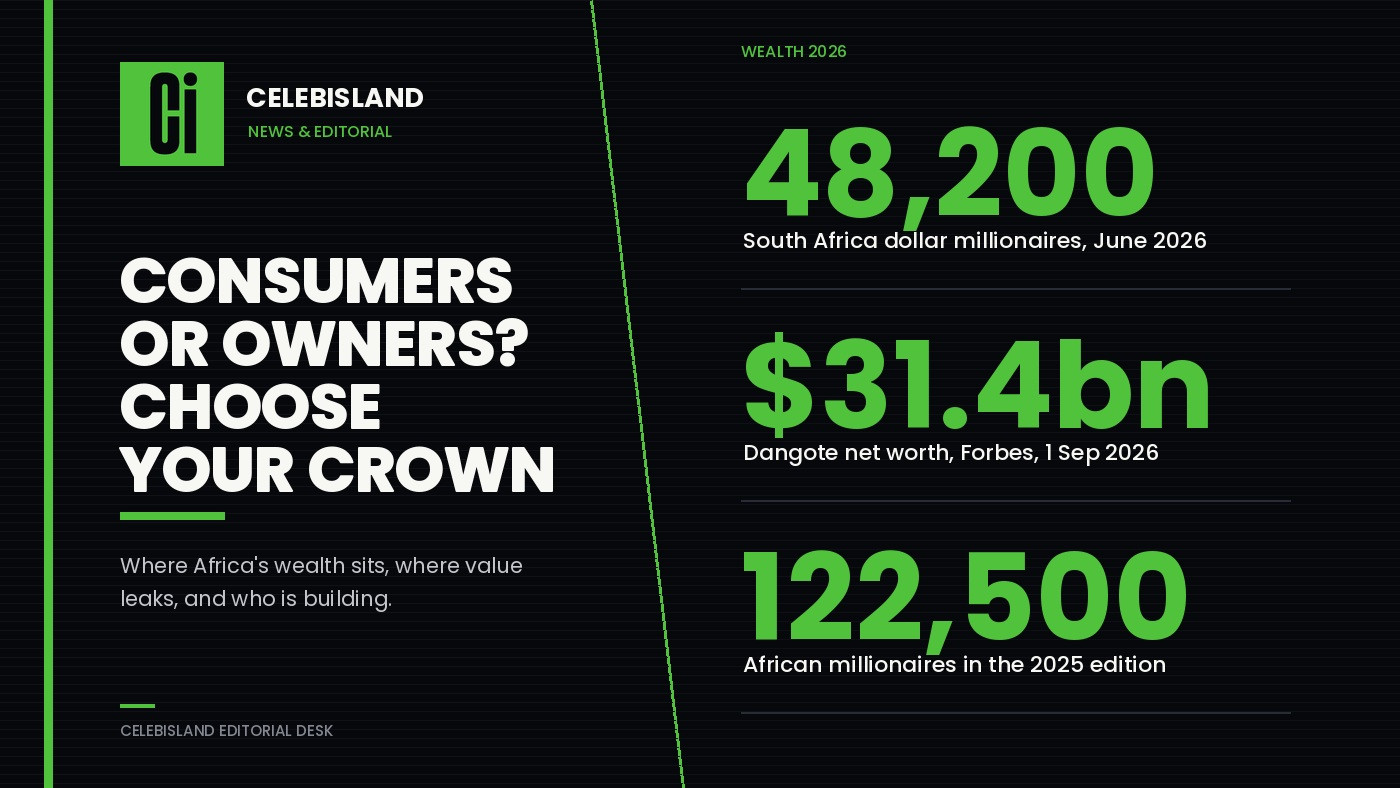
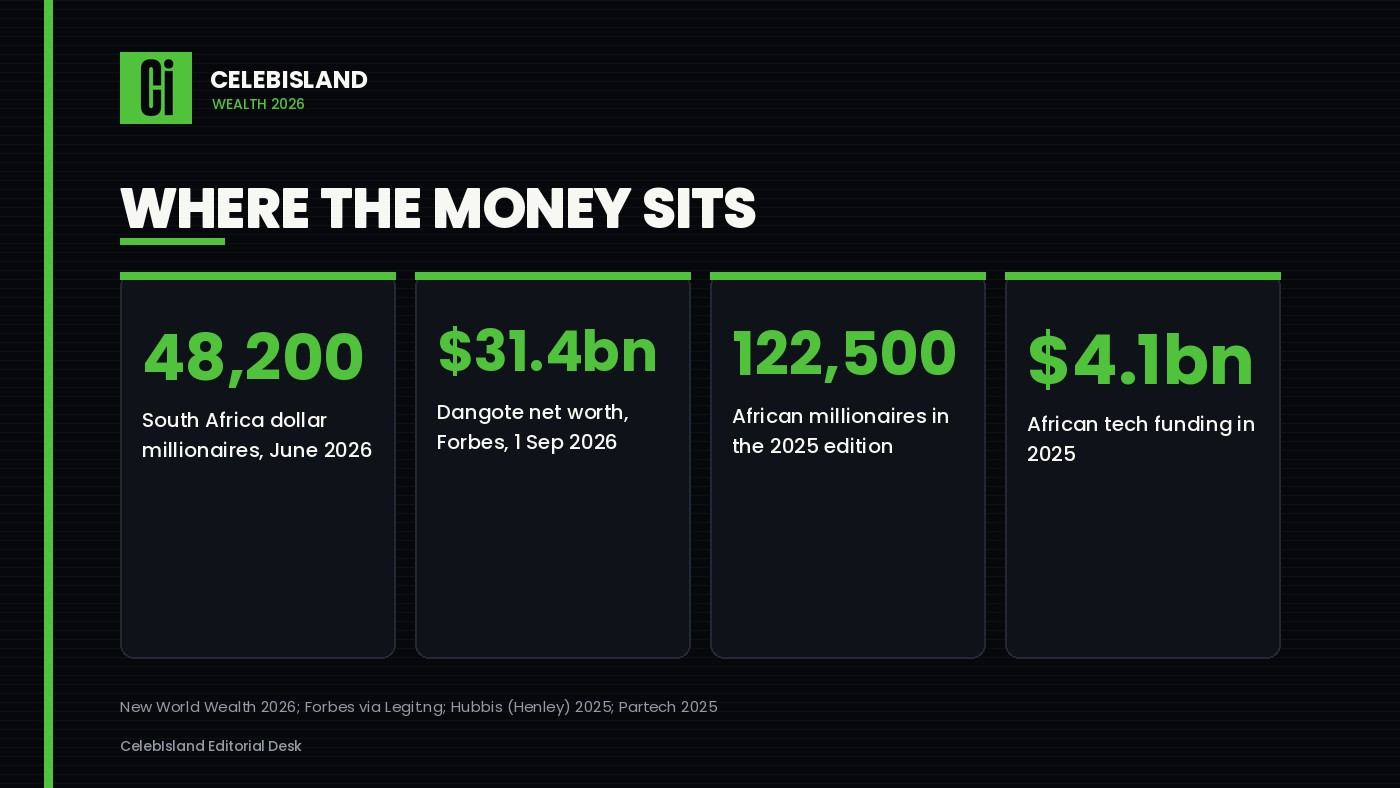
The Africa Wealth Report 2026 from New World Wealth (earlier editions were co-published with Henley & Partners) counts wealth as at 30 June 2026. South Africa has 48,200 dollar millionaires, about 38% of the continent's. The report expects fintech, entertainment, outsourcing, green tech, rare metals and biotech to make the next fortunes. One caution: it counts liquid wealth only, so family businesses and private equity are left out.
The Forbes real-time tracker on 1 September 2026 put Aliko Dangote first at $31.4bn, then Nathan Kirsh, Johann Rupert and Abdulsamad Rabiu. Three of the top ten are Nigerians. These numbers move daily with share prices. BusinessDay linked early 2026 gains to a Nigerian stock market rally.
Not all wealth stays home. The 2025 Henley edition reports 122,500 African millionaires and says affluent Africans are seeking residence and citizenship abroad. It also notes that one in two African Schengen visa applicants is rejected.
How value leaks when we only consume
Afrobarometer surveyed seven countries in early 2026. Among internet users, 84% go online daily or several times a week, 85% mostly on a phone, and 82% get news from social media at least several times a week. Yet only 32% say they are familiar with tools that protect their privacy, and 52% worry about the security of their personal information.
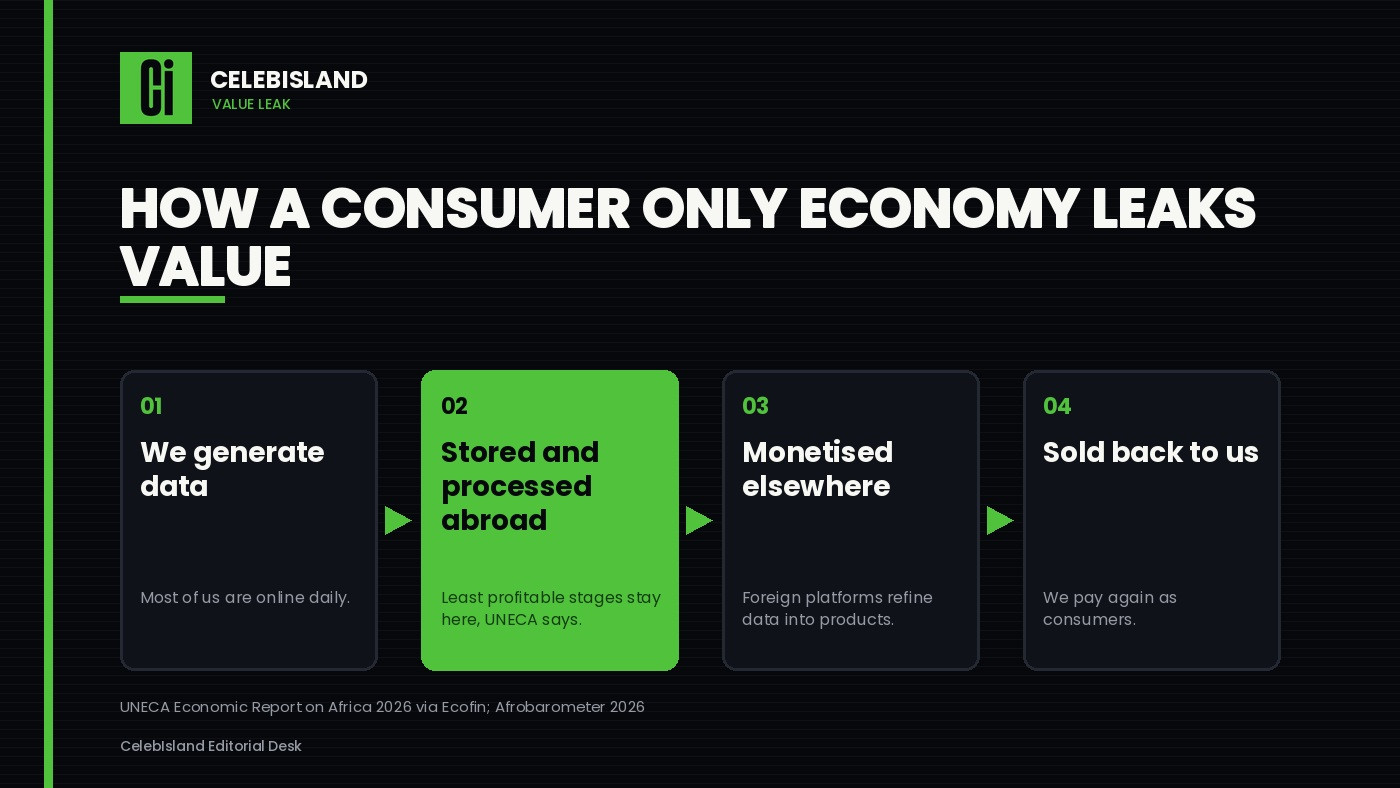
The UN Economic Commission for Africa warned in its Economic Report on Africa 2026 that Africa is strong at generating and storing data, the least profitable stages, while most processing and monetising happens on foreign servers. It said the data economy risks "reproducing an extractive model." Africa's share of global data centre capacity is put at under 2% by UNECA and at 0.6% by the Africa Data Centres Association. The methods differ, but both say small.
Claimed, not verified by us: a Business Report commentary says over 80% of African startups rely on foreign cloud providers, citing Partech. We did not find it in the Partech 2025 summary we read, so treat it as unverified. We also found no credible total for dollars leaving Africa each year through subscriptions and ads, so we give none.
Owners are already building
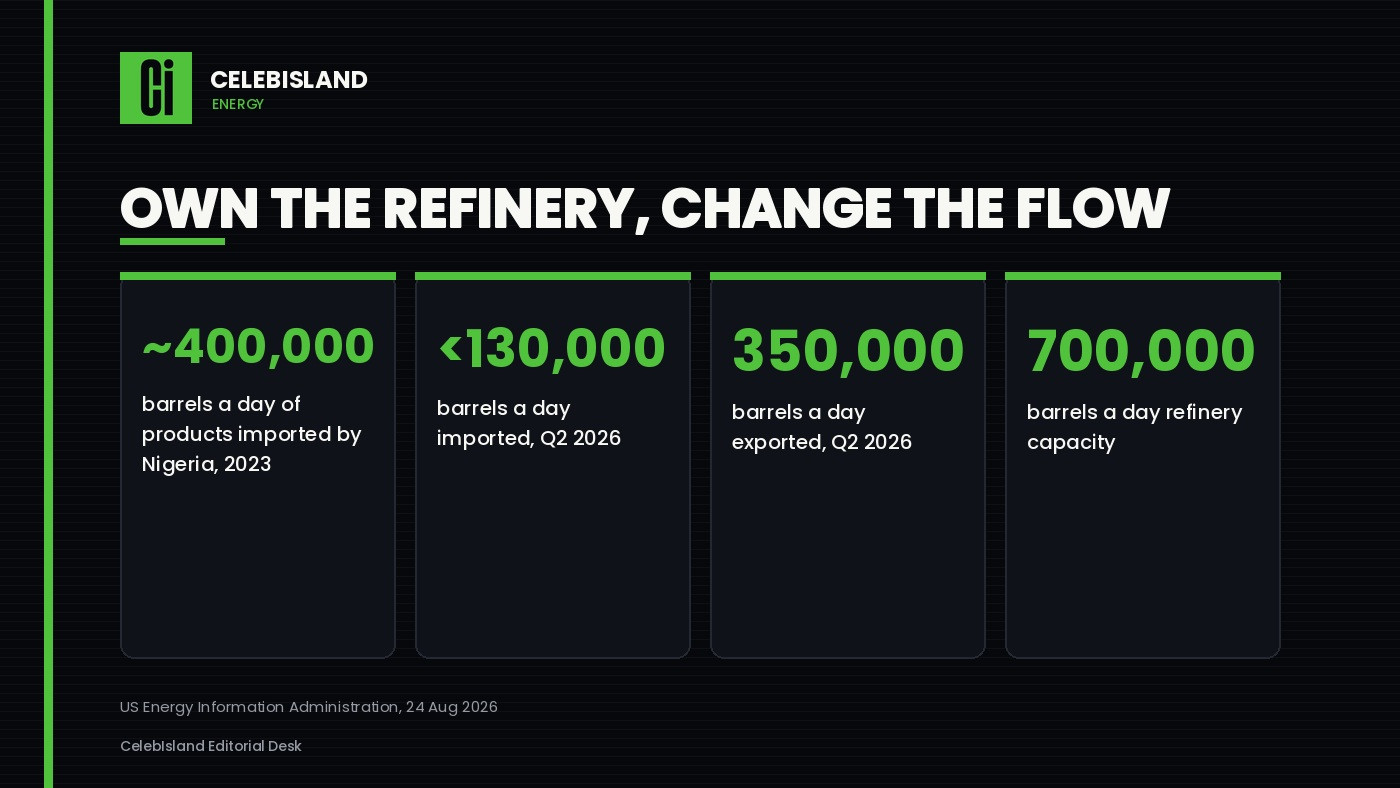
Energy. The US Energy Information Administration reports that Dangote's refinery reached 700,000 barrels a day of capacity in February 2026. Nigeria imported nearly 400,000 barrels a day of petroleum products in 2023. In the second quarter of 2026, seaborne imports were under 130,000. Exports reached 350,000 barrels a day. This is one company, and fuel prices still matter, but it shows what owning production changes.
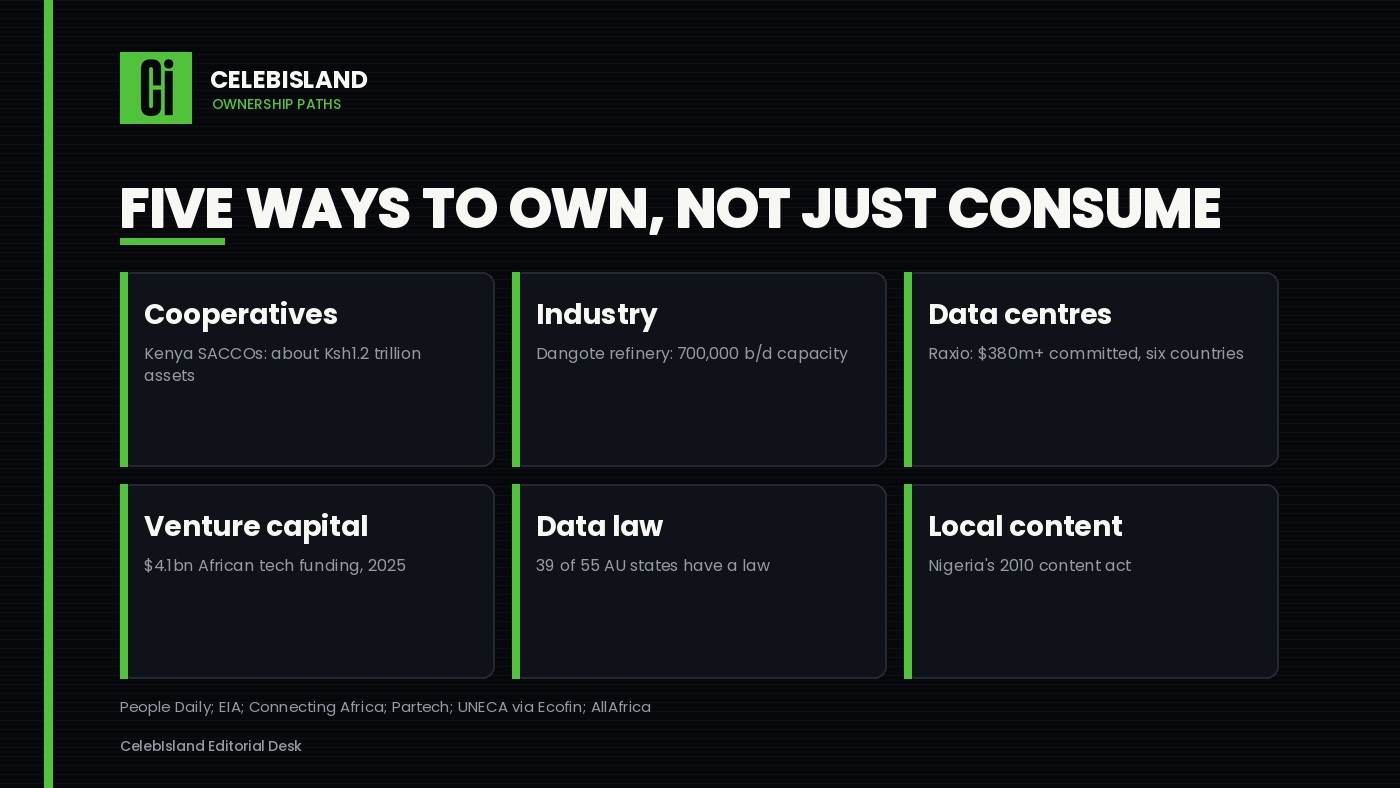
Cooperatives. Kenyan SACCOs report about Ksh1.2 trillion in assets, with roughly Ksh950 billion lent back to members. People Daily reports 10 to 14 million members out of about 55 million Kenyans. These are industry figures, but the model is simple: savers are the owners.
Infrastructure and capital. Raxio, an Africa-focused data centre builder, has over $380 million committed and runs in six countries. Its backers include development banks and Meridiam, so it is mixed ownership, not purely African. Partech counted $4.1bn in African tech funding in 2025, with record debt at 41% of the total. Also, 39 of 55 African Union states now have data protection laws.
Local content. At the 2026 Nigerian energy summit, a TotalEnergies executive said a recent project reached 95% Nigerian participation under the 2010 content law. That is a company claim, and project names in the report were inconsistent, so we cite it only as a direction.
What this means for us
CelebIsland's view, not a documented finding. Consumers are not slaves. But a consumer with no stake in what is sold, stored or built will always pay the rent. The richest are not all the answer: some wealth builds refineries and cement plants, and some buys passports. Our job is to push the first kind.
Ownership does not need a billion dollars. It can start as ten people in a savings group, a creator holding her own audience, or a trader who learns to process what she sells.
What to do now
- Join or start a cooperative or savings group, and read its rules and audited accounts.
- Own your audience: keep your list and your content, not only a platform account.
- Learn the basics of privacy: two-factor login and strong passwords.
- Buy local when quality and price are fair, and ask where products are made.
- Learn a skill in the data or cloud chain: coding, data analysis, hosting.
- Know your country's data protection law and your rights under it.
This is information, not financial or legal advice. Check any investment or cooperative yourself.
What do you think: are we consumers or owners? Vote in the poll and repost this to someone building.
Sources: New World Wealth, Hubbis (Henley & Partners), Forbes via Legit.ng, BusinessDay, Afrobarometer, Ecofin Agency (UNECA), Techeconomy, IOL Business Report, US EIA, People Daily, Partech, Connecting Africa, Leadership via AllAfrica.