Short answer: a little, and more every year, but not yet at the scale the dream promises. The free trade area exists, the first shipments have moved, and a continental payment rail is switching on. The border queue and the card that gets declined are still the real boss levels.
We separate what is documented, what is claimed, and what is our analysis. This is for traders, students, creators and the diaspora.
Where AfCFTA stands in 2026
The agreement entered into force on 1 January 2021. At a Lagos conference in June 2026, AfCFTA Secretary-General Wamkele Mene said 50 countries are implementing it and all supporting protocols are concluded. That is an official claim; "implementing" does not mean every tariff schedule and customs desk is ready. One trade analysis notes that rules of origin still have gaps in areas like textiles and processed foods, and goods outside agreed categories get no preference.
The Guided Trade Initiative was the proof of concept. Launched in 2022 with eight countries (Cameroon, Egypt, Ghana, Kenya, Mauritius, Rwanda, Tanzania, Tunisia), it let real goods move under AfCFTA terms early. Early cargo included Kenyan batteries and tea to Ghana and a small lot of Rwandan coffee. The Secretariat's Mohamed Ali called it "a proof of concept that trade under the agreement is possible."
The numbers: growing, but still small
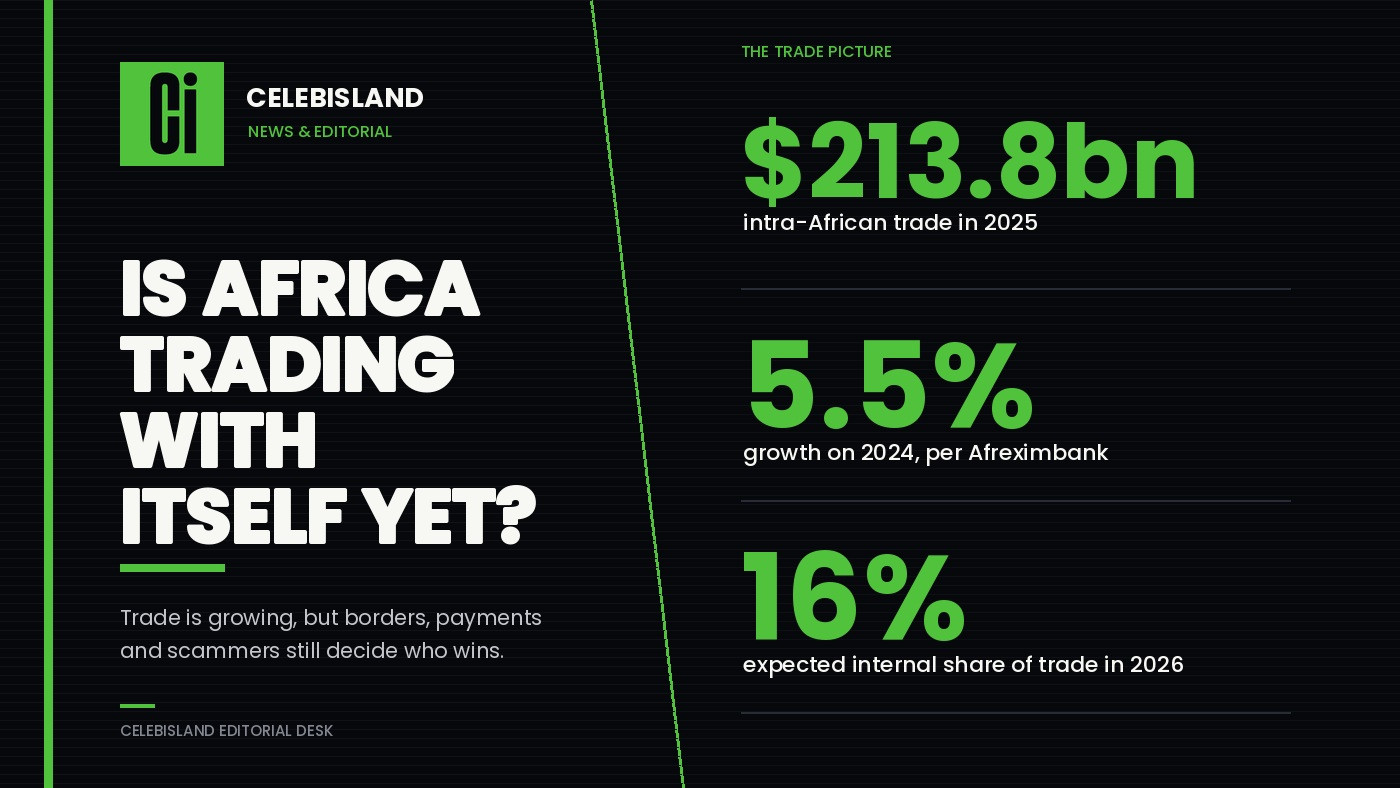
Afreximbank reports intra-African trade of $213.8 billion in 2025, up 5.5% from $202.7 billion in 2024. Its 2026 outlook expects Africa's internal share of total trade to reach about 16%, from roughly 15% in recent years, in an "optimistic scenario" that needs stability and reforms. The Secretariat's own 2026 target is higher, at $250 billion. Different bodies use different baselines, so compare carefully.
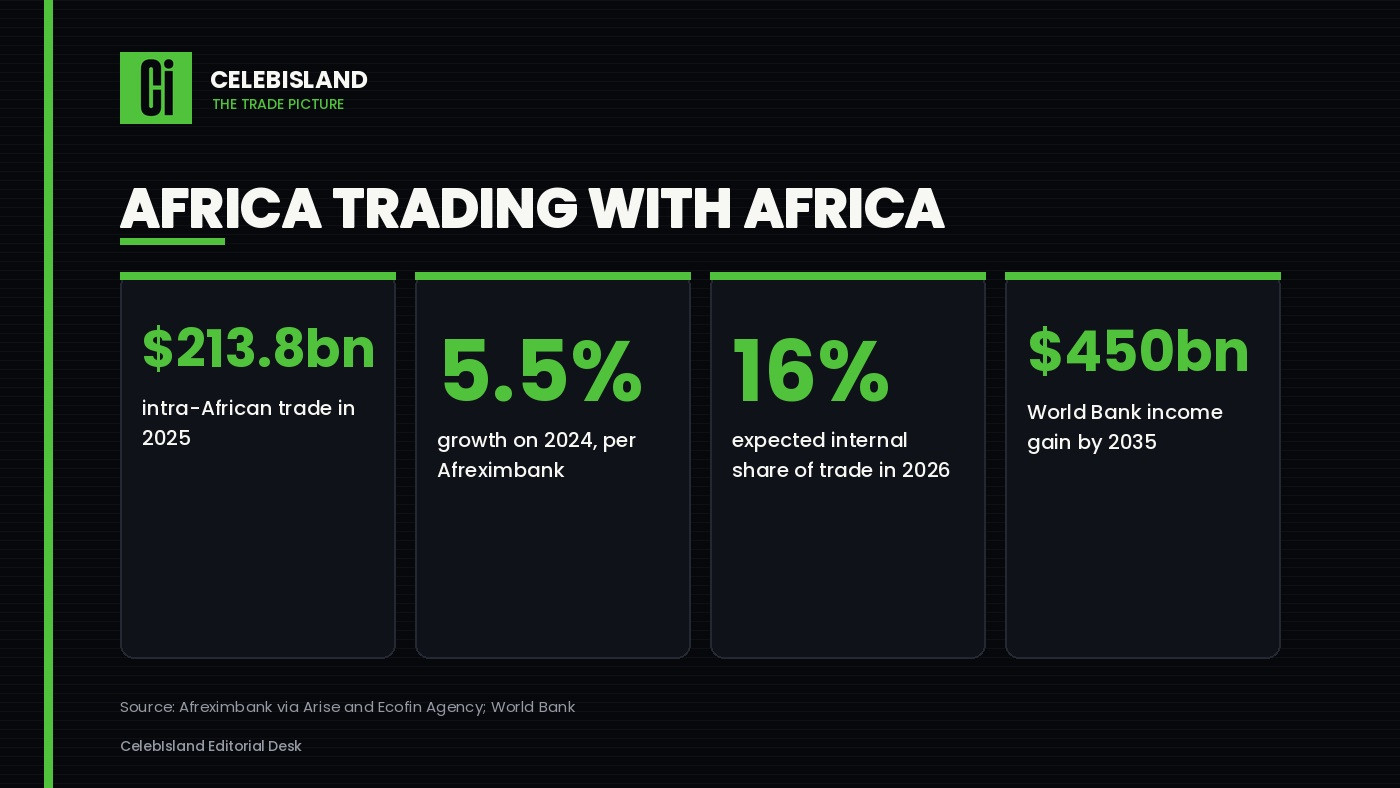
The World Bank's modelling is the most useful reality check. It projects a $450 billion income gain for Africa by 2035, but says tariff cuts alone add only 0.2%. About $292 billion of the gain comes from trade facilitation: less red tape, faster customs. The paperwork matters more than the tax.
Borders and payments
Mene said moving goods the roughly 1,080 km from Lagos to Abidjan can take up to 17 days because of checkpoints. In East Africa, leaders set a 2026 deadline to clear barriers, and The EastAfrican reported in August that the EAC's monitoring committee blamed Tanzania for 39% of the barriers recorded, with the deadline lapsing.
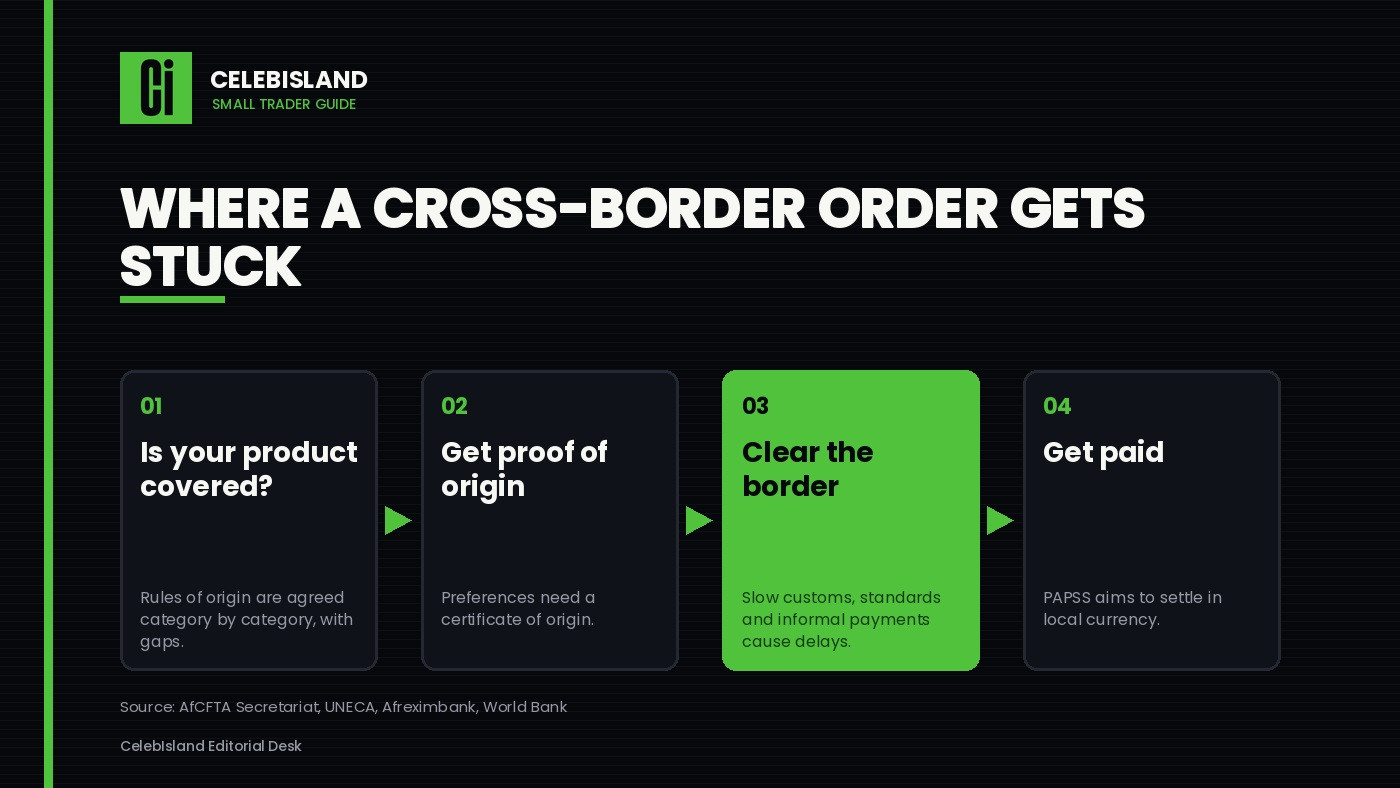
On money, the Pan-African Payment and Settlement System (PAPSS) lets payments settle in local currencies. Afreximbank expects it to cut foreign exchange costs by 20% to 30%. PAPSS itself says it is live in 28 countries and that volumes rose about 1,000% year on year. That is self-reported and starts from a low base, and South Africa is still outside the network. Treat it as promising, not proven.
The Yahoo boys question
This is a hard topic, so we keep it plain. Internet fraud by Nigerian and West African networks, called "Yahoo" in slang, harms real people. It is not a hustle.
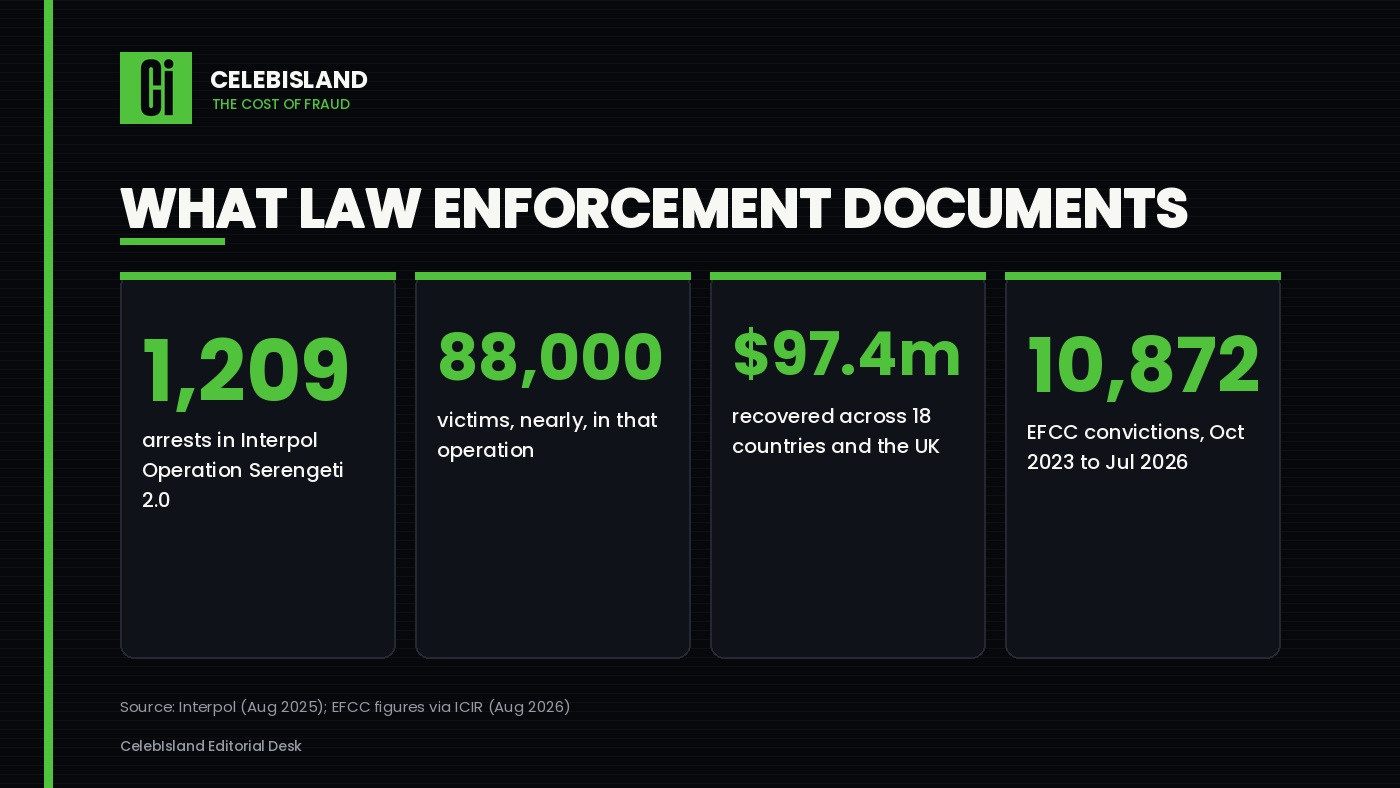
Documented. Interpol's Operation Serengeti 2.0 (June to August 2025) led to 1,209 arrests across 18 African countries and the UK, with nearly 88,000 victims and $97.4 million recovered. The US Justice Department sentenced two Lagos brothers to 210 months each over a sextortion scheme that targeted more than 100 victims and led to the death of a 17-year-old in Michigan. Nigeria's EFCC reports 10,872 convictions between October 2023 and July 2026, and says advance-fee fraud and cybercrime make up nearly two thirds of 46,288 offences recorded in 2024 to 2026. The World Cybercrime Index 2024 ranks Nigeria fifth.
Why it persists. Official unemployment was 4.3% in 2024, yet 93% of work is informal, so the problem is secure income, not just jobs. Reporting also points to glamorised social media wealth and light sentences. EFCC chair Ola Olukoyede has said children are recruited into "419 training schools" with parental consent. We found no data showing this is majority behaviour.
The cost to honest trade. PayPal said it restricted Nigeria over stolen-card fraud; many Nigerians call that discriminatory. It returned in January 2026 through Paga, though early users reported limited accounts. Blocked cards and extra checks hit honest sellers first. We found no solid data on visa refusals tied to fraud, so we make no claim there.
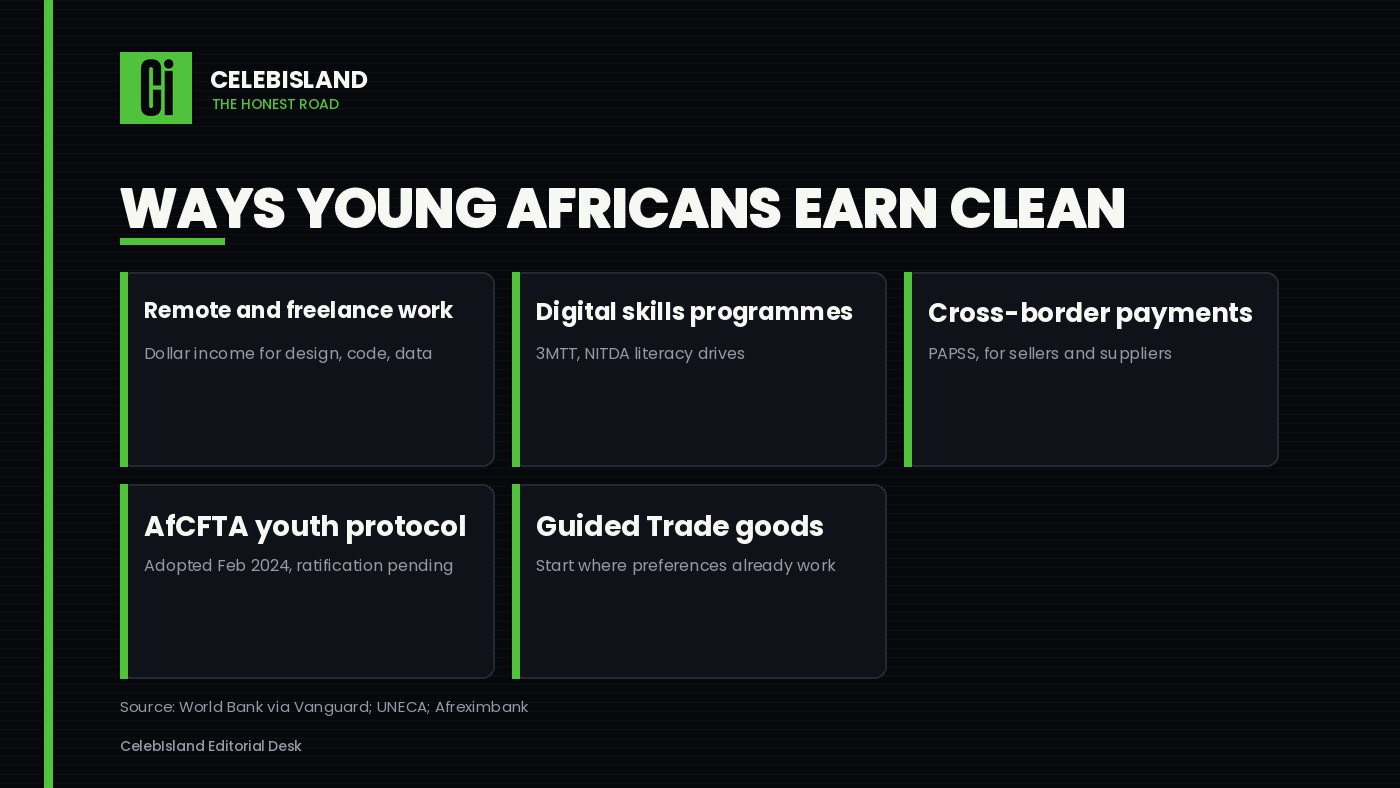
The legitimate road. The World Bank estimates 17.5 million online freelancers across Nigeria, Ghana and South Africa. ICT contributed 11.31% of Nigeria's real GDP in Q1 2026, per the NBS.
What this means for us
This is CelebIsland's view. The biggest winners will be those who treat paperwork and payments as skills. Honest earning at scale needs a clean record, and every scam makes a good seller's life harder. Real wealth is built where we own the product, the brand and the trust.
What to do now
- Check whether your product category has agreed rules of origin before you plan a cross-border order.
- Ask your national AfCFTA or trade office about the Guided Trade Initiative and certificates of origin.
- Ask your bank whether it is on PAPSS before paying a supplier abroad.
- Students: build a portfolio on freelance platforms and price in dollars.
- Keep payment records clean. Never lend your account to strangers.
This is not financial or legal advice. Do your own checks.
What do you think: is the border or the payment the bigger blocker? Vote in the poll and repost to someone who is building.
Sources: Afreximbank (via Arise and Ecofin Agency), World Bank, AfCFTA Secretariat (via Xinhua and Opinion Nigeria), UNECA, IISD, The EastAfrican, Interpol, US Department of Justice, ICIR, Global Voices, Techpoint Africa, Vanguard via AllAfrica, Arabian Post.