
Washington has pulled the plug on one of the busiest routes to a US green card, and the shockwave is going to be felt far beyond India.
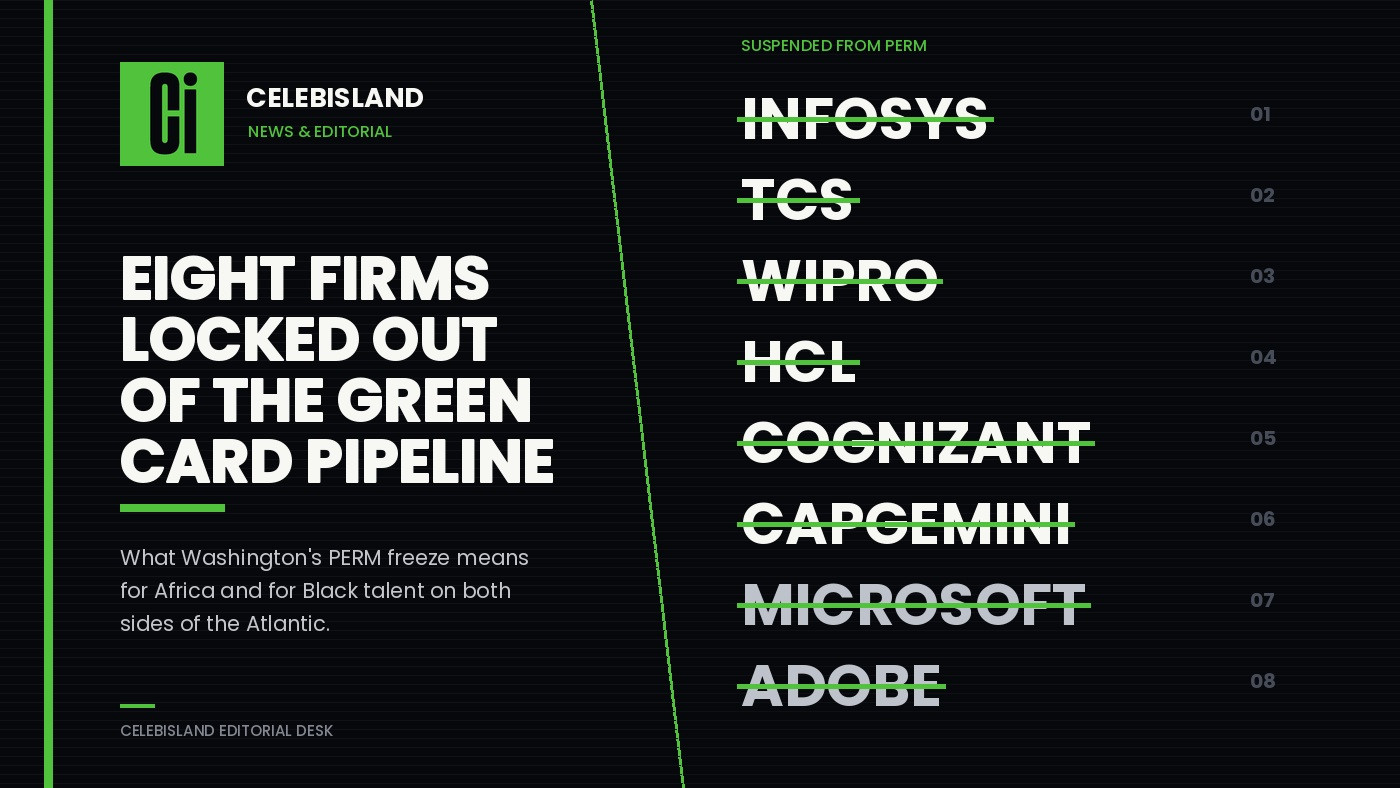
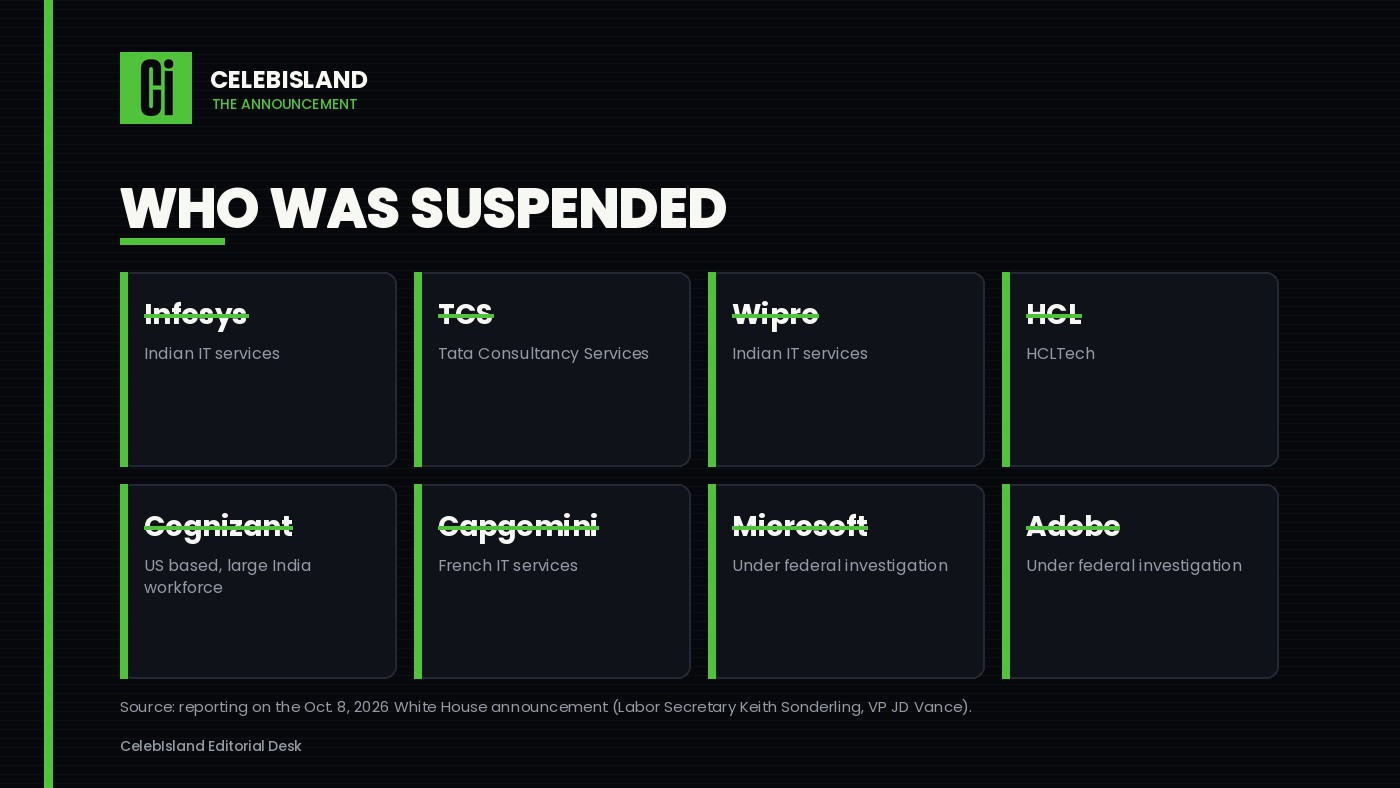
On Thursday, October 8, 2026, Labor Secretary Keith Sonderling announced at the White House, alongside Vice President JD Vance, that eight companies are suspended from the Permanent Labor Certification programme, known as PERM. The list: Infosys, Tata Consultancy Services, Wipro, HCL, Cognizant, Capgemini, Microsoft and Adobe. The Labor Department will not accept new PERM applications from them and will not process pending ones.
What PERM is, and why it matters
PERM is the gate employers must pass before filing most employment based green card petitions. The company has to show that no qualified, willing and available US worker can fill the job. Close that gate for a company and the green card pipeline for its sponsored staff stops moving.
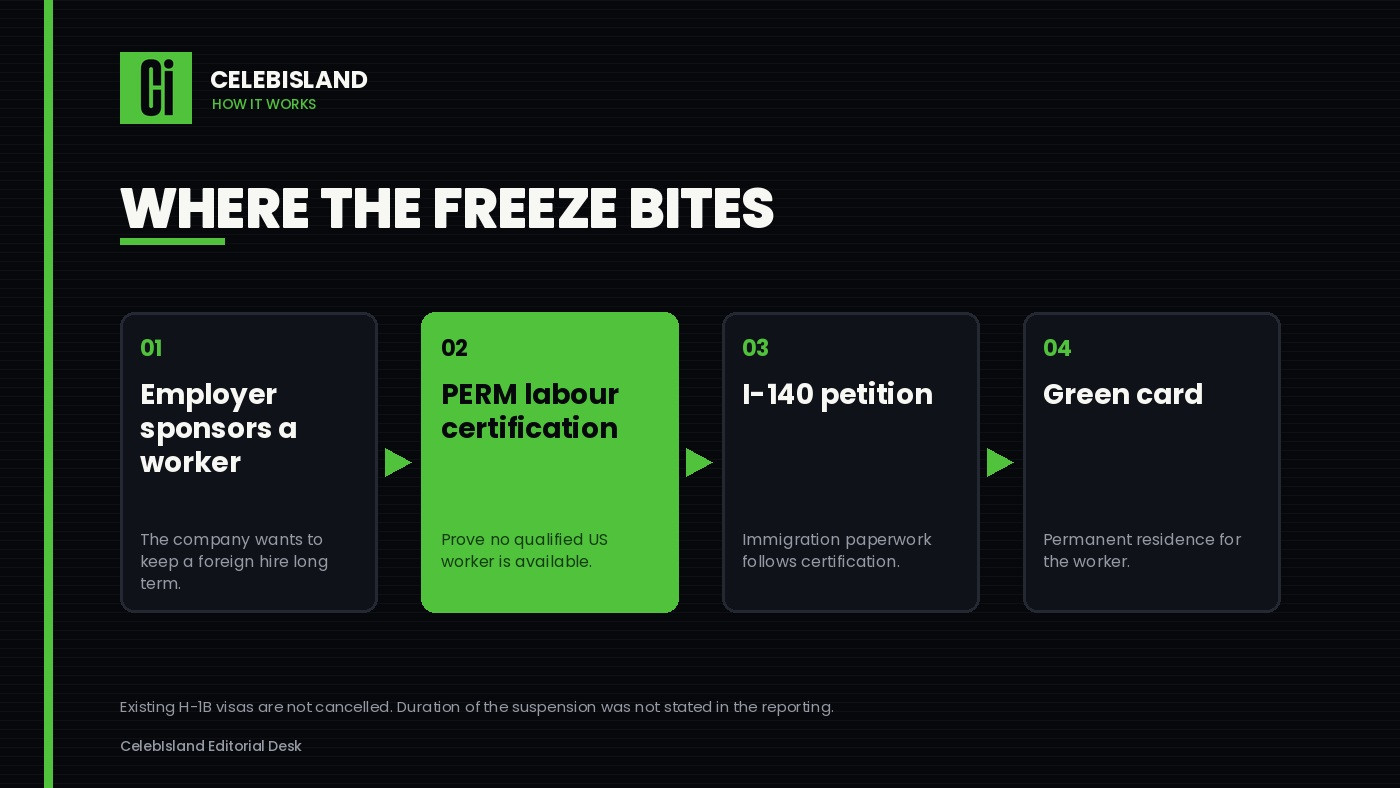
Two things the reporting is clear about. First, this does not cancel the H-1B visas that employees of these firms already hold. Second, the reports we reviewed do not say how long the suspension will last.
The case Washington is making
Sonderling said the named IT outsourcing firms requested nearly three million foreign workers since 2009, received more than 230,000 H-1B approvals and secured more than 100,000 PERM certifications, which he argued displaced American workers. Vance said the H-1B system has become rife with fraud and singled out Microsoft, accusing it of laying off about 6,000 US workers in 2025 while receiving more than 6,000 H-1B approvals and filing 3,682 PERM applications, nearly 1,000 of them for positions held by laid off workers. Microsoft and Adobe are described as being under multiple active federal investigations. These are the administration's claims; the companies' responses were not part of the reports we reviewed.
What this means for Africa
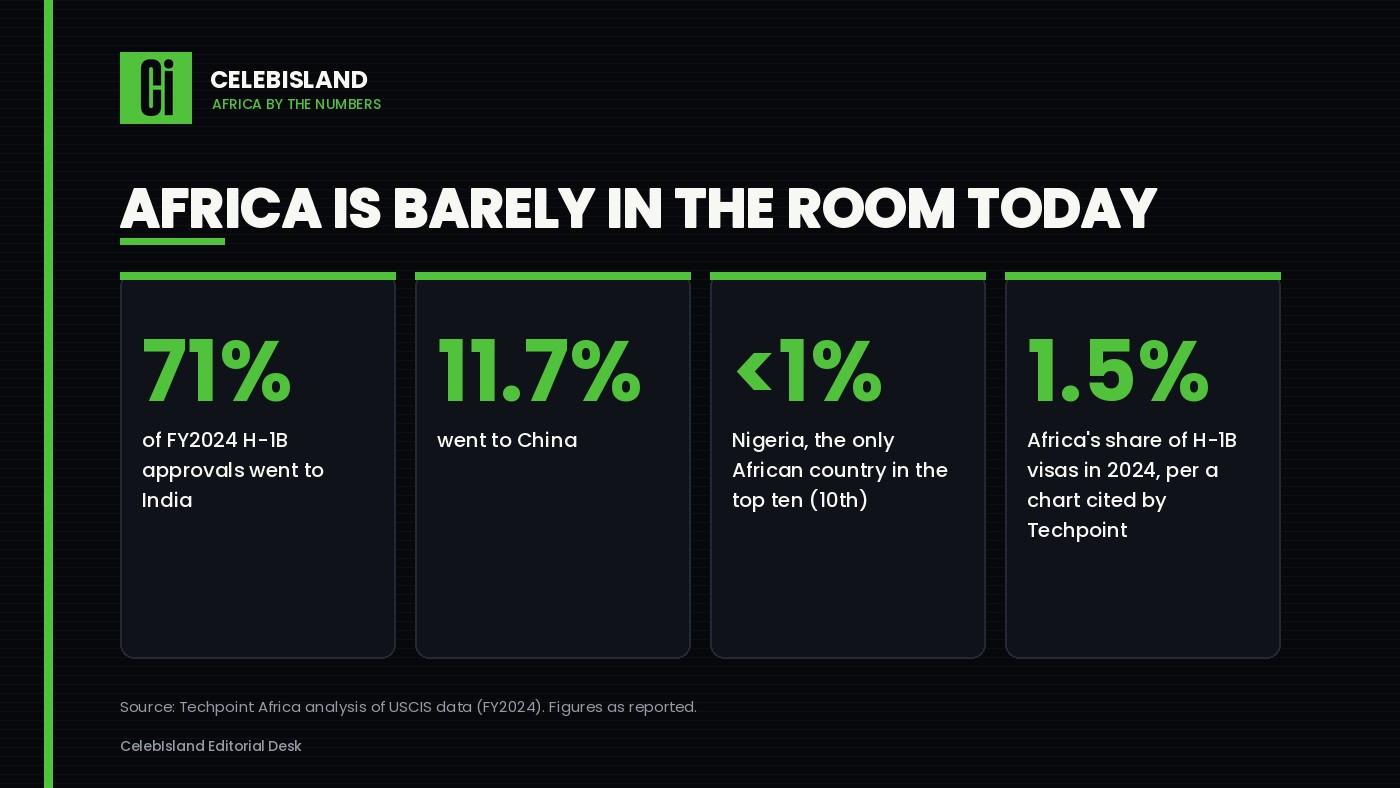
Let us be honest about the starting point. Africa is a small player in the H-1B system today. In fiscal 2024, India took 71 percent of approvals and China 11.7 percent. Nigeria was the only African country in the top ten, in tenth place, with under one percent. A chart cited by Techpoint Africa puts the whole continent at 1.5 percent. That is the gap.
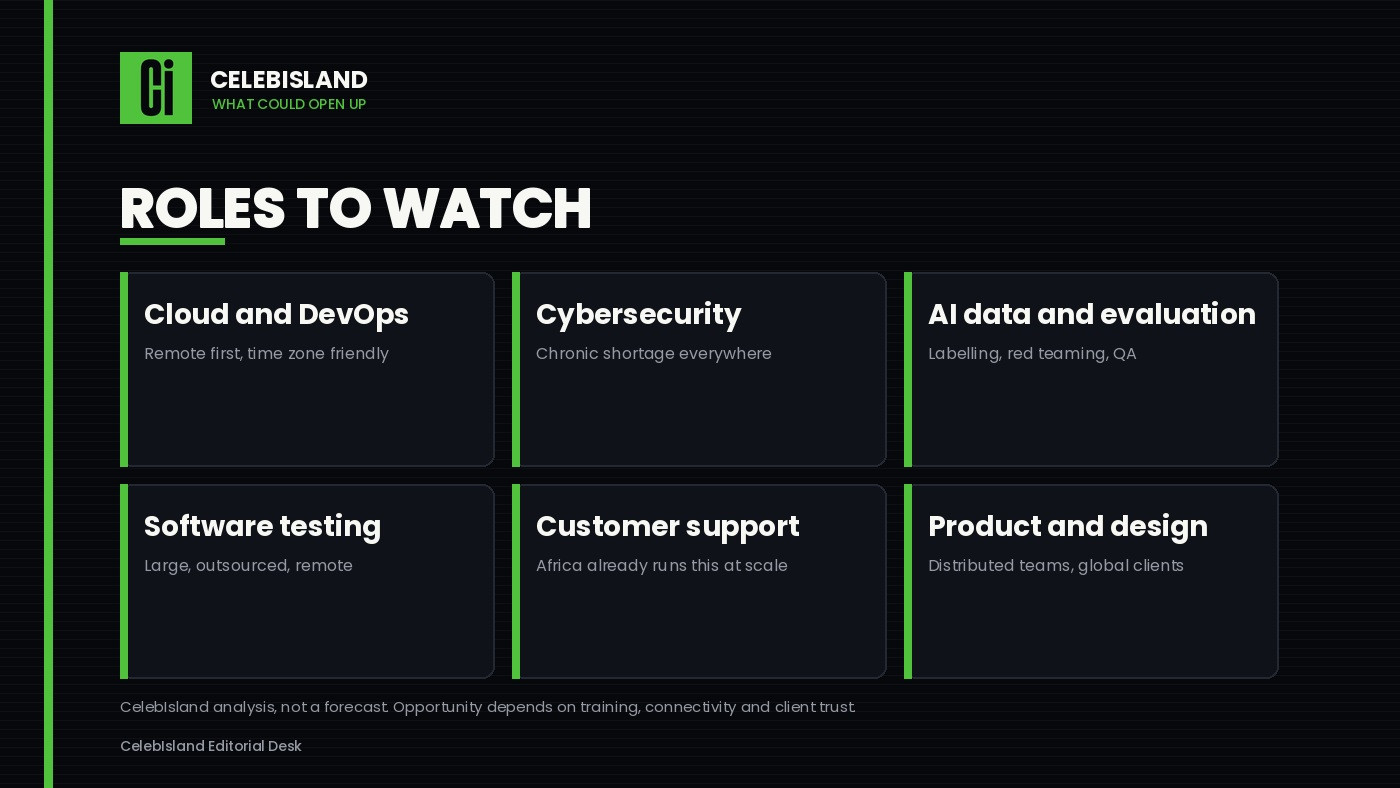
But the logic of this move cuts in a direction Africans should study carefully. When the biggest outsourcing and consulting firms lose the ability to lock in foreign talent for the long term, the pressure goes somewhere. Some of it lands on US hiring. Some of it lands on remote and nearshore delivery, where an engineer in Lagos, Nairobi, Accra or Kigali works for a US client without ever needing a visa. Those are the roles worth watching: cloud and DevOps, cybersecurity, AI data and evaluation work, software testing, customer support, product and design.
Techpoint's own analysis is a useful dose of realism: Africa is unlikely to be on companies' shortlists for moving AI research abroad until the continent builds deeper postgraduate and applied AI talent. The opening is real, but it is earned by skills, not by headlines.
And for Black talent in the United States
There is a second story inside this one. If sponsored foreign hiring tightens at the largest employers, more roles have to be filled domestically. That is an opening for African American engineers, analysts and graduates, who have long been under represented in the pipelines these firms and their clients recruit from. The diaspora conversation matters here: Black professionals in the US and Africa's builders are not competitors in this story. They are two ends of the same talent bridge, and CelebIsland intends to keep both ends in view.
What to do now
- Builders and students: get certified in cloud, security and applied AI, and build a public portfolio. Remote clients hire proof.
- Employers and founders: recruit across the continent and across the diaspora while the global talent market reshuffles.
- Everyone: watch for how long the suspension lasts, and for what the eight companies do next.
This is the first in a continuing CelebIsland series on Africa, technology and artificial intelligence. Repost it if you think someone in your circle should read it, and tell us in the comments which stories we should cover next.
Sources: reporting by The Tribune (India) and Deccan Herald on the October 8, 2026 announcement; Techpoint Africa analysis of H-1B data; first reported on X by Shashank Mattoo. Analysis sections are CelebIsland's own.