By Kelechi Orji (Kelly Hansome)
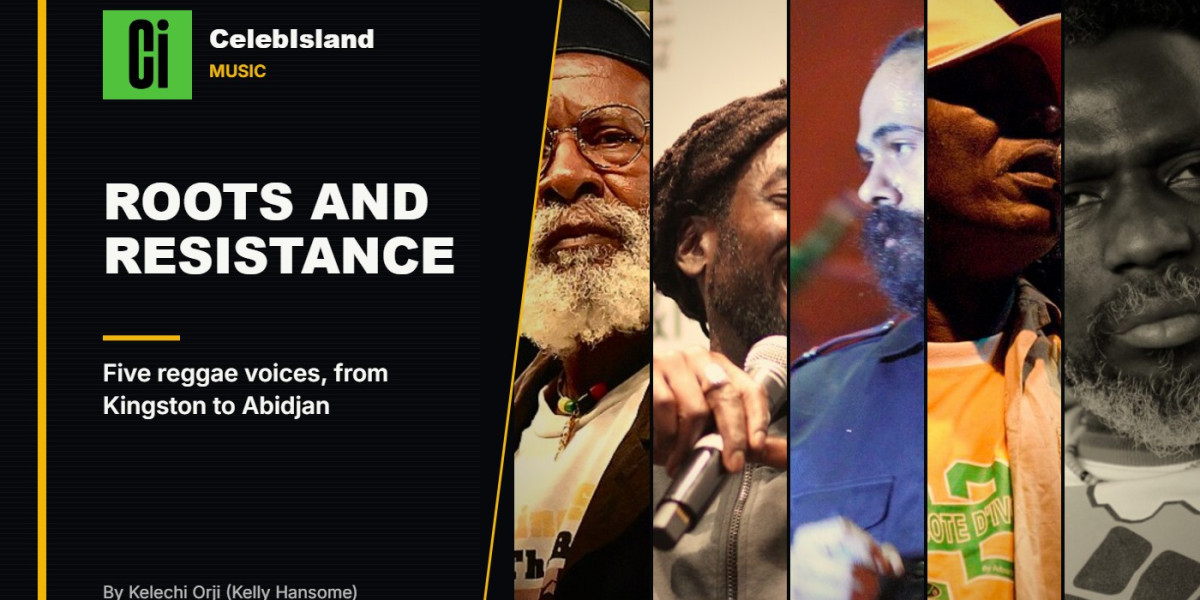
Reggae was born in Jamaica, but it never stayed there. Within a generation it had crossed the Atlantic and found a second home in West Africa, where singers took its rhythm and its conscience and pointed both at their own governments. This week CelebIsland opened fan pages for five artists who tell that story between them: three from Jamaica and two from Ivory Coast. Here is why each one matters.
Burning Spear: the elder
Burning Spear is the stage name of Winston Rodney, born in Saint Ann's Bay, Jamaica. When he wanted a way into the music business, it was a fellow Saint Ann native, Bob Marley, who pointed him to Studio One, the label run by Clement "Coxsone" Dodd. His first single came out there in 1969.
His 1975 album Marcus Garvey, named for the Pan-African thinker whose ideas shaped him, is still treated as a benchmark of roots reggae. Decades later the Recording Academy caught up: he won the Grammy for Best Reggae Album with Calling Rastafari and again with Jah Is Real.
Buju Banton: the voice of a generation
Buju Banton, born Mark Anthony Myrie, arrived in the early 1990s as the sharpest voice in dancehall. His 1992 album Mr. Mention made him a star and set the pace for the whole genre. By the middle of the decade his writing had turned more spiritual, and the 1995 album 'Til Shiloh is the record most fans point to as the turning point. His album Before the Dawn later won the Grammy for Best Reggae Album in 2011.
Damian Marley: the heir who made his own name
Damian Marley, known to fans as Junior Gong, is the youngest son of Bob Marley. Being a Marley opens doors; it does not win awards. He did that himself. Halfway Tree won the Grammy for Best Reggae Album in 2002. Welcome to Jamrock won it again in 2006, and its title track also took the Grammy for Best Urban/Alternative Performance. Stony Hill added another Best Reggae Album win in 2018.
Alpha Blondy: Africa answers back
Alpha Blondy was born Seydou Koné on 1 January 1953 in Dimbokro, Ivory Coast. His song Brigadier Sabari came out of his own arrest and mistreatment by police in Abidjan, and it became a symbol of resistance. In 1986 he travelled to Jamaica and recorded Jerusalem with The Wailers, Bob Marley's own band, closing the loop between Kingston and West Africa. He sings in Dyula, French and English, and at times in Arabic and Hebrew, using the music to argue for unity across faiths.
Tiken Jah Fakoly: the conscience with a price
Tiken Jah Fakoly was born Doumbia Moussa Fakoly on 23 June 1968 in Odienné, in the north-west of Ivory Coast. His songs go straight at power, and that has cost him. His 2002 album Françafrique won the Victoires de la Musique award for reggae, ragga and world album in 2003. After threats over his lyrics he went into exile and based himself in Bamako, Mali. Albums such as Coup de gueule and L'Africain kept the message loud from there.
One thread
Put the five side by side and the line is clear. Burning Spear sang about Marcus Garvey and African self-determination. Buju Banton and Damian Marley carried that conscience into dancehall and onto the Grammy stage. Alpha Blondy and Tiken Jah Fakoly took the same sound home to Africa and aimed it at the people in charge. The rhythm travelled, and so did the argument.
Follow the new fan pages on CelebIsland: Burning Spear Fans, Buju Banton Fans, Damian Marley Fans, Alpha Blondy Fans and Tiken Jah Fakoly Fans. These are unofficial fan pages run by CelebIsland members. They are not affiliated with, endorsed by, or managed by the artists.
Sources checked for this article include Wikipedia, the Recording Academy (grammy.com), Reggaeville, AllMusic and Universal Music France.
Cover and photo credits, all via Wikimedia Commons: Burning Spear by Peter Verwimp (CC0); Buju Banton by Danielle G. Campbell (CC BY-SA 4.0); Damian Marley by Emha (CC BY-SA 4.0); Alpha Blondy by livepict.com (CC BY-SA 3.0); Tiken Jah Fakoly by Sylvain lasco (CC BY-SA 4.0). Images cropped and combined by CelebIsland; the cover is shared under CC BY-SA 4.0.