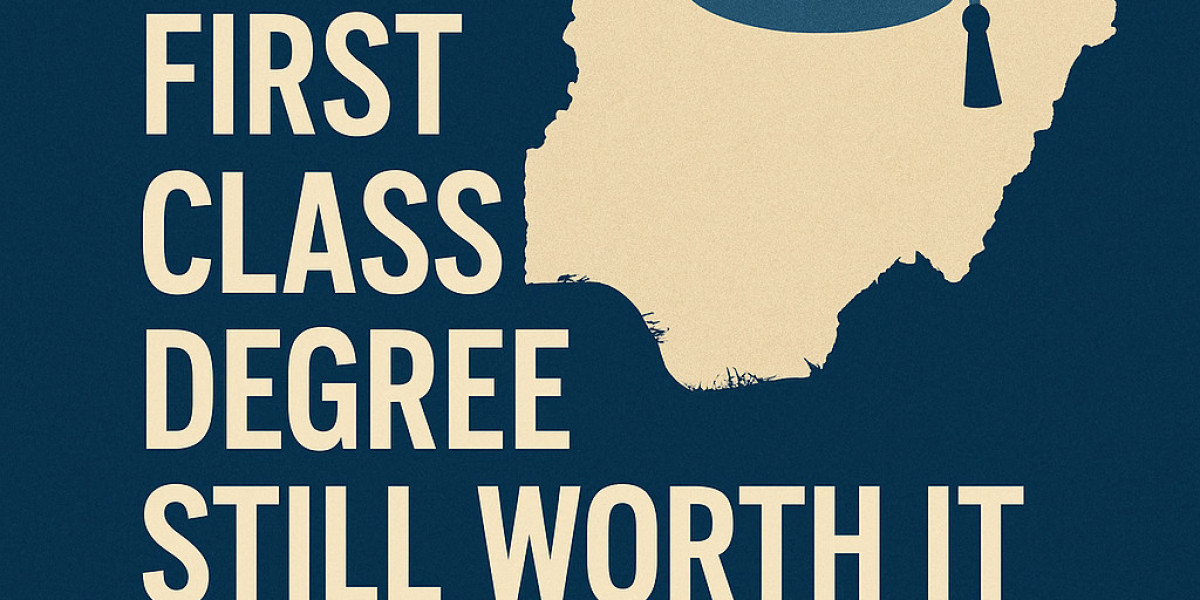
The graduation photos are always the same. The gown. The cap in the air. The parents crying. Somebody's uncle spraying money.
Then Monday comes.
Then NYSC. Then the group chat where everybody is "applying." Then two years pass and the person who was posting congratulations is now posting about a laptop repair business, and nobody talks about the degree anymore.
We have built an entire culture around a finish line that leads nowhere. So what are we actually doing in these schools?

The Promise That Got Cancelled
Understand what was actually sold, because it was a specific deal.
The arrangement our parents inherited was simple: suffer through secondary school, get into university, graduate, and a job with a salary and a pension would be waiting. Not a fantasy job. Just a job. That deal was real for a generation. Many of the people telling students to work harder are living proof that it worked — for them.
Nobody held a press conference to announce that the deal had ended. The economy changed, the number of graduates multiplied, the number of jobs did not, and the contract quietly stopped being honoured. But the marketing never stopped. We are still selling a product that was discontinued.
So students are paying four to seven years and enormous family sacrifice for a thing whose main advertised benefit no longer reliably exists. Then when it does not work, we tell them individually that they did not try hard enough. That is the cruellest part of it.
The Case That School Is a Scam
The loudest argument right now, and it has real evidence behind it.
Employers openly say graduates arrive unable to do the work. Curricula have not moved in decades. Lecturers teach from notes older than the students. Strikes eat entire sessions. A degree that took six years because of industrial action is a degree that cost you two years of income for nothing.
Meanwhile the people actually making money around you increasingly did not do this. The designer. The developer who learned from YouTube. The trader. The person running a logistics operation from a phone. They skipped the queue entirely and the sky did not fall.
And the certificate itself has inflated. When everyone has a degree, having one stops being a signal. It becomes the floor, not the advantage — you need it to be considered, and it gets you nothing once you are.

The Case That This Is Survivorship Bias
Now the part the "school is a scam" crowd skips.
You are hearing from the people it worked for. The self-taught developer earning in dollars is loud on your timeline. The forty people who dropped out to do the same thing and are now stranded are not posting. You are looking at winners and calling it a strategy.
There is also a quieter function nobody credits. For a lot of Nigerians, the degree is not a job ticket at all — it is an emigration instrument. It is the document that makes a foreign master's possible, that makes a skilled worker visa possible, that gets your qualifications recognised in another country. In a japa economy, that is arguably the single most valuable thing the certificate does, and almost nobody says it out loud.
And there is what happens to you in those years that has nothing to do with the syllabus. You learn to meet deadlines you did not set. You survive institutions. You meet the people who will hire you, partner with you, marry you, refer you. That network is not on the transcript, and it is frequently the most valuable thing a graduate leaves with.

The Question Nobody Is Asking
I think the whole debate is framed wrong.
"Is a degree worth it" is the wrong question, because it treats university as a lottery ticket you either cash or do not. The better question is: what should four years actually buy, and are you extracting it?
Because two students can sit in the same lecture hall for the same four years and leave with completely different assets. One leaves with a certificate. The other leaves with a certificate, a skill they taught themselves in the gaps, a portfolio, three people who will vouch for them, and a clear idea of what they are for.
The second student did not get a better school. They just refused to let the institution define the ceiling. In a system that is not going to deliver on its promise, that is not optional anymore. It is the entire game.
None of which excuses the system. A country that cannot employ its graduates has a policy failure, not a personal-discipline problem, and no amount of individual hustle fixes an economy. Both things are true at once: the system owes you something it is not delivering, and nobody is coming to fix it in time for your graduation.
So Where Do You Stand?
Is the Nigerian degree still worth the years and the money — a floor you need, plus a passport out if you want one? Or has it become an expensive ritual we keep performing because nobody wants to be the one to say it is over?
And for the students reading this: if you graduated tomorrow, what could you actually do that somebody would pay for? Not what is on your certificate. What can you do.
Answer honestly in the comments. Graduates, undergraduates, the ones who dropped out, the ones who japa'd — all of you.
#NigerianStudents #CampusLife #Japa #GraduateLife #Unemployment #StudentLife #GenZ #CelebIsland #Naija #NYSC #RealTalk #Education