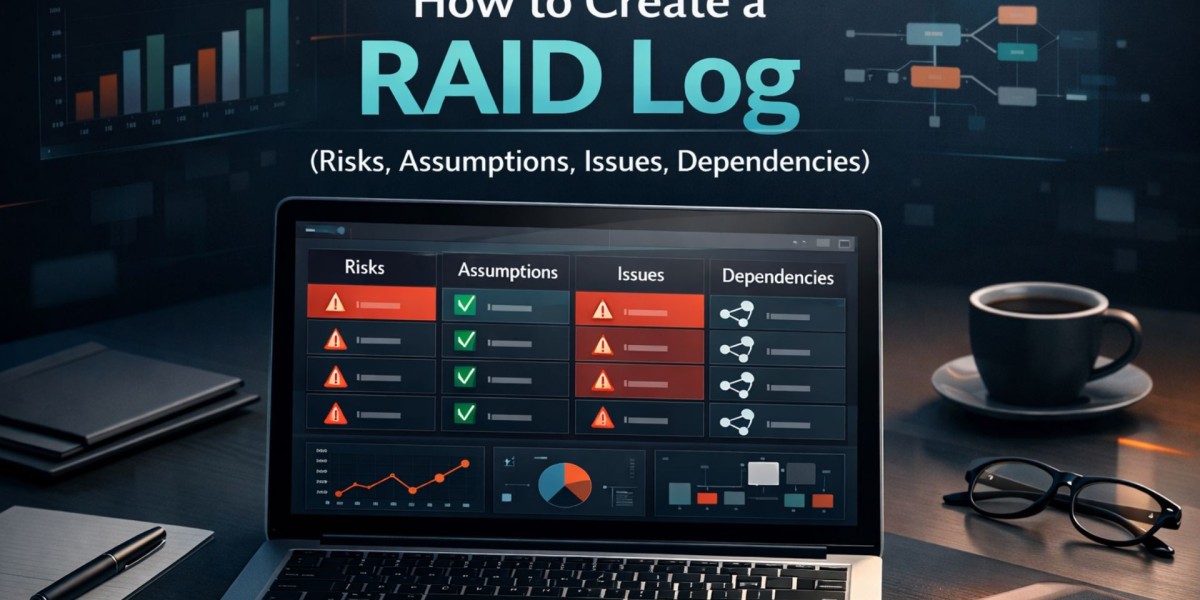

Struggling to keep track of risks and problems in your project? If your projects often run into unexpected delays, unclear responsibilities, or missed dependencies, you're not alone.
A RAID log is a simple yet powerful project management tool used to track Risks, Assumptions, Issues, and Dependencies in one centralized place. It helps teams stay proactive, organized, and prepared, reducing surprises and improving decision-making from day one.
What Is a RAID Log and Why Is It Important?
It is a document that captures four critical project elements:
- Risks – Potential problems that may occur
- Assumptions – Conditions believed to be true
- Issues – Problems that have already occurred
- Dependencies – Tasks reliant on others
Why does it matter? Because projects fail when these elements are ignored. It ensures:
- Better visibility into project health
- Faster problem resolution
- Improved communication across teams
- More accurate planning and forecasting
How to Create a RAID Log Step by Step
Creating a log doesn’t require complex tools. You can start with a spreadsheet or project management software.
- Define the Structure
Divide your log into four sections:
- Risks
- Assumptions
- Issues
- Dependencies
Each section should include fields like:
- Description
- Impact
- Owner
- Status
- Action plan
- Identify Risks Early
Start by brainstorming potential risks with your team. Ask:
- What could go wrong?
- What might delay the project?
Examples of risks include:
- Resource shortages
- Budget overruns
- Technical failures
Document each risk clearly and assign an owner responsible for monitoring it.
- List Assumptions Clearly

Assumptions are often overlooked but can significantly impact outcomes.
Examples:
- Team members will be available full-time
- Required tools will function as expected
If assumptions prove false, they can quickly turn into risks or issues. Keeping them documented ensures accountability.
- Track Issues in Real Time
Issues are active problems that need immediate attention.
For example:
- A missed deadline
- A system crash
- A communication breakdown
Update your log regularly to reflect new issues and track their resolution status.
- Map Dependencies Accurately
Dependencies define how tasks are connected. Missing these can disrupt entire workflows.
Common dependencies include:
- Task A must finish before Task B starts
- External vendor deliverables
- Approval processes
Managing dependencies effectively is especially important during sprint planning, where tasks are tightly scheduled and interdependent.
Best Practices for Maintaining a RAID Log
Creating a log is just the beginning; keeping it updated is what delivers real value.
Keep It Simple and Accessible
Avoid overcomplicating the format. Ensure everyone on the team can easily understand and update it.
Update Regularly
Review the log during weekly meetings or project check-ins.
Assign Ownership
Every item should have a responsible person to ensure accountability.
Prioritize Entries
Not all risks or issues are equal. Focus on high-impact items first.
Common Mistakes to Avoid
Even experienced teams can misuse RAID logs. Watch out for these pitfalls:
- Ignoring updates: An outdated log is useless
- Lack of ownership: No one takes responsibility
- Overloading information: Too much detail reduces clarity
- Not integrating with workflows: It should be part of daily operations
Tools You Can Use to Create a RAID Log

You don’t need specialized software to get started, but using the right tools can improve efficiency.
Popular options include:
- Spreadsheets (Excel, Google Sheets)
- Project management tools (Asana, Trello, Jira)
- Dedicated monitoring platforms like EmpMonitor
These tools help automate tracking, improve visibility, and ensure nothing falls through the cracks.
How a RAID Log Improves Project Success
A well-maintained log gives teams a proactive advantage. Instead of reacting to problems, you anticipate and manage them early.
According to project management statistics, projects with structured tracking systems are significantly more likely to meet deadlines and stay within budget.
Key benefits include:
- Reduced project risks
- Faster issue resolution
- Better team collaboration
- Improved decision-making
When Should You Use a RAID Log?
It is useful for:
- Complex projects with multiple stakeholders
- Agile and iterative workflows
- Long-term projects with evolving risks
It’s especially valuable when coordination and communication are critical.
Also, watch this video - EmpMonitor: Skyrocket Your Sales with Better Project Management
Conclusion
RAID logs are more than just a tracking tool; they are a strategic asset that keeps your project on course. By documenting risks, assumptions, issues, and dependencies, teams can stay organized, proactive, and aligned. Implementing a structured raid log in project management ensures better outcomes, fewer surprises, and a smoother path to success.
FAQs
Q1. What does RAID stand for in project management?
RAID stands for Risks, Assumptions, Issues, and Dependencies.
Q2. Is a RAID log only for large projects?
No, it can be used for projects of any size to improve organization and tracking.
Q3. How often should a RAID log be updated?
Ideally, it should be reviewed and updated weekly or whenever significant changes occur.
Q4. Can a RAID log be used in Agile projects?
Yes, it works well alongside Agile practices and helps manage uncertainties effectively.