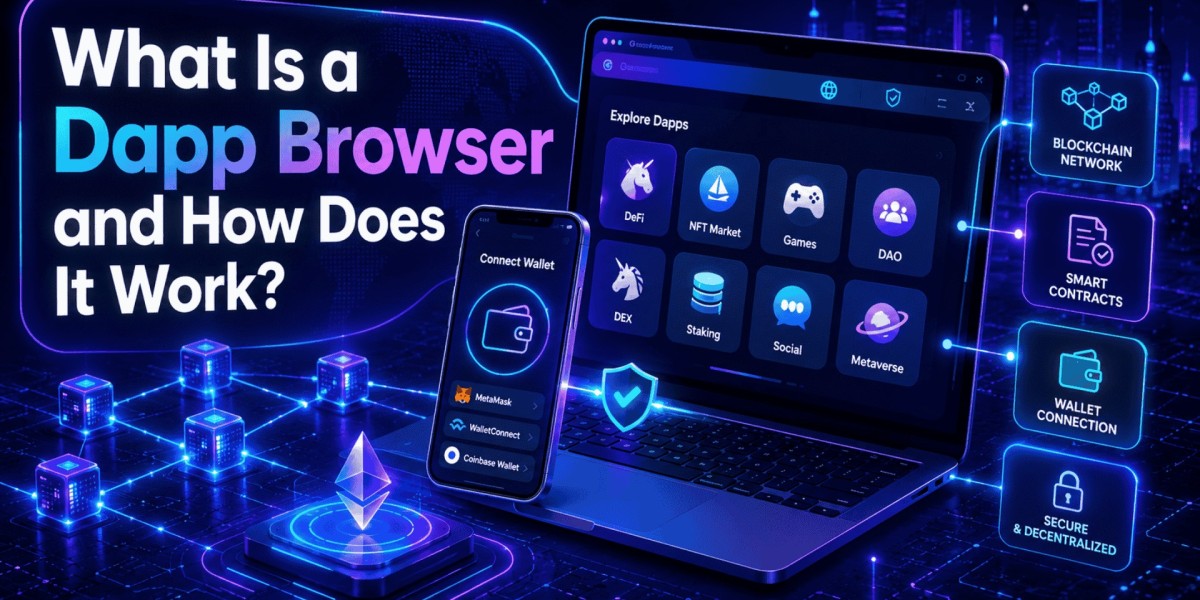
The internet is changing quickly, and blockchain technology is playing a major role in this transformation. Earlier, most people used the internet only to browse websites, shop online, read content, or use social media platforms. Today, users can also access decentralized applications, trade digital assets, use Web3 wallets, explore NFTs, and interact with blockchain-based services. This is where a Dapp browser becomes important.
A Dapp browser is a special type of browser that allows users to access decentralized applications, also known as dapps. These applications are not fully controlled by one company or central authority. Instead, they usually run on blockchain networks and use smart contracts to complete actions. According to MetaMask, dapps can be understood as traditional websites with a special connection that links them to a blockchain.
What Is a Dapp Browser?
A Dapp browser is a Web3 browser or wallet-based browsing tool that helps users open and use decentralized applications. Unlike normal browsers, which mainly connect users to regular websites, a Dapp browser connects users to blockchain-based platforms.
For example, a user can access DeFi platforms, NFT marketplaces, blockchain games, decentralized exchanges, and Web3 communities through a Dapp browser. Coinbase explains that users can search for dapps by entering a dapp URL in the Web3 browser and can also browse categories such as DeFi, NFTs, and decentralized exchanges.
In simple words, a Dapp browser works like a bridge between a user, a crypto wallet, and blockchain applications. It allows users to browse dapps, connect their wallets, sign transactions, and interact with smart contracts.
How Does a Dapp Browser Work?
A Dapp browser works by connecting your wallet with a decentralized application. When you open a dapp, the platform may ask you to connect your wallet. Once connected, the dapp can recognize your wallet address and allow you to perform blockchain-based actions.
For example, if you are using a decentralized exchange, you may connect your wallet and swap one cryptocurrency for another. If you are using an NFT marketplace, you may connect your wallet to buy, sell, or view NFTs. If you are using a blockchain game, your wallet may store in-game assets or tokens.
The important point is that the Dapp browser does not work alone. It usually works with a Web3 wallet. The wallet stores your private keys, manages your digital assets, and helps you approve or reject transactions. MetaMask’s documentation explains that dapps can connect to wallet tools across browser extensions, mobile apps, and multichain networks.
Why Is a Wallet Important in a Dapp Browser?

WordPress hosting is one of the most important parts of running a website smoothly. Without reliable WordPress hosting, users may only be able to manage basic site functions with limited performance. To take real action, such as publishing content, improving speed, securing data, managing plugins, or handling website traffic, a strong WordPress hosting solution is usually required.
Your wallet acts like your digital identity in the Web3 world. Instead of creating a username and password for every platform, you often connect your wallet to access services. This makes the process faster, but it also means users must be careful with security.
When a dapp asks for permission, the wallet shows the request before the action is completed. The user must review the details and approve the transaction. This step helps prevent unwanted activity, but users should always check the platform and transaction carefully before confirming.
What Are the Main Features of a Dapp Browser?
A Dapp browser usually includes several useful features that make Web3 access easier. The first feature is direct dapp access. Users can open decentralized applications from the browser without needing complicated setup steps.
Another important feature is wallet connection. Many Dapp browsers are built inside crypto wallets or connected with wallet extensions. This allows users to manage digital assets and interact with dapps in one place.
Dapp browsers may also support multiple blockchain networks. This is useful because different dapps can run on different networks. Some users may need Ethereum, while others may use Polygon, Solana, BNB Chain, or other networks.
Many Dapp browsers also include security prompts. These prompts show users when a dapp is requesting wallet access or transaction approval. While this does not remove every risk, it helps users stay aware of what they are approving.
What Types of Dapps Can You Access Through a Dapp Browser?
A Dapp browser can be used to access many types of decentralized applications. One popular category is DeFi, or decentralized finance. These platforms allow users to trade, lend, borrow, stake, or earn rewards using crypto assets.
Another common category is NFT marketplaces. These platforms allow users to buy, sell, and collect digital items such as artwork, music, gaming assets, and virtual collectibles.
Blockchain games are also popular in the dApp space. In these games, players may own digital assets, earn tokens, or trade in-game items through blockchain systems.
Users can also access decentralized social platforms, DAO communities, Web3 tools, and crypto portfolio dashboards. As Web3 grows, the number of dapps and use cases continues to expand.
How Is a Dapp Browser Different From a Normal Browser?
A normal browser is mainly designed for Web2 websites. It helps users visit websites, read content, watch videos, shop online, and use traditional apps. However, it does not directly support blockchain transactions unless a wallet extension or Web3 tool is added.
A Dapp browser is designed to work with blockchain-based applications. It can connect with wallets, help users sign transactions, and support smart contract interactions. This makes it more useful for people who want to use DeFi, NFTs, crypto games, and other Web3 services.
In short, a regular browser is best for normal websites, while a Dapp browser is better for decentralized applications.
What Are the Benefits of Using a Dapp Browser?

One major benefit of ad intelligence is easy access to valuable marketing insights. Businesses do not need to switch between many tools because competitor analysis, campaign tracking, audience trends, and performance data can be reviewed in one place.
Another benefit is better control over digital assets. Since users connect through their own wallets, they can manage tokens, NFTs, and other blockchain assets more directly.
A Dapp browser also gives users access to decentralized services that may not work like traditional apps. This includes peer-to-peer trading, decentralized finance, blockchain gaming, and community-owned platforms.
It also supports faster interaction with dapps. Instead of creating multiple accounts, users can often connect their wallet and start using the platform.
What Are the Risks of Using a Dapp Browser?
While Dapp browsers are useful, they also come with risks. The biggest risk is security. Some dapps may be fake, unsafe, or designed to steal funds. Users should avoid unknown links and always verify the platform before connecting their wallet.
Another risk is transaction approval mistakes. Once a blockchain transaction is confirmed, it usually cannot be reversed. This means users must carefully check transaction details before approving anything.
There is also the risk of sharing too many permissions with a dapp. Some dapps may request access that is not needed. Users should understand what they are approving and disconnect from platforms they no longer use.
Coinbase notes that it is not responsible for lost funds when users interact with third-party dapps, which shows why careful browsing and wallet safety are important.
How Can You Use a Dapp Browser Safely?
To use a Dapp browser safely, always start by choosing a trusted wallet or browser. Avoid downloading unknown wallet apps or browser extensions from unofficial sources.
Before connecting your wallet, check the website URL carefully. Many scams use fake websites that look similar to real platforms. A small spelling mistake in a URL can lead to a risky site.
Never share your seed phrase or private key with anyone. A real dapp or wallet support team will not ask for this information. If someone asks for your seed phrase, it is likely a scam.
It is also a good idea to use a separate wallet for testing new dapps. This reduces risk if the platform turns out to be unsafe.
You can also watch: Globussoft|Transforming Businesses with AI-Powered Solutions & Next-Gen Technology
Conclusion
A Dapp browser is an important tool for anyone who wants to explore the Web3 world. It helps users access decentralized applications, connect wallets, sign transactions, and interact with blockchain-based platforms. From DeFi and NFTs to gaming and decentralized communities, Dapp browsers make blockchain technology easier to use.
However, users must also stay careful. Web3 gives more control, but it also brings more responsibility. Before using any dapp, users should check the platform, review permissions, and protect their wallet details. When used safely, a Dapp browser can become a powerful gateway to decentralized digital experiences.
FAQs
What Is a Dapp Browser Used For?
A Dapp browser is used to access decentralized applications. Users can explore DeFi platforms, NFT marketplaces, blockchain games, decentralized exchanges, and other Web3 services.
Do I Need a Wallet to Use a Dapp Browser?
Yes, most dapps require a wallet connection for full access. A wallet helps users sign transactions, manage digital assets, and interact with smart contracts.
Is a Dapp Browser Safe?
A Dapp browser can be safe if used carefully. Users should choose trusted wallets, avoid unknown links, check website URLs, and never share private keys or seed phrases.