
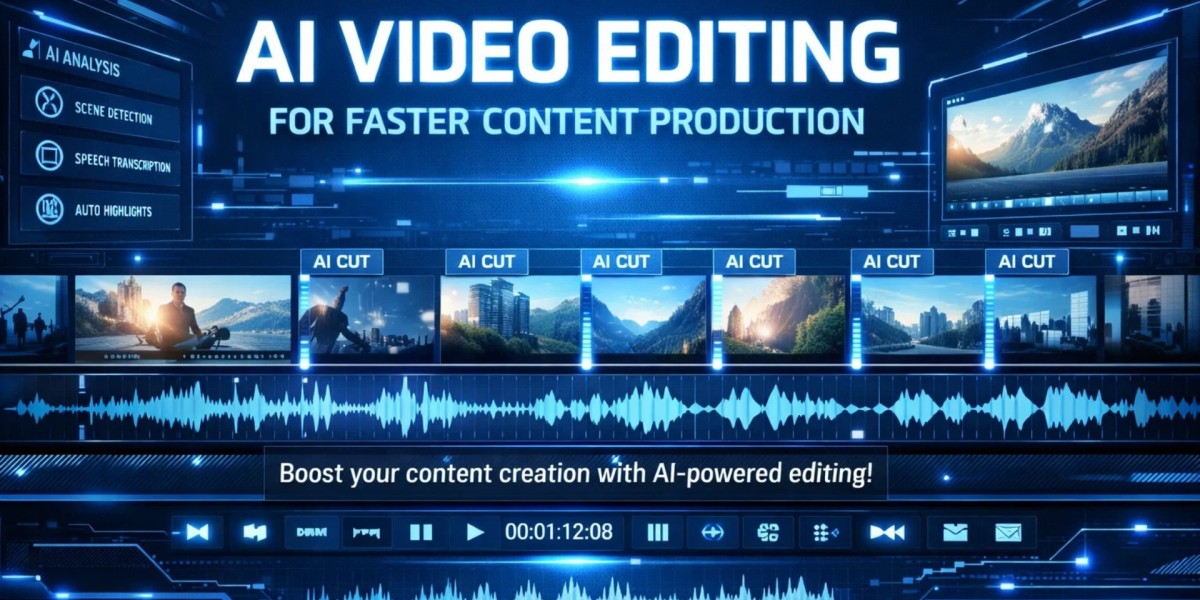
Explains intelligent automation in video workflows, covering editing speed, consistency, collaboration, and analytics-driven optimization that help organizations produce high-quality multimedia content efficiently while maintaining creative control and scalable publishing strategies.
Video has become a primary communication format across marketing, education, and digital publishing. Audiences increasingly expect visually engaging material delivered quickly, creating pressure on teams to produce more content without compromising quality or consistency.
Traditional editing workflows often require extensive manual adjustments, repetitive trimming, and complex timeline management. These processes can slow production cycles and limit experimentation. Intelligent automation introduces streamlined capabilities that reduce effort while preserving creative flexibility and professional output.
Automating Repetitive Editing Tasks
Automation simplifies time-consuming steps such as cutting silences, aligning clips, and generating captions. Intelligent detection tools identify key moments within footage, allowing editors to focus on storytelling rather than mechanical adjustments. Scene recognition organizes raw material into logical segments, improving navigation across long recordings. Automated color balancing and audio normalization enhance consistency without manual tweaking. These features reduce technical workload and accelerate project completion. As workflows become faster, teams can experiment with variations, test messaging, and deliver multiple formats tailored to different audiences.
Enhancing Collaboration and Workflow Consistency
Collaborative environments enable editors, marketers, and reviewers to work simultaneously on shared projects. Cloud-based timelines allow feedback directly on frames, eliminating lengthy revision cycles. Template-driven editing ensures brand alignment across multiple videos, including consistent typography, transitions, and visual styles. Version tracking maintains clarity by recording changes and enabling quick rollbacks. Centralized asset libraries store intros, overlays, and background music for reuse. These structured processes reduce confusion and ensure each project follows defined standards. Consistency improves recognition while minimizing production delays across distributed teams.
Features Supporting Faster Video Production
- Automatic caption generation with synchronized timing and formatting
- Smart trimming that removes pauses and repetitive segments
- Pre-built templates for intros, outros, and branded transitions
- Background noise reduction and audio enhancement tools
- Multi-format export optimized for social platforms and websites
Data Driven Optimization and Performance Insights
A structured AI video editing workflow connects production with measurable outcomes. Analytics highlight viewer retention, drop-off points, and engagement patterns. Editors use this information to refine pacing, adjust visual emphasis, and improve clarity. Automated suggestions identify sections suitable for short clips, enabling repurposing across platforms. Integration with publishing tools simplifies scheduling and distribution. Over time, performance data informs creative direction and improves consistency. Teams gain confidence when decisions rely on measurable behavior rather than assumptions. Continuous learning models refine recommendations as new videos are published. This iterative improvement supports scalable content strategies, ensuring efficiency without sacrificing creativity or storytelling quality.
Conclusion
Intelligent automation is transforming video production by simplifying editing, improving collaboration, and connecting creative decisions with performance insights. Organizations adopting these workflows reduce turnaround time while maintaining quality. Scalable systems support experimentation, enabling teams to produce multiple formats for diverse platforms. As analytics guide optimization, videos become more engaging and aligned with audience expectations. Over time, structured processes strengthen consistency, improve productivity, and help businesses deliver impactful multimedia experiences across digital environments.