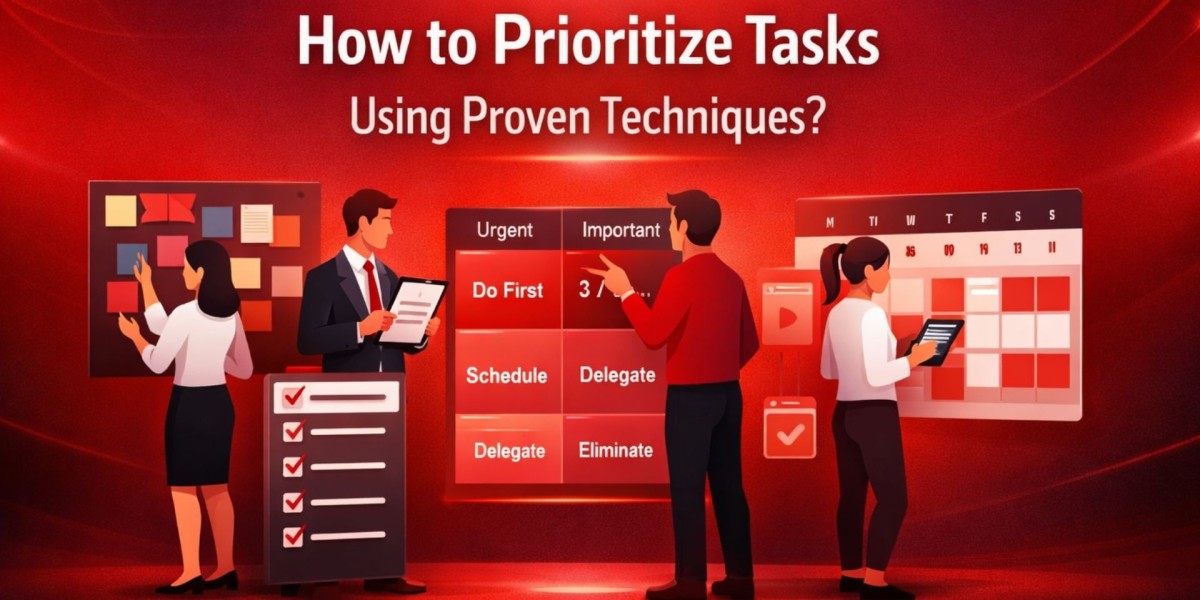

Do you often feel overwhelmed by a long to-do list and unsure where to start? Wondering how to prioritize tasks effectively without wasting time or energy? You’re not alone, and the good news is that proven methods can help you quickly decide what matters most and take action with confidence.
At its core, prioritizing tasks means identifying what delivers the highest value and tackling it first. This involves evaluating urgency, importance, and effort so you can focus on outcomes, not just activity.
Why Task Prioritization Matters
Without a clear system, it’s easy to:
- Spend time on low-impact tasks
- Miss important deadlines
- Experience unnecessary stress
Effective prioritization helps you:
- Improve productivity
- Stay focused on goals
- Make better decisions faster
Proven Techniques to Prioritize Tasks Effectively
- The Eisenhower Matrix (Urgent vs Important)
This classic framework helps you categorize tasks into four quadrants:
- Urgent and Important – Do immediately
- Important but Not Urgent – Schedule
- Urgent but Not Important – Delegate
- Neither – Eliminate
This method ensures you focus on meaningful work rather than reacting to everything.
- The ABCDE Method
Assign each task a priority level:
- A – Must do (serious consequences if missed)
- B – Should do
- C – Nice to do
- D – Delegate
- E – Eliminate
Always complete “A” tasks before moving forward.
- The 80/20 Rule (Pareto Principle)
This technique suggests:
- 80% of results come from 20% of efforts
Identify those high-impact tasks and prioritize them first. It’s a simple but powerful way to maximize efficiency.
How to Build a Daily Prioritization Workflow

To apply these techniques consistently, follow this simple routine:
Step 1: List All Tasks
Write everything down to avoid mental clutter.
Step 2: Categorize Tasks
Use a framework like Eisenhower or ABCDE.
Step 3: Estimate Effort and Time
Understand what each task requires.
Step 4: Rank Tasks
Order them based on value and urgency.
Step 5: Take Action
Start with the highest priority and avoid multitasking.
Aligning Priorities with Planning Strategies
Prioritization becomes more effective when aligned with structured workflows like sprint planning. This approach breaks work into short cycles, helping teams focus on the most critical tasks within a defined timeframe.
When combined with prioritization techniques, it ensures:
- Better time management
- Clear deliverables
- Continuous progress tracking
Using Tools to Simplify Task Prioritization
Technology can make prioritization easier and more accurate. For example, platforms like EmpMonitor help track productivity patterns and identify where time is being spent.
With the right insights, you can:
- Spot inefficiencies
- Reassign tasks effectively
- Focus on high-value activities
Data-Driven Prioritization

Using insights from project management statistics can help you make smarter decisions about what to prioritize. Data reveals patterns such as:
- Common delays
- Resource bottlenecks
- Task completion rates
This allows you to prioritize tasks based on real performance metrics rather than assumptions.
Common Mistakes to Avoid
Even with the right techniques, people often fall into these traps:
- Prioritizing everything equally
- Focusing only on urgent tasks
- Ignoring long-term goals
- Overloading your schedule
Avoiding these mistakes is just as important as choosing the right method.
Practical Tips for Better Prioritization
- Start your day with the most important task
- Limit your daily task list to 5–7 items
- Review and adjust priorities regularly
- Learn to say no to low-value work
- Use time-blocking for focused execution
Also, watch this video - EmpMonitor: Skyrocket Your Sales with Better Project Management
Conclusion
Mastering task prioritization is not about doing more; it’s about doing what matters most. By using structured techniques, aligning with planning strategies, and leveraging data, you can consistently make better decisions and improve productivity.
FAQs
Q1. What is the best method to prioritize tasks?
The Eisenhower Matrix is widely considered one of the most effective methods because it balances urgency and importance.
Q2. How many tasks should I prioritize daily?
Ideally, focus on 3–5 high-impact tasks to maintain productivity without burnout.
Q3. Can tools help in prioritization?
Yes, productivity and monitoring tools provide insights that help you identify and focus on critical tasks.
Q4. Why do I struggle with prioritizing tasks?
Common reasons include lack of clarity, too many responsibilities, and no structured system.