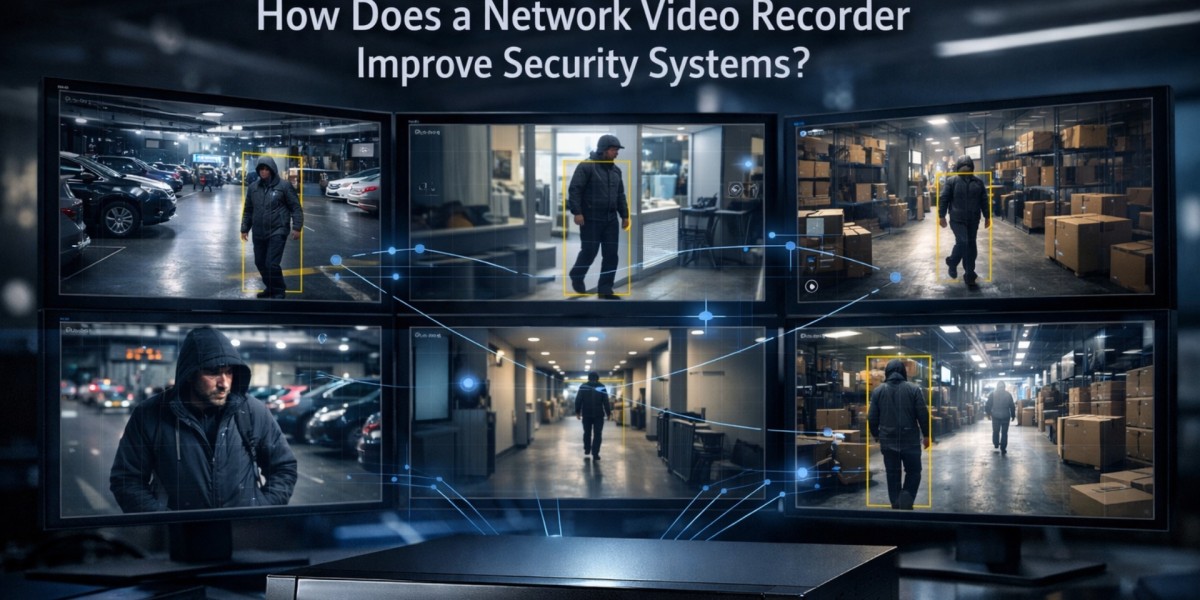

How do modern security systems store, manage, and analyze video footage efficiently? The answer lies in a network video recorder. As surveillance technology evolves, organizations need smarter ways to handle video data, ensure safety, and respond quickly to threats.
A network video recorder (NVR) is a device that records and manages video footage from IP cameras over a network. It provides centralized control, high-quality recording, and remote accessibility making it a core component of modern surveillance systems. Whether used in businesses, public spaces, or residential areas, NVRs enhance monitoring, improve response time, and support better decision-making.
What Is a Network Video Recorder?
A network video recorder is a system that captures and stores video data transmitted from network (IP) cameras. Unlike traditional DVRs, it processes video data at the camera level and records it digitally through a network.
Key characteristics include:
- Centralized video storage
- High-definition recording capabilities
- Remote access via internet-connected devices
- Seamless integration with modern security tools
These features make it an essential solution for organizations seeking reliable and scalable surveillance.
How Does a Network Video Recorder Work?

An NVR works by receiving video streams from IP cameras and storing them in a digital format. The process involves several steps:
1. Video Capture
IP cameras capture video footage and convert it into digital data.
2. Data Transmission
The footage is sent over a network (wired or wireless) to the recorder.
3. Storage and Management
The NVR stores the data on hard drives and organizes it for easy access.
4. Playback and Analysis
Users can view live or recorded footage and analyze events when needed.
This workflow ensures efficient video management and quick retrieval of important information.
Key Benefits of Using an NVR in Security Systems
1. Centralized Monitoring
An NVR allows users to manage multiple camera feeds from a single interface. This improves efficiency and reduces the complexity of monitoring large areas.
2. High-Quality Video Recording
Modern NVRs support HD and 4K video, ensuring clear and detailed footage. This is critical for identifying individuals and analyzing incidents accurately.
3. Remote Accessibility
Users can access video feeds from anywhere using smartphones, tablets, or computers. This flexibility enhances real-time decision-making.
4. Scalability
NVR systems can easily expand by adding more cameras. This makes them suitable for growing businesses and evolving security needs.
Role of Advanced Technologies in NVR Systems
Modern surveillance systems go beyond basic recording by integrating advanced tools such as video analytics solutions. These technologies enhance the capabilities of NVR systems by analyzing video data automatically.
Key advantages include:
- Detecting unusual behavior or movement
- Identifying objects, vehicles, or individuals
- Sending real-time alerts for suspicious activities
- Reducing the need for constant manual monitoring
By combining NVRs with intelligent analytics, organizations can move from reactive to proactive security strategies.
Where Are Network Video Recorders Commonly Used?

NVR systems are widely used across various sectors due to their flexibility and effectiveness.
Common applications include:
- Commercial buildings – Offices and retail stores use NVRs for security and loss prevention.
- Industrial facilities – Factories rely on NVRs to monitor operations and restricted areas.
- Public infrastructure – Airports, stations, and city streets use them for large-scale surveillance.
- Residential communities – Apartments and gated communities use NVRs for safety and monitoring.
These use cases highlight the adaptability of NVR systems in different environments.
Enhancing Security with Intelligent Software
As surveillance technology advances, NVR systems are increasingly integrated with video intelligence software to deliver smarter security outcomes.
This software enables:
- Automated threat detection
- Behavioral analysis
- Real-time alerts and notifications
- Improved incident investigation
By combining recording capabilities with intelligent insights, organizations can strengthen their overall security framework.
Best Practices for Using an NVR System
To maximize the effectiveness of an NVR, consider the following best practices:
- Install cameras strategically in high-risk and high-traffic areas
- Ensure sufficient storage capacity for long-term recording
- Regularly update software to maintain system performance
- Secure network connections to prevent unauthorized access
These steps help maintain system reliability and ensure consistent performance.
Summary
A network video recorder is a critical component of modern surveillance systems. It provides centralized video management, high-quality recording, and remote accessibility. When combined with advanced analytics and intelligent software, NVR systems enable proactive security, faster response times, and improved safety across various environments.
FAQ
What is a network video recorder?
A network video recorder is a device that records and stores video footage from IP cameras over a network.
How does an NVR improve security?
It centralizes monitoring, provides high-quality video, and enables quick access to live and recorded footage.
Can NVR systems be accessed remotely?
Yes, most NVR systems allow users to access footage remotely through internet-enabled devices.
What is the difference between NVR and DVR?
NVR works with IP cameras and processes digital data, while DVR works with analog cameras and processes video at the recorder level.