
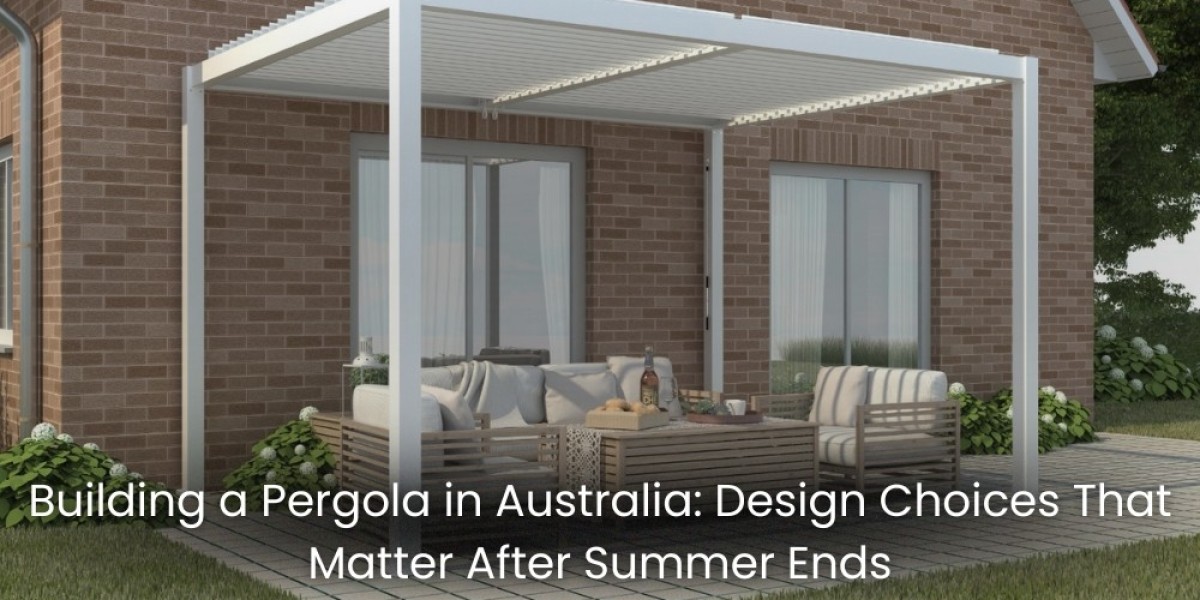
A pergola can feel like a summer project: somewhere to escape the midday sun, host a barbecue, and make a backyard feel more like a destination. The real test often arrives later—when the heat eases, the wind shifts, and “outdoor living” starts competing with rain, glare, and chilly evenings.
In Australian conditions, pergolas that stay genuinely useful after summer tend to share a few traits. They manage water predictably, keep light without sacrificing shelter, and avoid turning into a compliance headache when you add “just one more” feature. Here are the design choices that matter most once the warm-weather honeymoon ends.
Think in seasons, not snapshots
Summer comfort is mostly about shade. Autumn and winter comfort is more complicated:
- Low-angle sun can bring harsh glare, especially late afternoon.
- Cold winds find gaps you didn’t notice in January.
- Rain behaviour becomes obvious—where it sheets, drips, pools, or runs back toward the house.
- Damp and condensation can creep in where airflow is limited.
A practical starting point is to picture the space on a grey day: where would you actually sit, where would the wet areas be, and how would you move between the back door and the yard without getting soaked?
Roof choice: the difference between “shade” and “shelter”
The roof is where most pergolas succeed or fail after summer.
Open slats
Open-slat pergolas can soften light and create a relaxed feel, but they’re primarily shade structures. In wetter months they won’t deliver reliable cover, so furniture selection and layout need to tolerate exposure.
Solid or insulated panels
Solid roofing provides more dependable protection from rain, but it can reduce daylight and make adjacent indoor rooms feel darker—particularly if the pergola sits close to key windows or sliding doors. In cooler seasons, the upside is a more “room-like” outdoor zone; the downside can be reduced natural light.
Adjustable louvres
Adjustable louvre roofs are popular because they can respond to changing conditions—open for light and airflow, angled to manage glare, and closed for more cover. The catch is that performance depends on water management and installation details, not just the louvres themselves. If drainage paths, roof fall, and runoff discharge aren’t designed properly, “closed” can still mean drips in the wrong places and water pooling where you walk.
Water management: decide where rain will go before you choose finishes
After summer, you’ll notice water in three places:
- Runoff from the roof (where it’s captured and where it’s discharged)
- Splash-back (from hard surfaces after heavy rain)
- Pooling (where levels don’t fall away cleanly)
This is why the unglamorous groundwork—checking levels, planning fall, setting footings correctly, and understanding access constraints—often decides whether a pergola feels “solid and forever” or “a bit annoying after the first storm.”
If you’re building on existing paving, check whether the surface falls away from the house (and where the water naturally travels). If you’re pouring a slab or re-laying pavers, treat drainage as a design input early. Fixing it later is almost always more disruptive.
Height and placement: comfort is geometry
Pergola height changes more than the look; it changes the microclimate.
- Too low can trap warm air and feel oppressive.
- Too high can reduce effective shade and leave you exposed to wind and sideways rain.
- Too tight to boundaries can limit airflow and make screening feel claustrophobic.
In many Australian backyards, the most annoying sun isn’t overhead—it’s the low afternoon glare. Height, roof angle (or louvre angle), and the pergola’s relationship to the home’s eaves can determine whether that glare is softened or amplified.
A simple test: stand where you expect to sit at 3–5pm in summer and again in winter. If you can, do this on different days. The “uncomfortable spot” is often the clue to where screening, roof control, or a small shift in position will make the biggest difference.
Wind behaviour: the side you leave open can matter most
Summer design tends to focus overhead. Cooler months are when you learn what your site really does with wind.
Even a small change—placing the pergola in a corner, aligning it with a side passage, or adding partial screening—can turn the space from pleasantly breezy to turbulent. If you’re considering screens, panels, or outdoor blinds, it helps to treat them as targeted problem-solvers rather than default add-ons:
- block a dominant wind direction
- shield one neighbour-facing edge
- reduce low sun glare
Rather than enclosing everything, aim for balance: enough shelter to be comfortable, enough openness to avoid damp still air.
Attached vs freestanding: don’t assume your house is a simple “surface”
Attaching a pergola to a house can improve usability—especially for wet-weather access and the feeling of a true extension of the living area. It also introduces extra considerations: structural interfaces, waterproofing details, and how existing gutters and rooflines will interact with the new structure.
Homes aren’t uniform. Fascia details, brickwork, roof pitches, existing downpipes, and drainage all vary. The risk isn’t just aesthetic—it’s how water behaves where the pergola meets the building, particularly during heavy rain and when wind drives water sideways.
If you’re unsure, this is the point where it’s worth seeking advice from a qualified professional so you’re not guessing about load paths, fixings, or waterproofing interfaces.
Approvals and classification: where “simple” quietly becomes “complicated”
Whether a pergola needs approval can depend on your state, local council, and the details of the design—size, height, location on the block, proximity to boundaries, whether it’s attached to the dwelling, and how “roof-like” or enclosed the structure becomes.
A practical rule of thumb (without replacing local advice): the more it behaves like a roofed, enclosed outdoor room, the more likely it is to trigger additional checks. If you suspect you’ll want to add screens, blinds, or other enclosure elements later, it’s worth thinking about that pathway early so you don’t design yourself into a corner.
Layout and “real use”: design for movement, not just furniture
A common regret is sizing a pergola around the table—then discovering there’s no comfortable circulation. A better approach is to plan around the way people move:
- clearance behind dining chairs
- a walkway line from the back door to the yard
- where doors swing (including stacked sliders)
- where you’ll stand when cooking or serving
If the structure feels slightly generous on day one, it tends to remain useful as needs change (kids, pets, bigger gatherings, or the gradual shift toward more outdoor time).
Winter-proofing that stays tasteful
Once the structure is right, the additions that tend to improve year-round use without turning the pergola into a dark box are:
Targeted screening
Use screening where it solves a specific problem—one windy edge, one neighbour-facing line, or one glare angle—rather than wrapping every side. This helps keep light and airflow.
Lighting that matches how you live
When the sun sets earlier, lighting becomes the difference between “we’ll use it” and “we forget it exists.” Plan lighting around seating zones, paths, and serving areas—not just symmetry.
A wet-weather transition plan
If you want to use the space in rain, consider the transition from the back door to the seating area. Even a well-covered pergola can be annoying if the main walking line is where runoff lands or where puddles form.
A reliable planning checklist (without overcomplicating it)
If you want a single, structured reference that pulls together design decisions, site preparation, and the “what to think about before you commit” steps, Unique Pergolas’ pergola planning guide is a useful starting point.
Key Takeaways
- After summer, pergolas succeed or fail on water management, wind behaviour, and glare control, not just shade.
- Roof choice matters, but drainage, fall, and runoff discharge often matter more in wet weather.
- Height and placement strongly affect comfort—too low can feel stuffy; too high can feel exposed.
- Approvals vary across Australia; enclosing or making a structure more “roof-like” can change how it’s assessed.
- The best year-round upgrades are usually targeted (a single screened edge, practical lighting), not full enclosure.