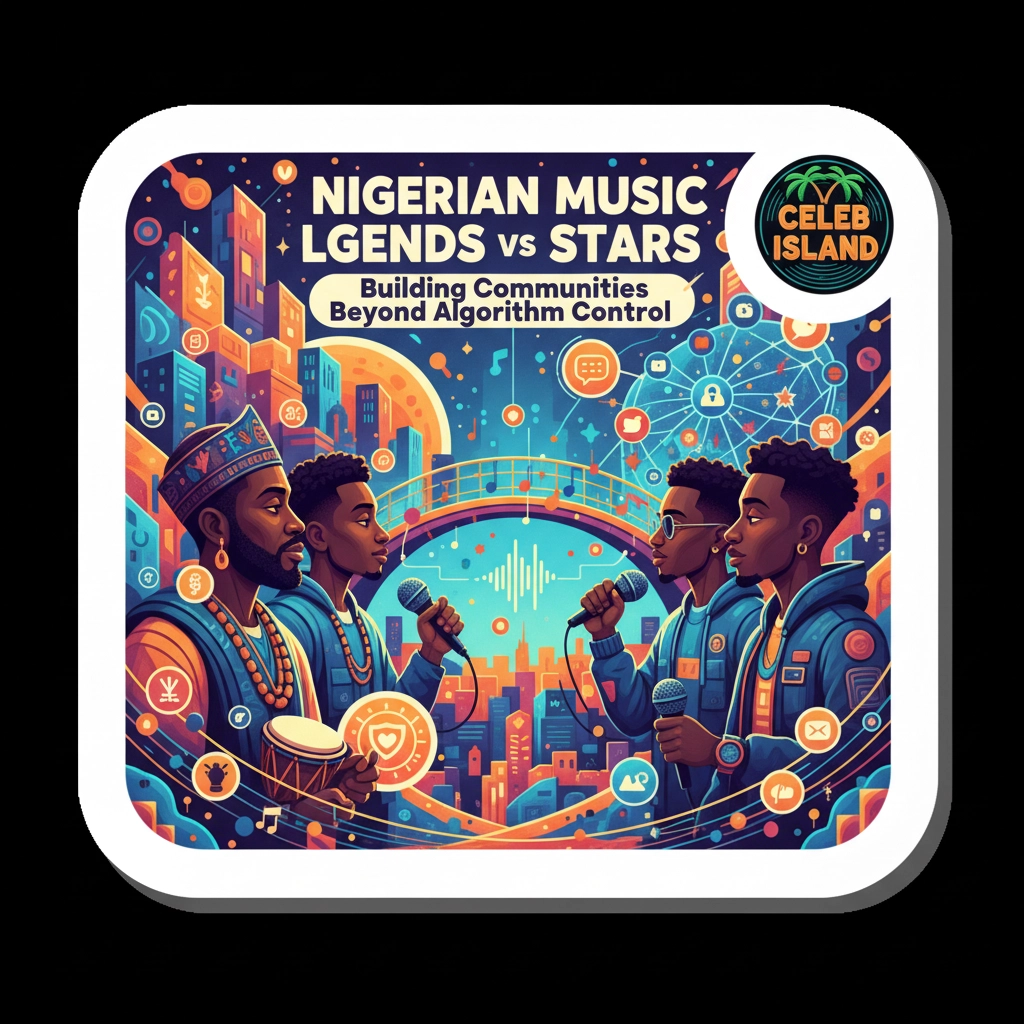
This shift represents more than musical evolution. It's a cultural revolution where artists reclaim the power to define their relationships with fans, create meaningful dialogue, and preserve African identity in an increasingly homogenized digital landscape.
The Foundation: How Fela Kuti Built the Blueprint for Real Community
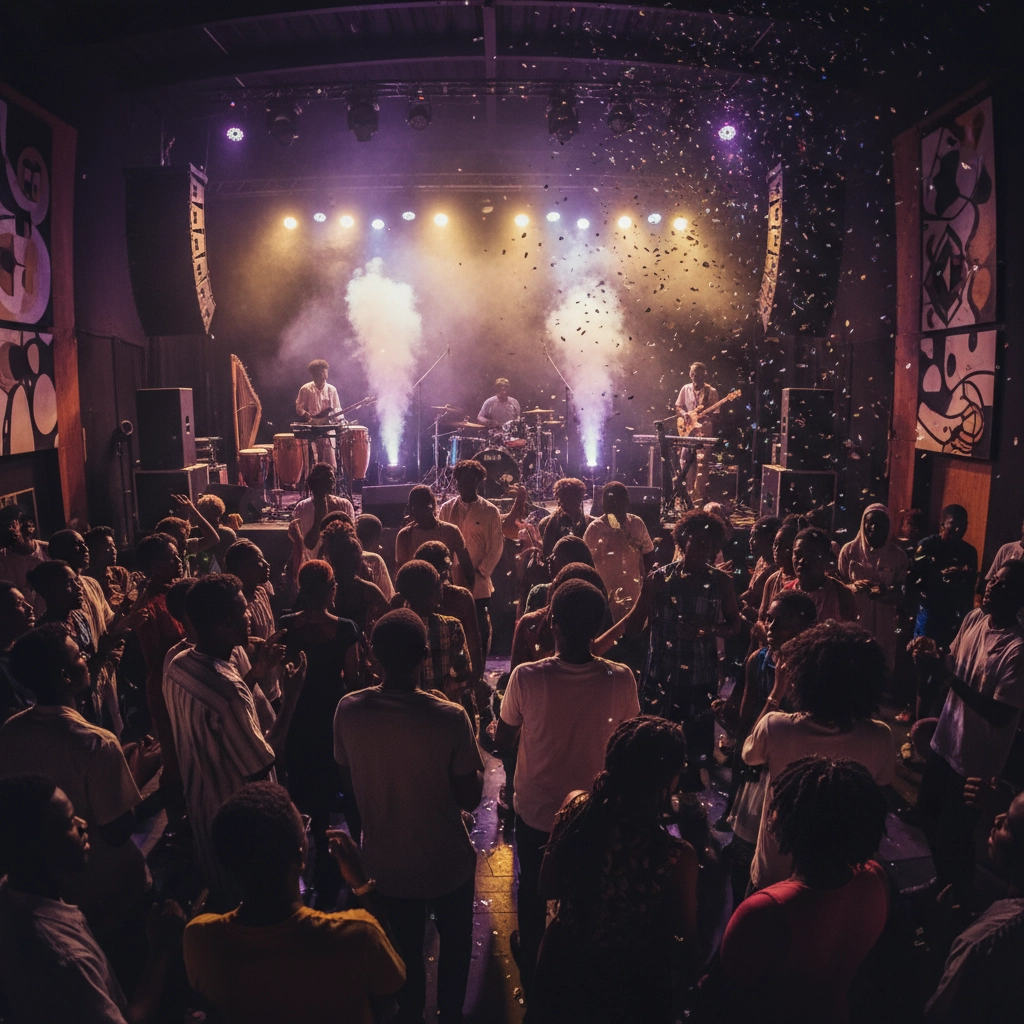
Fela Kuti didn't just perform music: he created a movement. His venue, The Shrine, became the template that modern artists still follow today. Here was a physical space where rhythm became ritual, sound became protest, and community became resistance.
Fela's genius wasn't in his ability to attract crowds; it was in his understanding that music serves as a method for truth-telling, remembering, and rebuilding. The Shrine represented something algorithms can never replicate: a gathering place where people experienced transformation together, not just entertainment.
As Nigerian poet Chigozie Obioma noted, "Fela didn't just play music: he moved the people's spirits." That spiritual connection created a fire that cannot be streamed or commodified, only carried forward: beat by beat, voice by voice.
This foundational approach emphasized physical spaces and direct political engagement. When you attended a Fela performance, you weren't just consuming content. You were participating in a cultural awakening that challenged both local corruption and global imperialism.
Rising Stars: The New Multi-Platform Community Architects
Today's breakthrough artists like Ayra Starr, DjMondo, and Ruger represent a sophisticated evolution of Fela's community-building vision. They've learned to navigate streaming platforms while maintaining cultural authenticity and direct fan connection.
Ayra Starr has evolved into a global Afrobeats queen known for her Gen Z energy and strategic collaborations. Her 2025 project "StarrWorld" blends multiple genres while creating one of the most streamed albums in Africa this year. But her real achievement lies in how she maintains artistic integrity while achieving massive digital success.
DjMondo exemplifies the new community-building model. He positions himself as more than a musician: he's a movement. His music speaks to dreamers, hustlers, and lovers of African rhythm, but his strategy focuses on actively building a community of fans who live and breathe Afrobeats.
These artists understand something crucial: building authentic communities requires more than posting regularly or responding to comments. It demands creating spaces where fans feel genuinely connected to both the artist and each other.
Beyond Algorithm Control: Creating Grassroots Digital Communities
Modern Afrobeats artists are strategically building communities that exist beyond traditional platform control. These grassroots movements often emerge in online platforms like Twitter Spaces, TikTok, and Clubhouse, where diaspora youth host live conversations about Afrobeat's cultural politics.
Here, music becomes a launchpad for discussions on colonial legacies, migration, and mental health. The community-building aspect becomes just as essential as the sound itself. Artists aren't just sharing music; they're facilitating conversations that matter to their audiences' lived experiences.
The diaspora has transformed Afrobeat into a tool for cultural reclamation, identity-building, and intergenerational connection. For second- and third-generation Africans worldwide, these artists offer a bridge back to heritage that feels both authentic and contemporary.
This represents sophisticated evolution of Fela's original vision, adapted for global digital contexts while maintaining the spiritual and political depth that made the original movement so powerful.
The Power of Authentic Language and Cultural Pride
Both legendary and rising artists understand the importance of linguistic authenticity in community building. Modern Afrobeats continues the tradition of celebrating African languages, with songs in Pidgin, Yoruba, Igbo are dominating international charts.
This linguistic shift empowers African communities to see their languages as globally valued while encouraging non-African listeners to approach Afrobeat with cultural humility and curiosity rather than consumption. Non-Western languages are no longer treated as peripheral: they're recognized as central to the genre's authenticity and appeal.
The result is music that becomes not just entertainment but embodied memory, a language through which to claim belonging and challenge erasure. Artists create communities where cultural pride isn't just celebrated: it's lived and shared daily.
Navigating Cultural Ownership in the Digital Age
Both generations of artists face challenges around cultural ownership, though in different forms. While legends like Fela fought direct political oppression, rising stars navigate critical questions about ownership and authenticity as Western brands and pop stars tap into Afrobeat aesthetics.
The challenge emerges when increased visibility doesn't translate to increased African control over the genre's economic benefits. Western entities often profit from Afrobeat aesthetics without platforming African producers, engineers, or lyricists. This creates ongoing tensions where the genre's visibility has increased, but structures of cultural extraction remain largely unchanged.
Successful contemporary artists are learning to build communities that explicitly address these ownership questions. They create spaces where fans understand not just the music, but the economics and politics behind it.
Building Communities That Last: Strategies from Both Eras
The most successful contemporary artists combine the spiritual and political depth of legendary community building with sophisticated digital community management. They create spaces where music serves both artistic and political purposes while reaching unprecedented global audiences.
These artists understand that authentic community building requires:
- Physical and digital integration: Combining online engagement with live experiences that create lasting memories
- Cultural education: Teaching fans about the history and significance of the music they love
- Economic transparency: Helping communities understand how to support artists directly
- Political awareness: Connecting music to broader issues affecting African communities globally
- Language preservation: Maintaining linguistic authenticity while building global reach
The evolution from Fela's revolutionary shrine to today's multi-platform community networks demonstrates how authentic artistic movements adapt their strategies while maintaining their essential spirit of resistance, cultural pride, and collective empowerment.
Your Role in Building Authentic Musical Communities
This transformation offers lessons for anyone interested in building authentic communities around African culture and creativity. The most successful approaches combine respect for traditional values with strategic use of modern tools.
Whether you're an artist, fan, or cultural entrepreneur, you can contribute to this movement by supporting platforms and artists who prioritize community over algorithms, culture over commercialization, and authentic connection over viral moments.
Ready to be part of a community that celebrates authentic African creativity? Join the conversation on Celeb Island, where indigenous voices shape the narrative and real connections matter more than engagement metrics.